
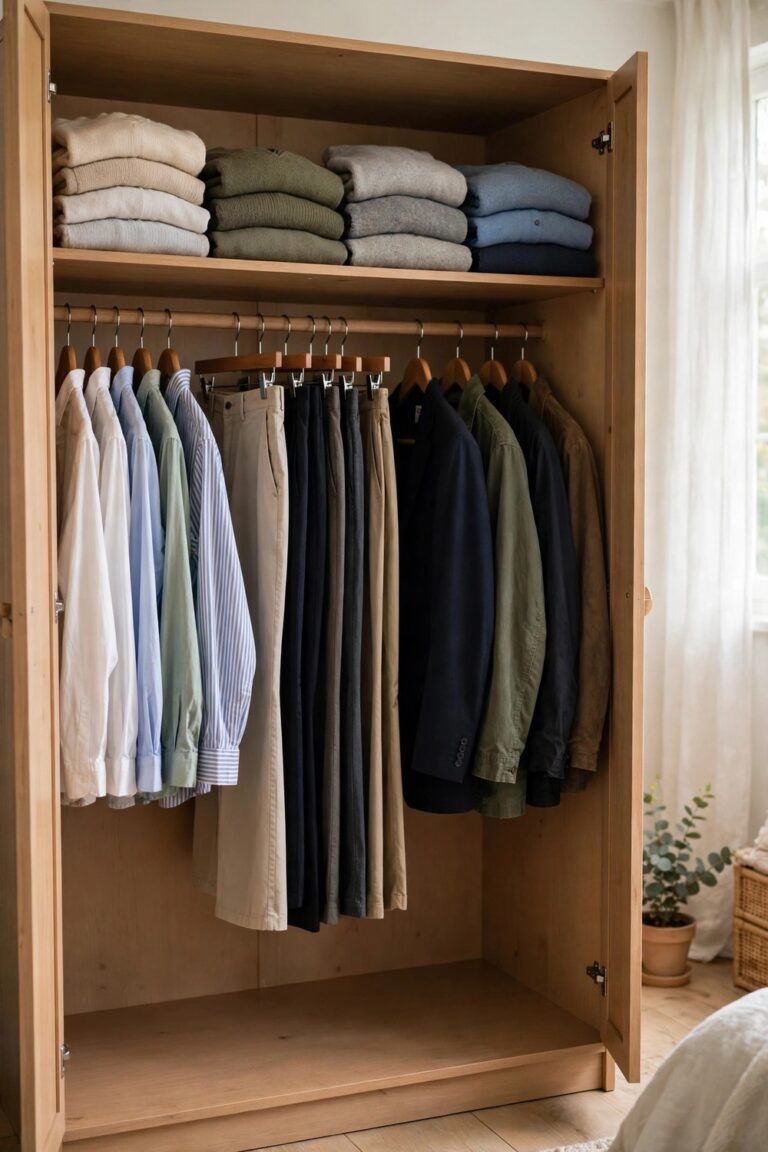

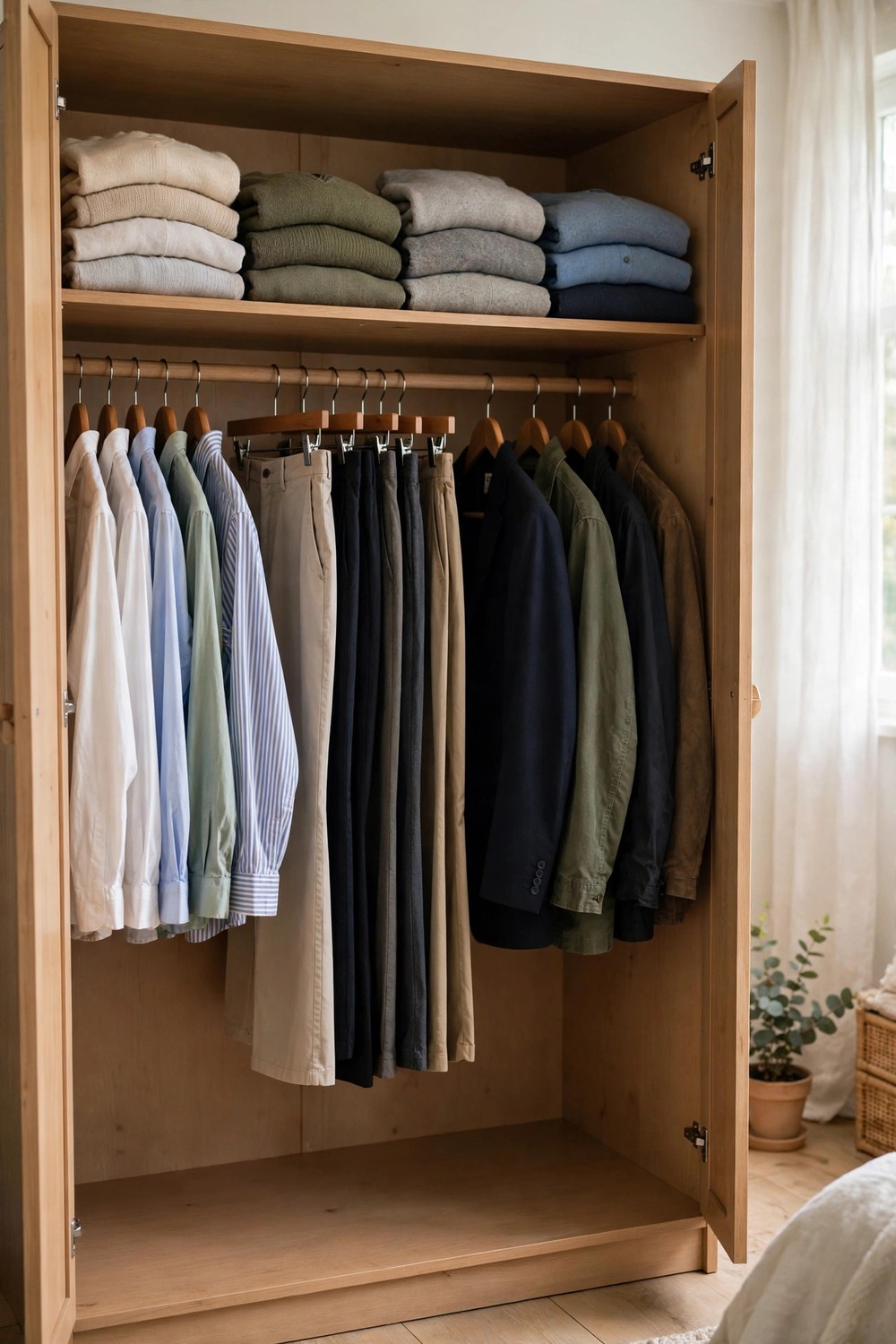
Most wardrobes are not too small. They are too full of clothes nobody wears. The shirts that do not fit, the jumper kept out of guilt, the dress bought for one event — they take up the rail, hide the clothes you actually reach for, and make getting dressed feel harder than it is. The wardrobe organisation ideas that work are not about clever folding. They are about taking everything out, keeping only what you wear, and putting it back so you can see it.
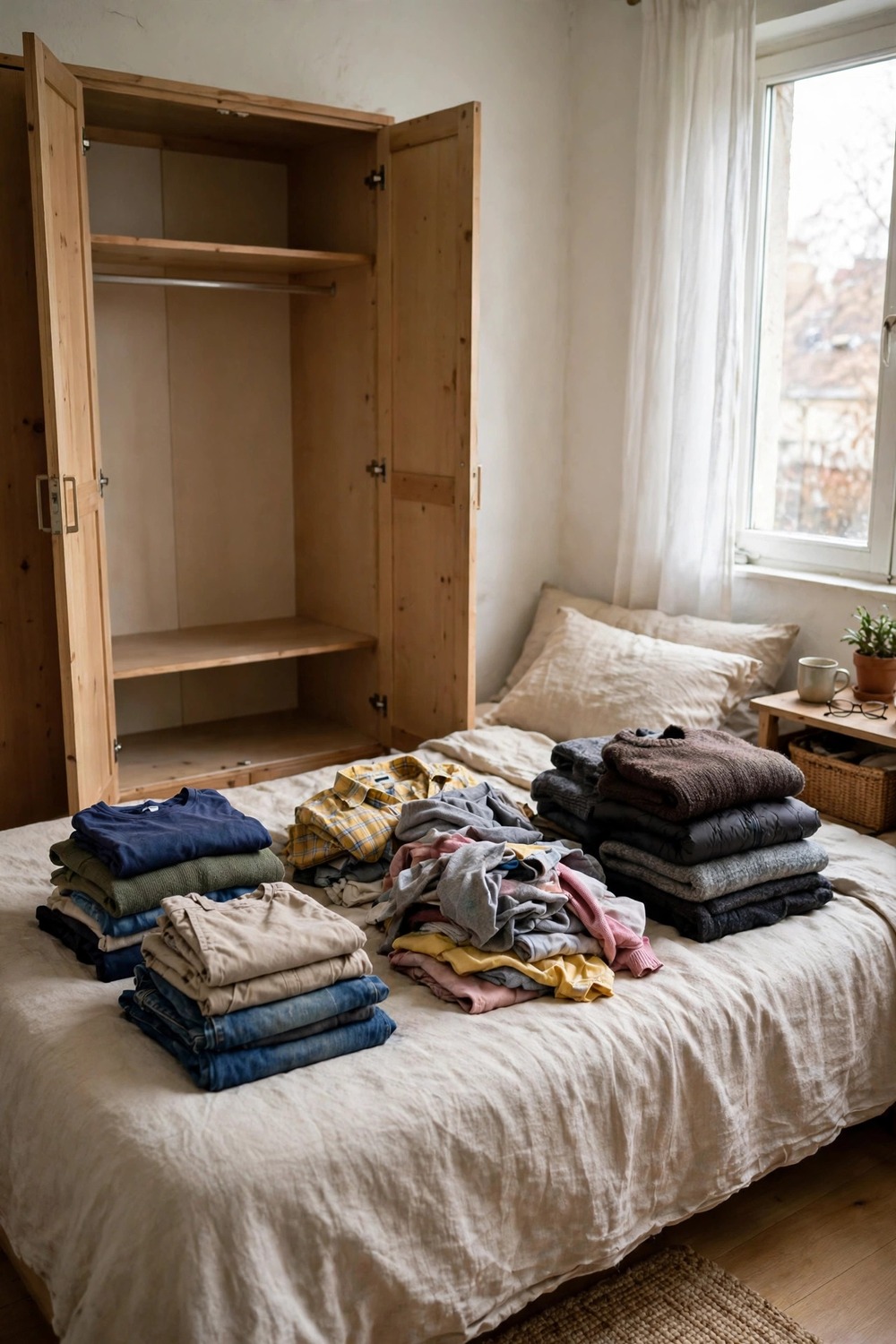
Empty it first, all of it
Take every single item out of the wardrobe and put it on the bed. It feels dramatic, and that is the point — you cannot judge a wardrobe while half of it is still hanging in the dark. Sort the pile into three groups: keep, donate, and store elsewhere. Keep means you wore it in the last three months or you will wear it this season. Donate means it does not fit, you do not like it, or you keep passing it over. Store means it is out of season or for a specific job, and it belongs in a box under the bed, not on the rail. Be honest, and be quick — if you have to think about it for more than a few seconds, you do not wear it.
Hang by type, not by colour
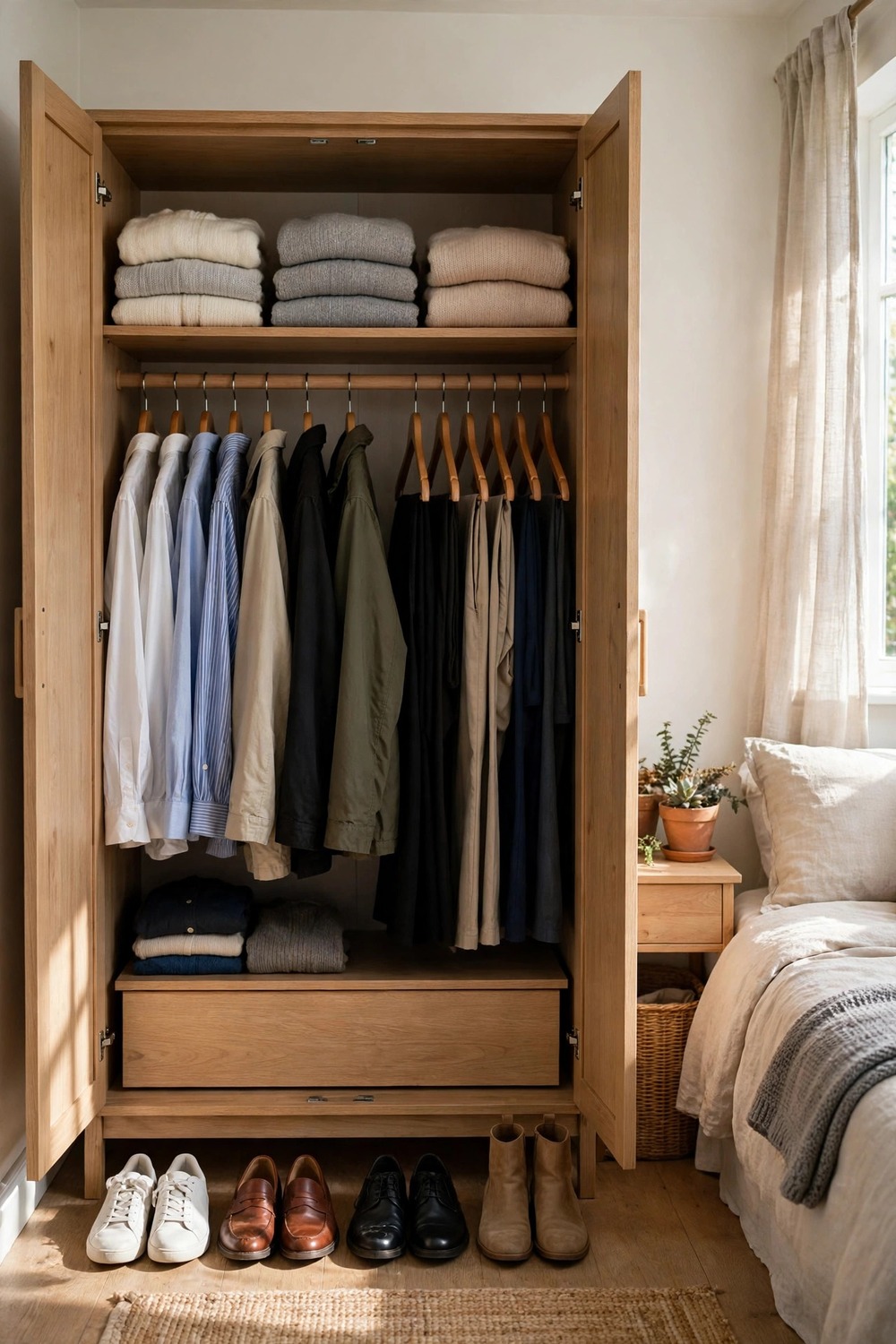
Put the clothes back grouped by type: shirts together, trousers together, dresses together, jackets together. It sounds boring, and it is the single change that makes a wardrobe usable, because you look for a shirt, not for a colour. Use matching slim hangers — mixed hangers tangle, slip, and take up more space than the clothes on them. Hang everything facing the same way, and turn the hanger round when you wear something, so in a month you can see at a glance what you never touched.

Double the rail before you buy anything else
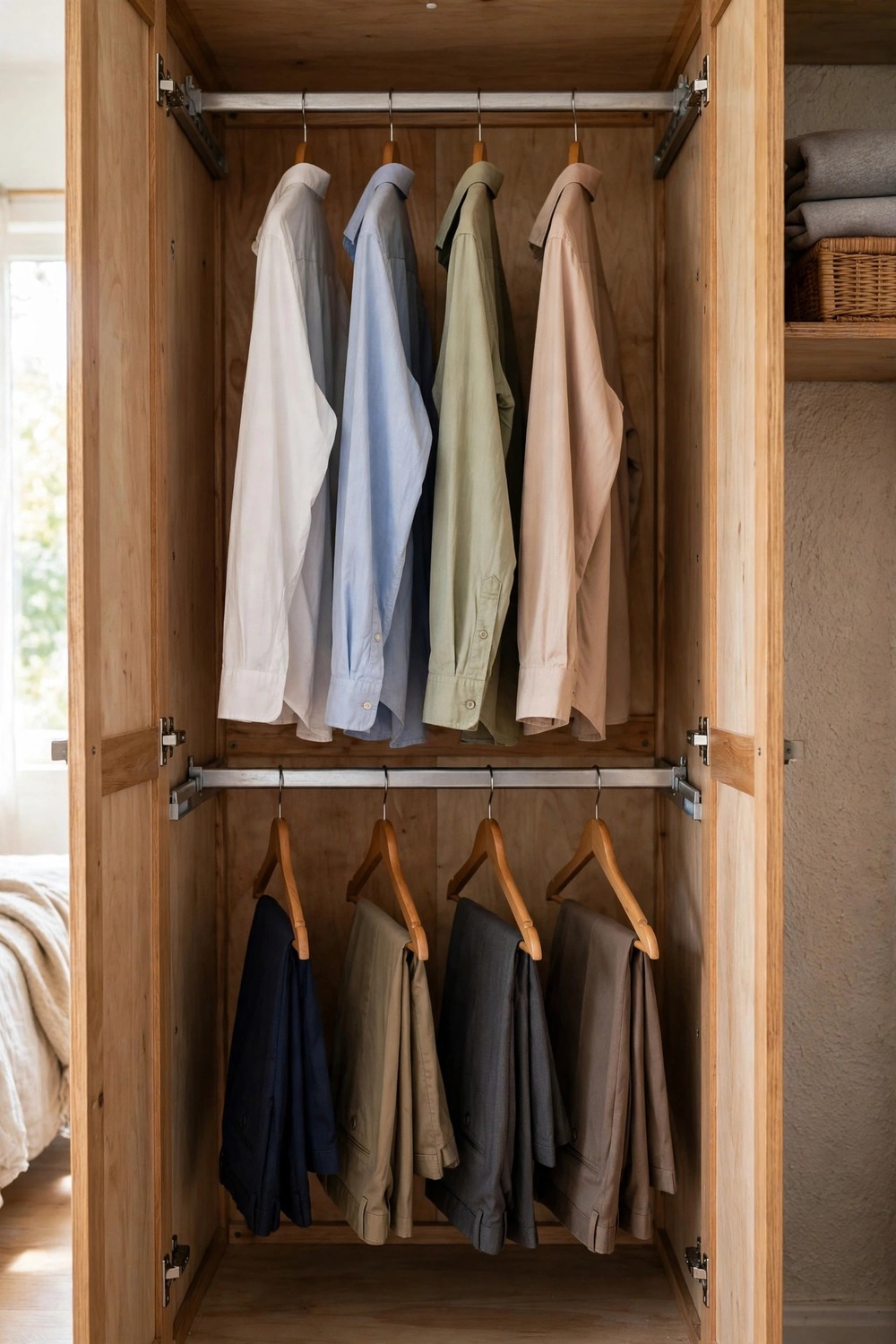
A small wardrobe usually has one rail and a lot of empty air underneath it. A second rail, fitted below the first, doubles the hanging space for shirts, folded trousers and shorter items — no drilling needed for a tension rail, and most clip-on rails fit in minutes. The shelf above the rail takes folded jumpers in stacks of four or five, and the floor below takes shoes in pairs, not in a pile. The inside of the door takes a slim organiser for scarves, belts and the things that otherwise end up on a chair. Wardrobe organisation ideas work best when they use the space the wardrobe already has.

Fold what hangs badly, hang what creases
Jumpers stretch on hangers and slide off them; trousers crease when folded in a drawer. So fold the jumpers, hang the trousers, and stop fighting the fabric. Fold jumpers in neat stacks you can lift without toppling the pile, and keep one stack per colour family so you can find the grey one without unfolding five others. Keep one small basket on the shelf for the bits that have no other home — belts, scarves, hats — and nothing else goes in it.
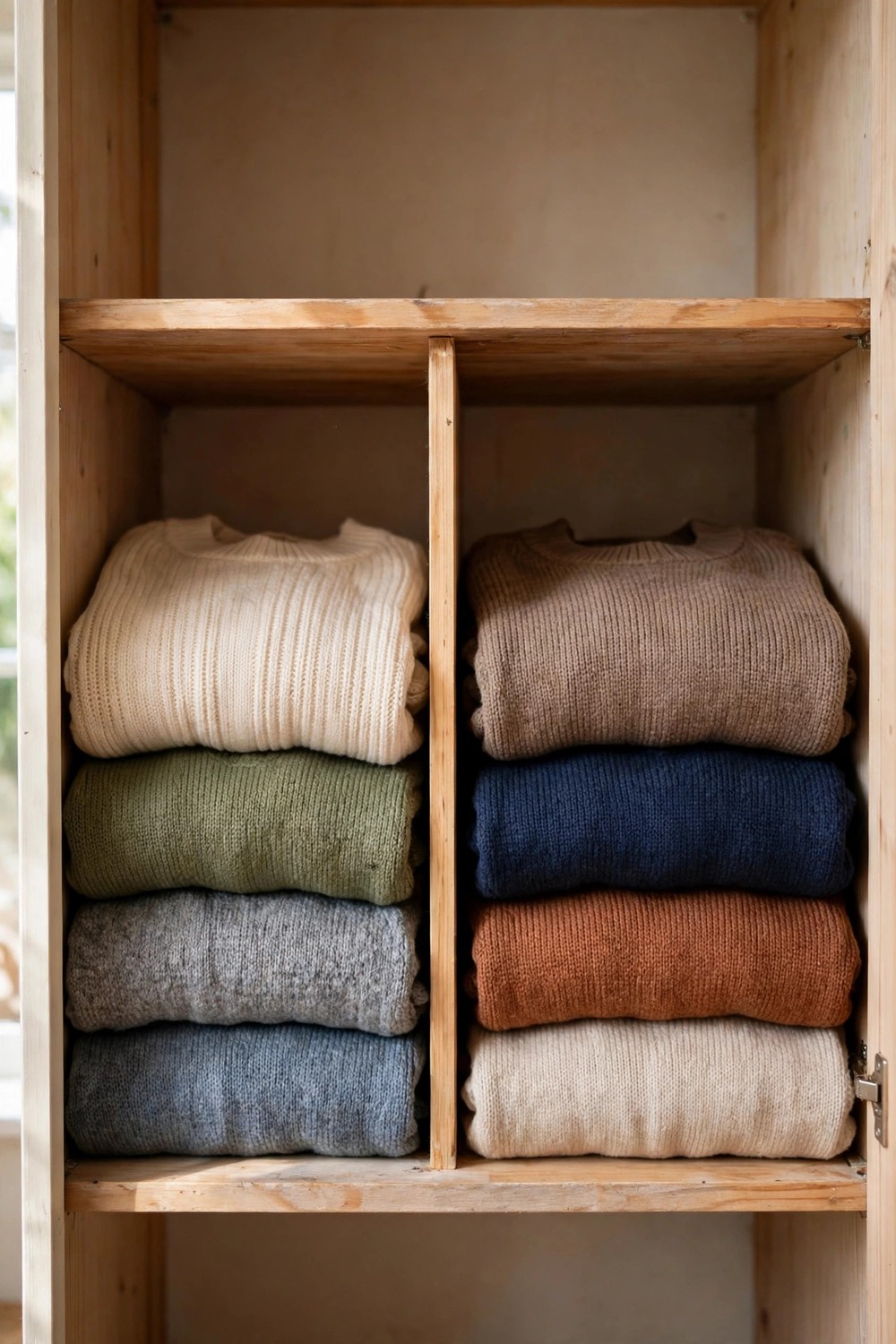
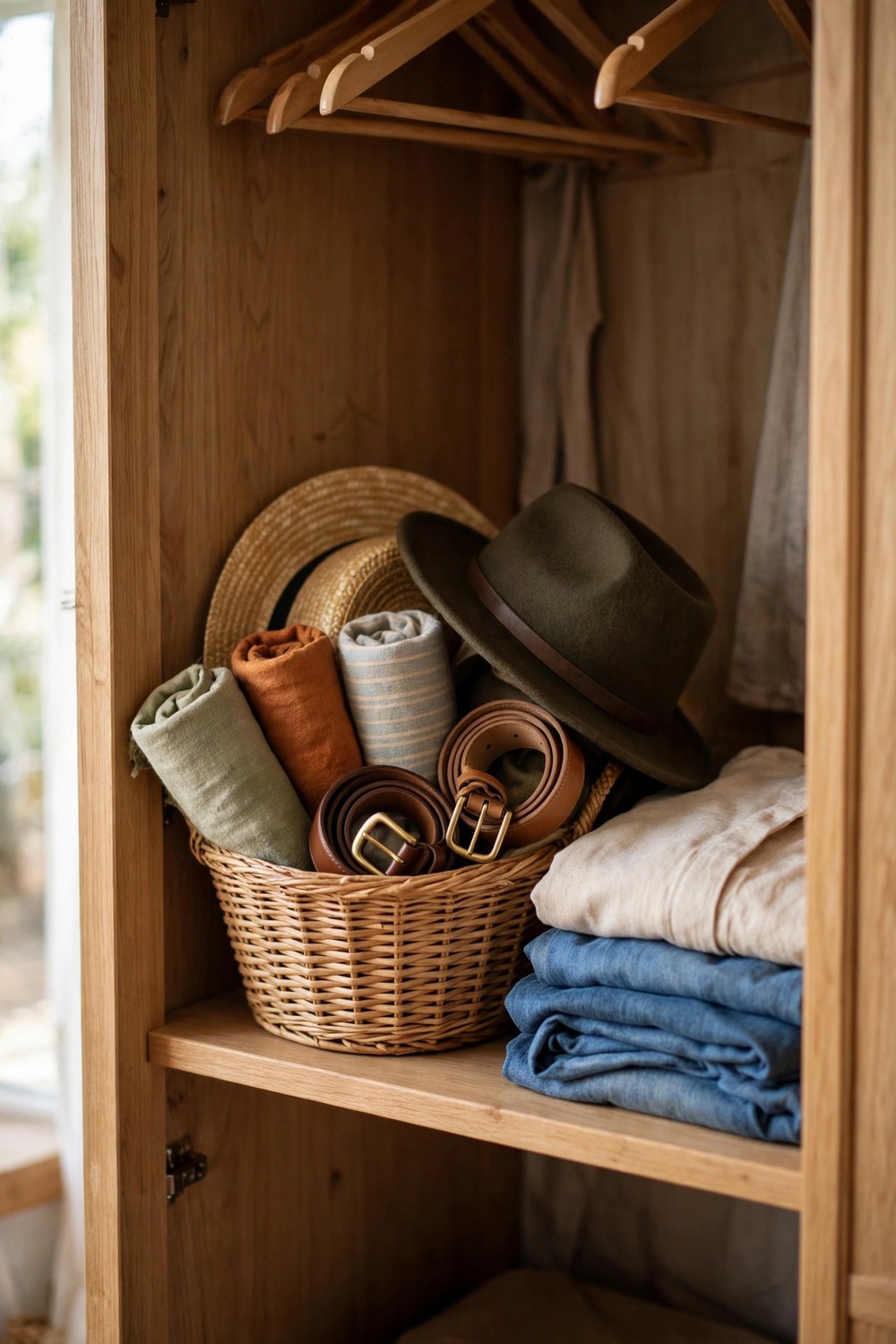
The ten-minute weekly reset
A wardrobe stays organised for about a week on its own, and then it needs ten minutes. Pick a day — Sunday works, folded into the weekly reset — and do three things: hang up anything on the chair, return anything that ended up on the wrong rail, and pull out one thing you have not worn. Ten minutes a week is the difference between a wardrobe that stays organised and one that needs emptying all over again in three months.
Start with the rail you use most
Do not reorganise the whole wardrobe, the drawers and the shoe pile in one go. Start with the rail you reach for every morning, finish it properly, and live with it for a week. When getting dressed gets easier, the rest of the wardrobe will feel worth doing — and you will already know what works in your space.
For more ways to keep the house running, try a 15-minute tidy, borrow the small apartment storage ideas that work in a rented flat, fold it all into your Sunday reset, and explore the rest of Home Organisation.
How do I organise a very small wardrobe?
Empty it completely first, keep only what you wore in the last three months, add a second rail, and use matching slim hangers. Most small wardrobes feel bigger once the unworn clothes are out.
Should I organise by colour or by type?
By type first — shirts with shirts, trousers with trousers — because that is how you look for clothes. Colour within each group is a nice extra, not the system itself.
How often should I declutter my wardrobe?
Once a season, properly, plus ten minutes a week to keep it tidy. The seasonal sort catches the clothes that stopped fitting your life; the weekly reset stops the wardrobe sliding back.



0 Comments