
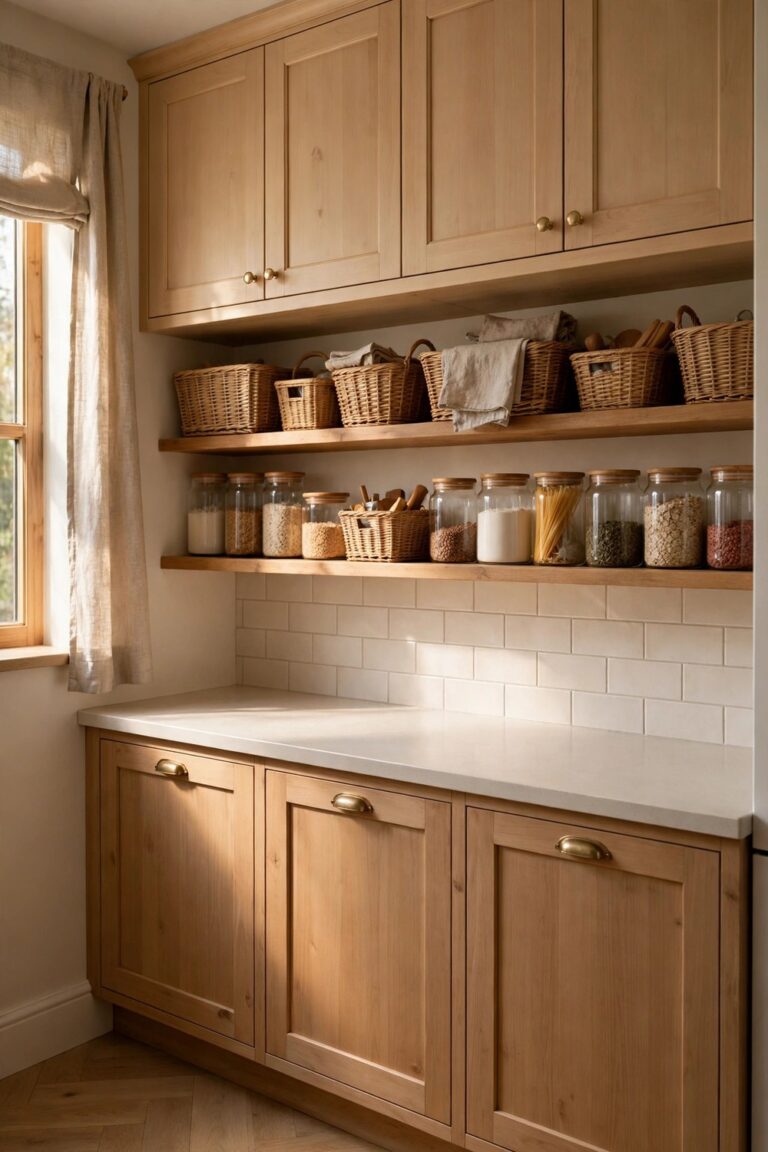

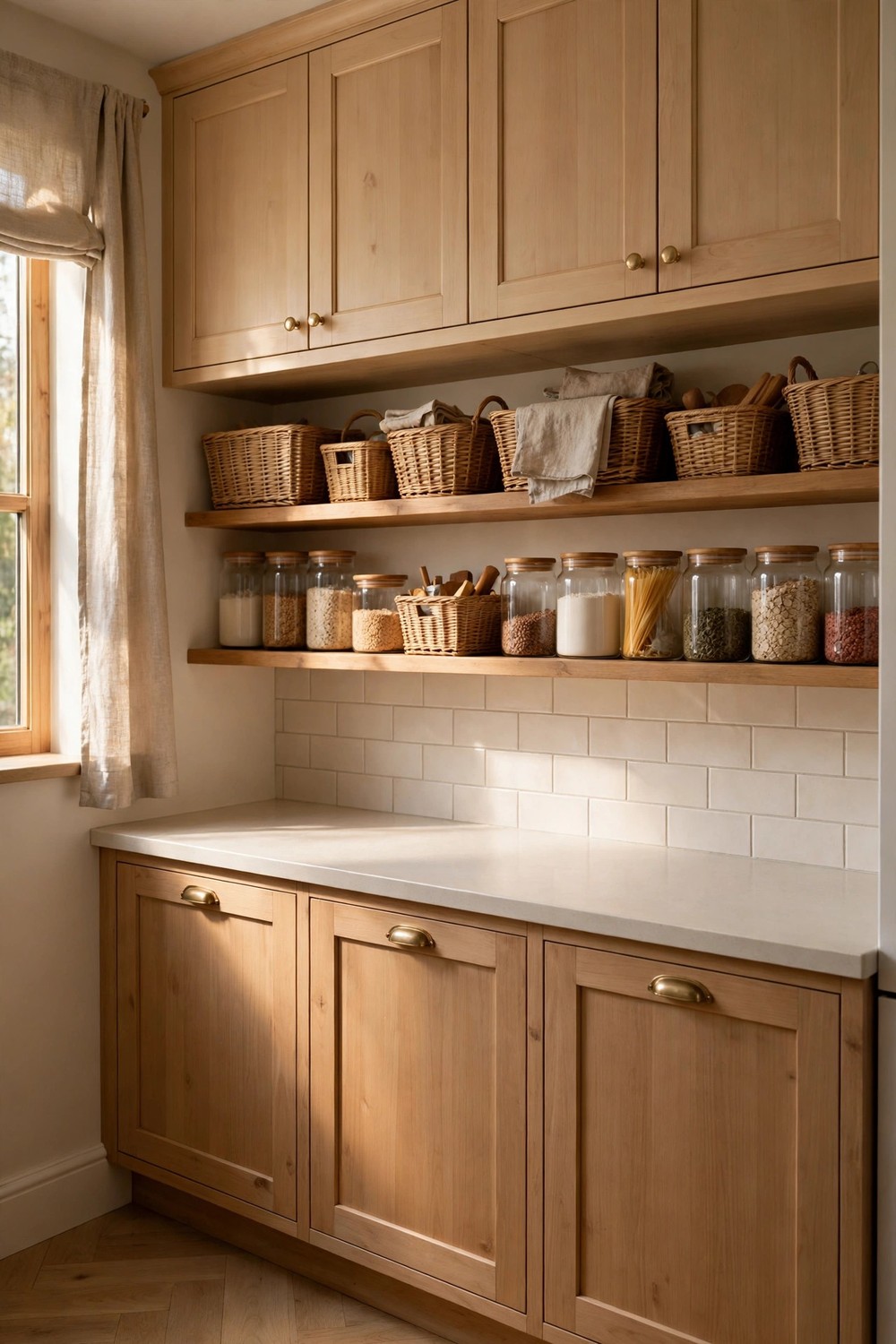
Kitchen organisation on a budget starts with a hard truth: the kitchen is not the problem. The buying is. A small kitchen can hold three sets of containers and still have nowhere to put the pasta, because the containers were bought before anyone decided what lives on each shelf. The fix is not a bigger spend. It is a rule that nothing new comes in until the kitchen has been emptied, sorted, and given one job per shelf — and a habit of using what is already there first.
Start with what you already have
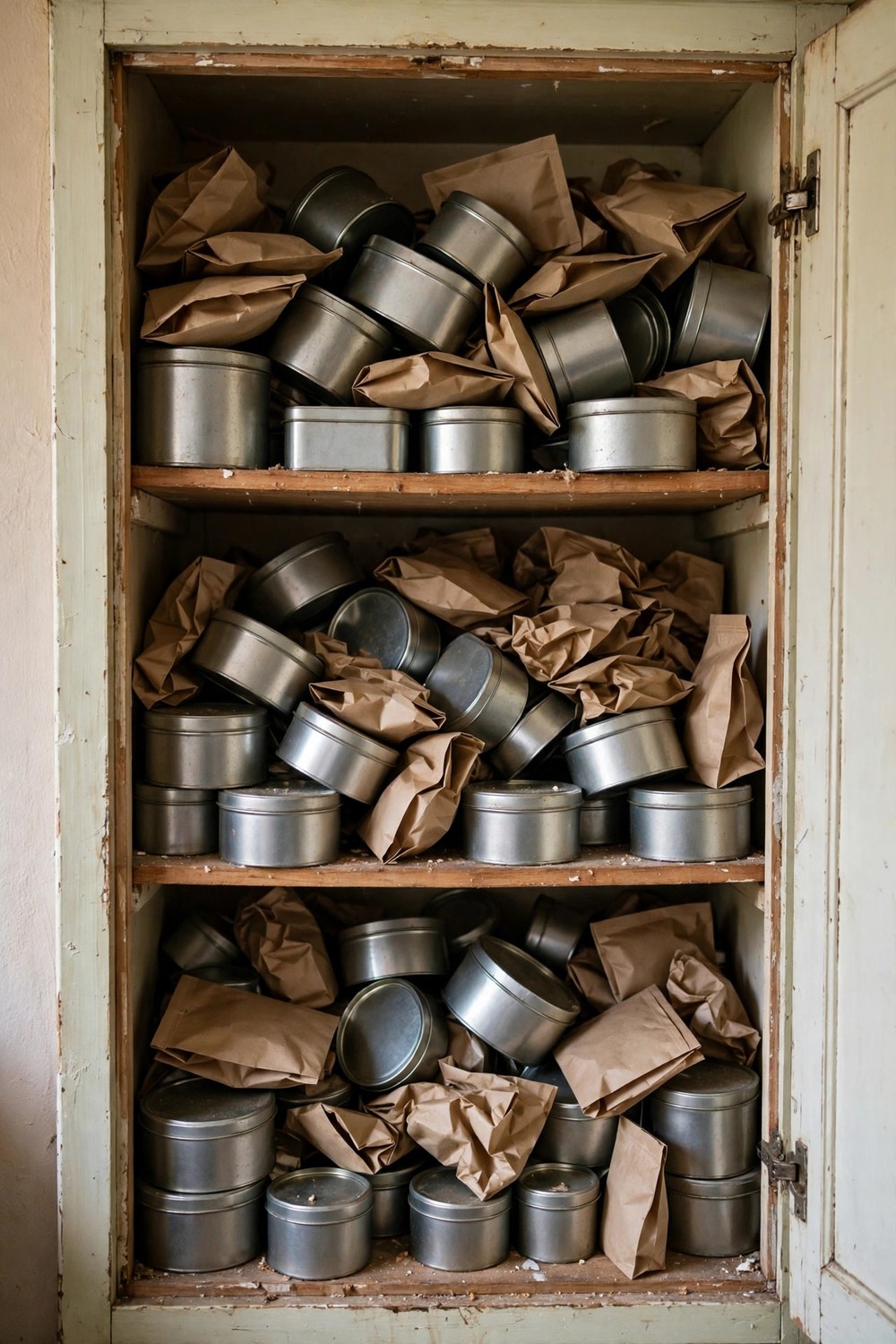
Kitchen organisation on a budget works best when the cupboard starts empty and the shopping list starts blank. Take everything out — every tin, packet, jar and half-used bag — and sort it into three piles: keep, use this week, and out. Keep means used in the last three months. Use this week means it goes into the next three dinners. Out means it leaves the kitchen. Then look at what is left before buying anything: the jars, the baskets, the racks the kitchen already owns. Most kitchens hold a year’s worth of containers that were bought for a job nobody defined, and the moment they get a job, the cupboard feels twice as big. (If the whole kitchen needs a reset first, the thirty-minute daily declutter is the place to start.)
One shelf, one job
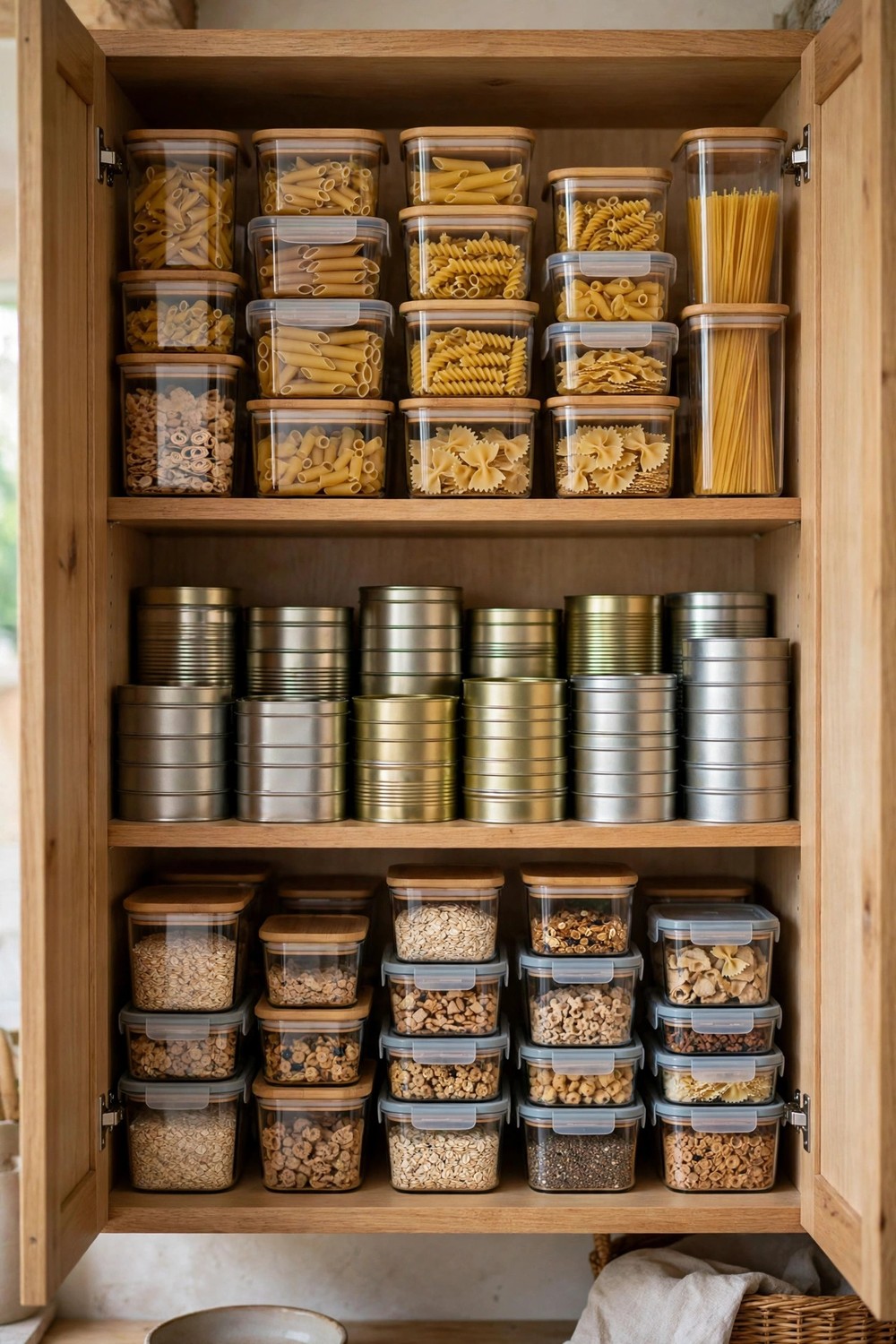
A kitchen is organised by shelves, not by size. One shelf for pasta and rice, one for tins, one for breakfast — and each shelf holds only its own things. A shelf with one job stays tidy; a shelf that holds a bit of everything becomes the shelf nobody opens. Put the daily things at arm height: the pasta and rice you use every day live where your hand already reaches, and the roasting tin lives above the cupboards. (If the pantry itself needs sorting first, the tiny-pantry weekend is the place to start.)
Jars, baskets and labels
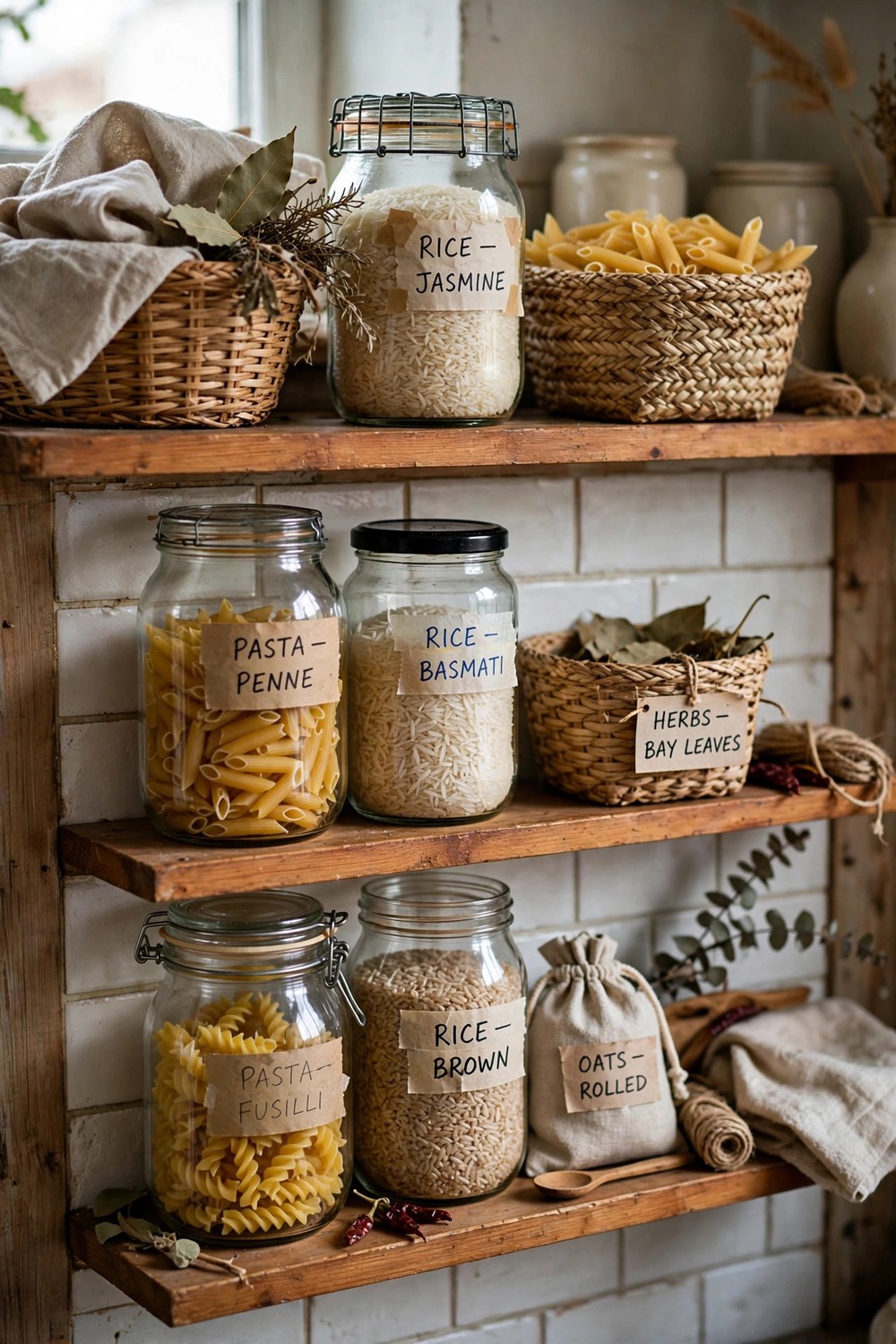
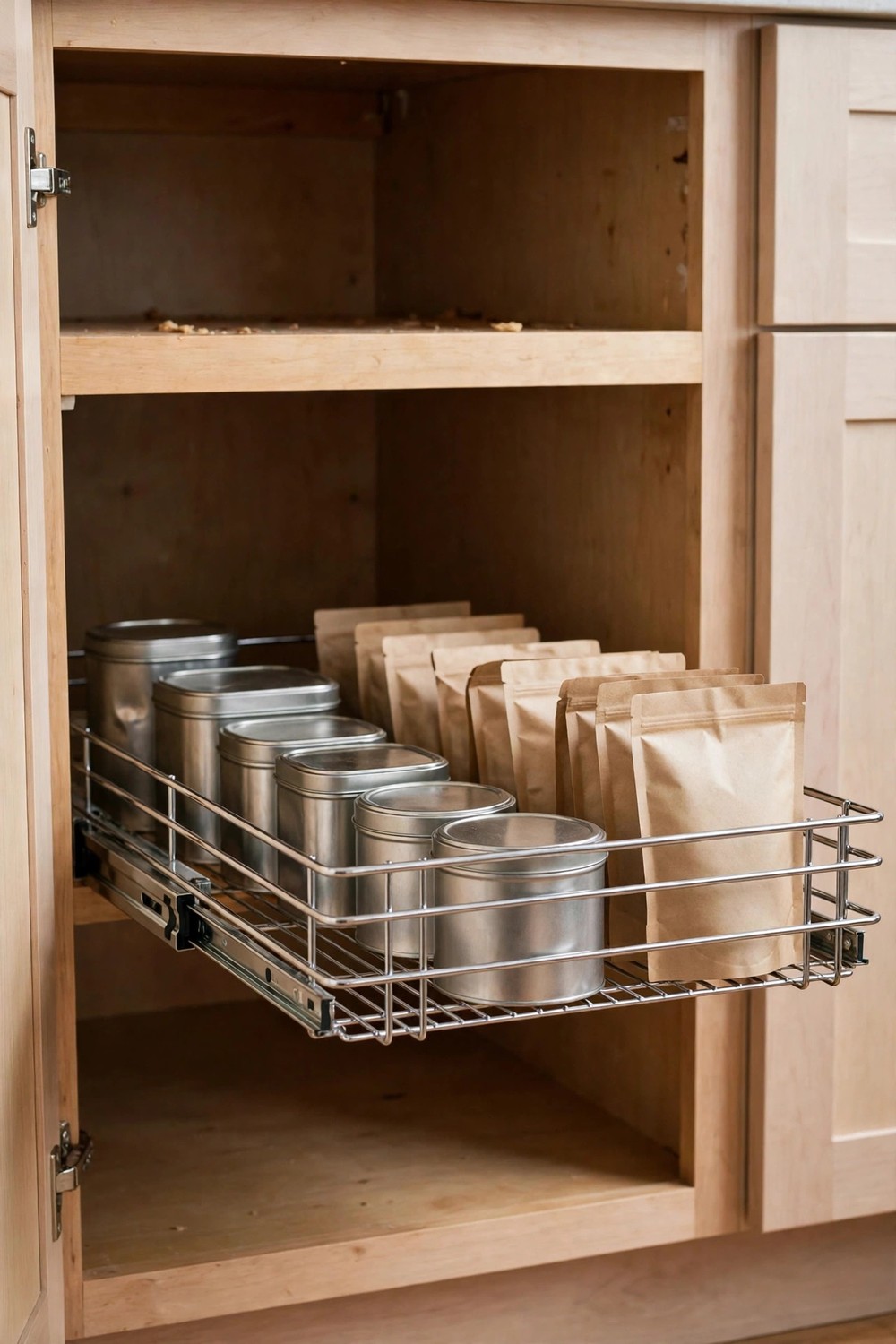
Dry food belongs in jars, and jars belong where you can see them. Pasta in a jar, rice in a jar, lentils in a jar — and you can see what is left at a glance, without opening a packet to check. A jar that holds one thing stays tidy; a packet that holds half a bag becomes clutter with a clip. Baskets take the rest: one basket per shelf, one job per basket, tins and packets in a row. Label the lid and the jar, and write the label by hand — printed labels peel off in the steam, and a jar with no label is a jar that gets thrown away.
The door and the wall
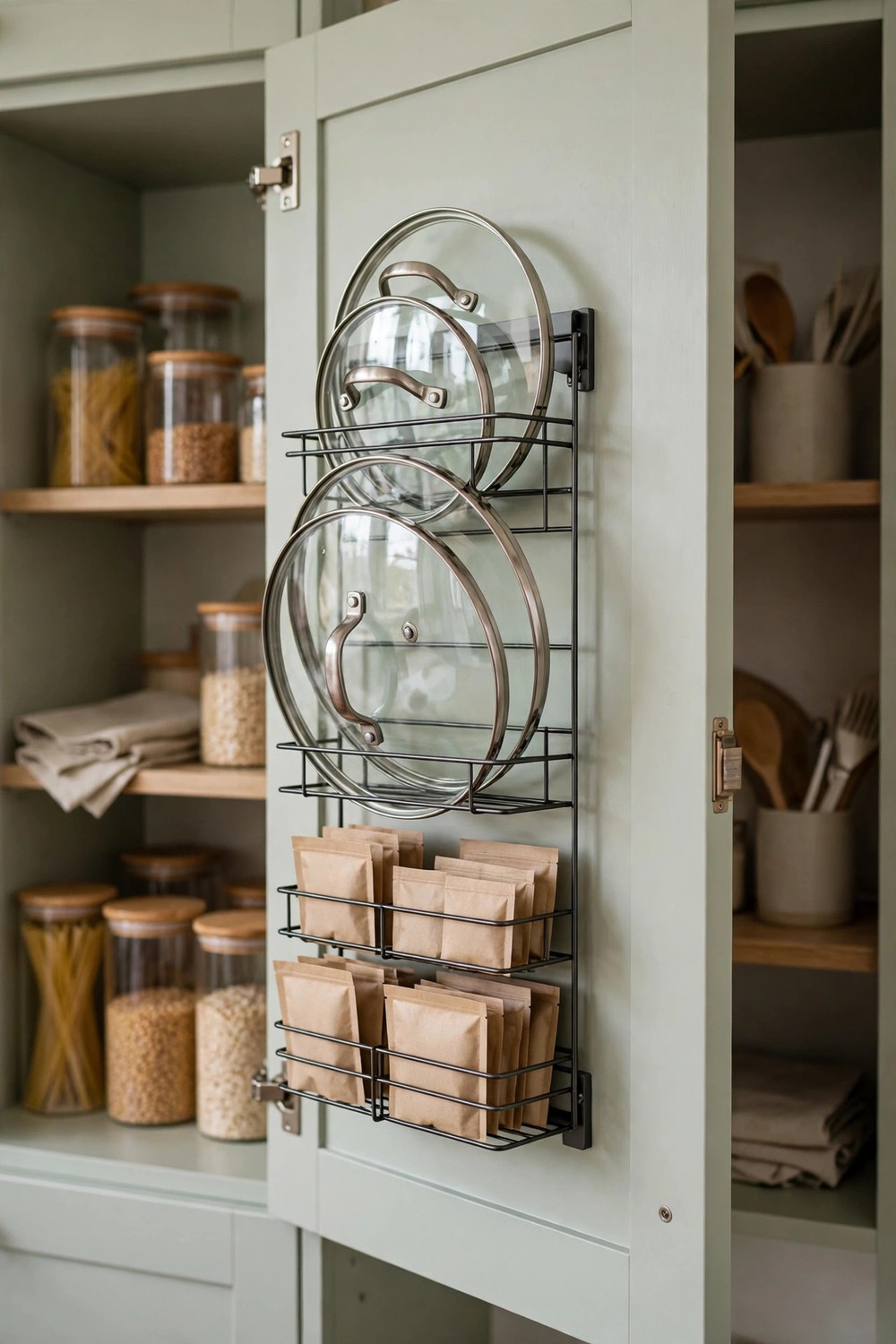
What cannot live on a shelf goes on the door or on the wall. A slim rack on the cupboard door takes lids and small packets, and frees a whole shelf inside. A rail on the wall takes the measuring cups and the scissors, and the worktop stays clear for cooking. The wall and the door were doing nothing, and now they hold the things the shelves could not. Nothing new was bought for either job — the rack came from the back of another cupboard, and the rail was already in a drawer.
The five-minute reset
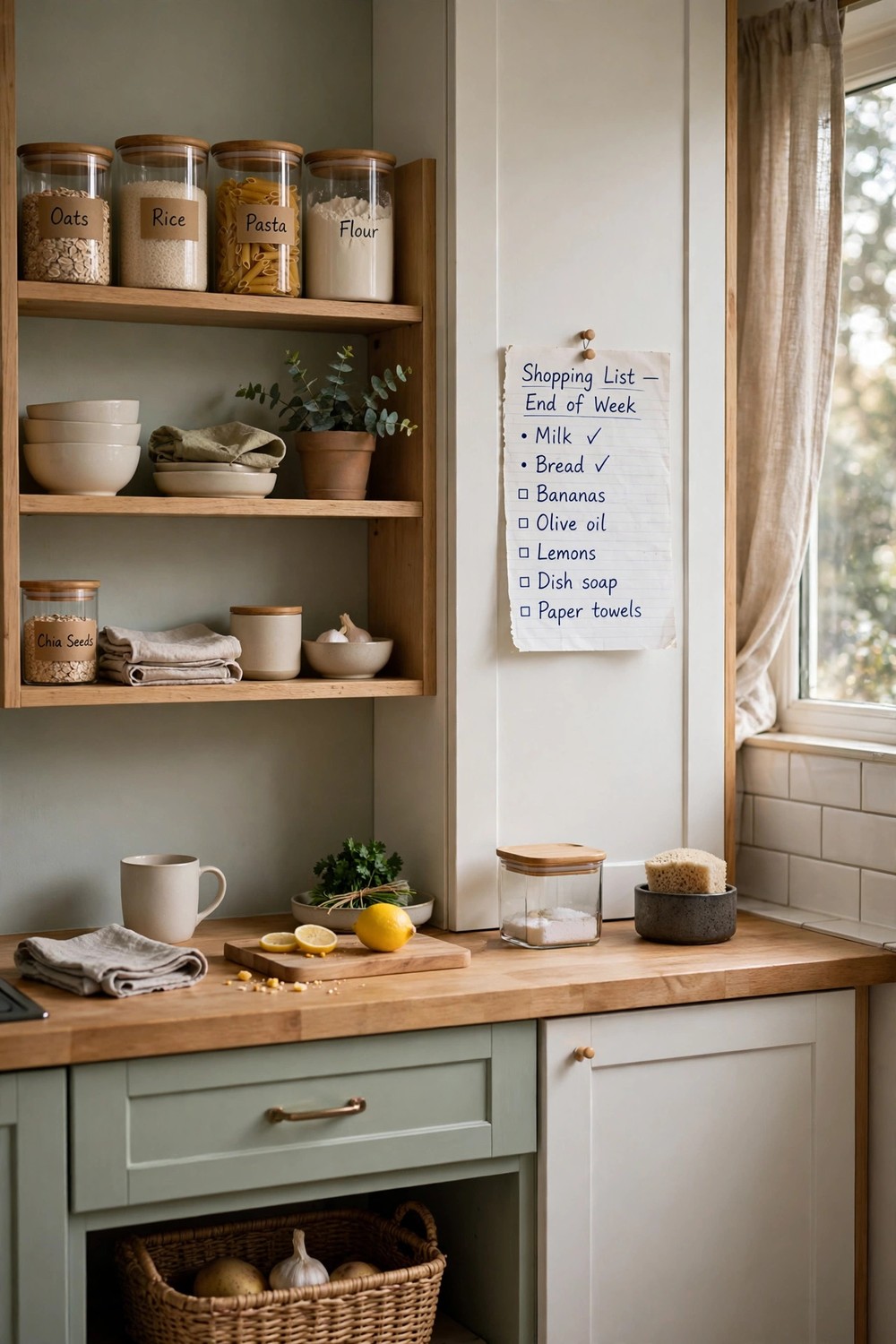
A tidy kitchen stays tidy by a habit, not by luck. Five minutes at the end of the week: every jar back in its place, shelf wiped, shopping list pinned by the door, kitchen ready for the shop. The same five minutes every week beats an hour of clearing on a Sunday, because the kitchen never gets the chance to fill up again. A clear worktop makes a small kitchen feel twice as big, and it costs nothing at all.
Start with one cupboard, not the whole kitchen
Do not try to organise the whole kitchen in one weekend. Pick one cupboard — the plates cupboard — and finish it properly: shelves stacked, daily plates at arm height, nothing else there. One finished cupboard changes how the whole kitchen feels, and it shows you what works before you spend anything on the next one. A kitchen gets easier one cupboard at a time.
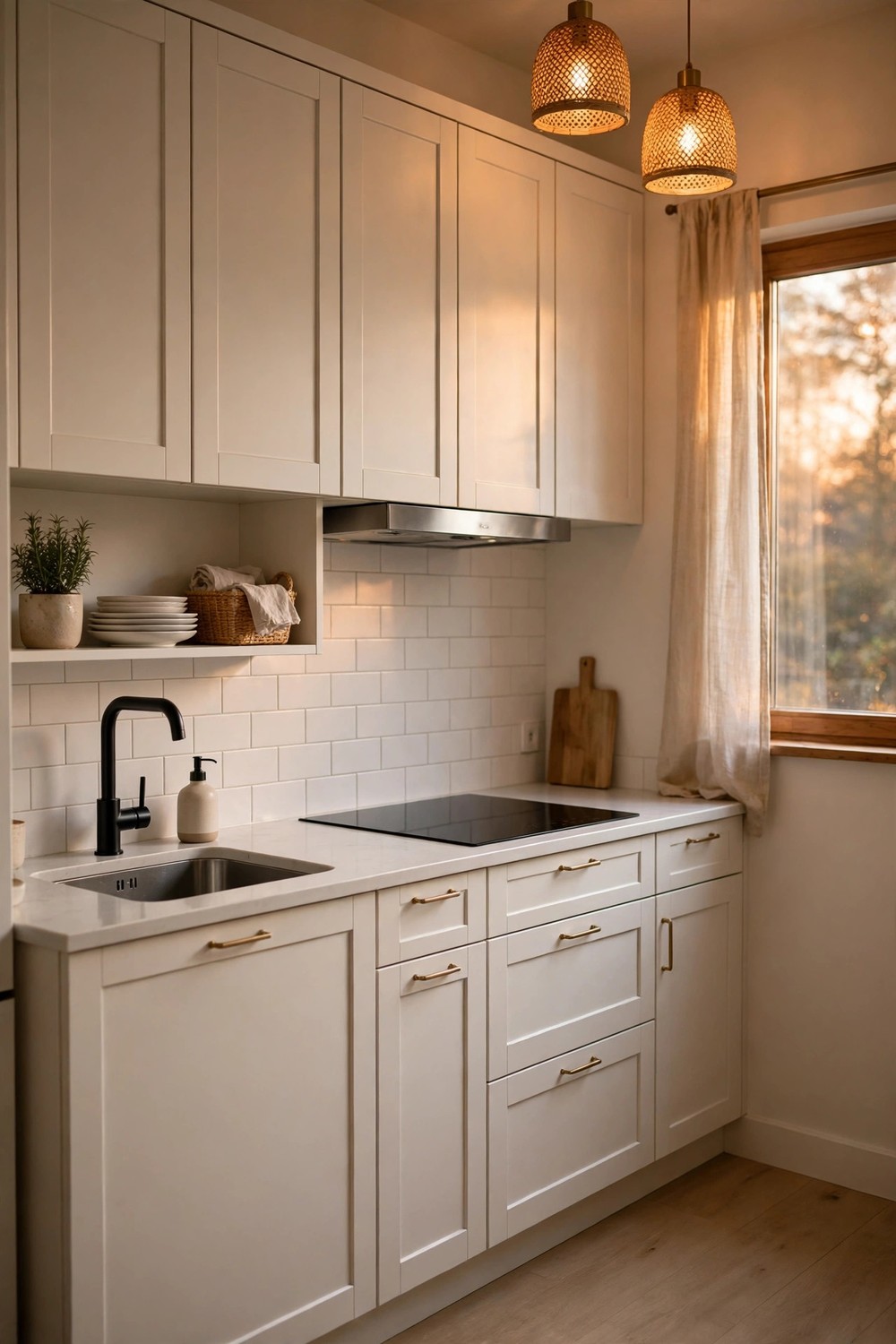
How do I organise my kitchen on a budget?
Empty one cupboard completely, keep only what you have used in the last three months, reuse the jars and baskets you already own, and give each shelf one job — pasta, tins, breakfast — with labels on everything you cannot see into.
What should I buy first for kitchen organisation?
Nothing — measure the cupboard first, decide what lives on each shelf, and only then buy the one thing that earns its place. A basket that does not fit is clutter with a handle.
How do I keep a kitchen organised without spending a lot?
Five minutes at the end of the week: every jar back in its place, shelf wiped, and the shopping list checked before the shop. The habit keeps the kitchen tidy, not the containers.
More small-space storage: small apartment storage ideas and the full home organisation collection.



0 Comments