
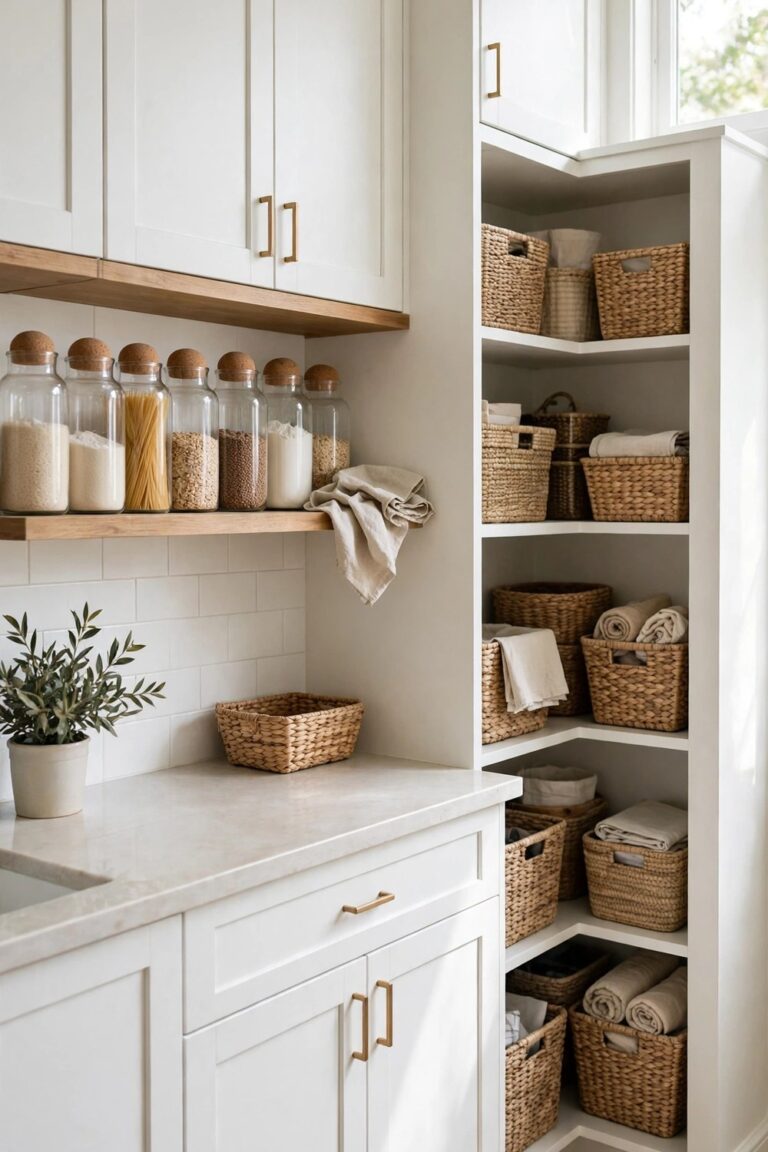

My kitchen used to fight me every morning. One drawer would not close, the worktop was a landing strip for post and shopping bags, and I could never find the baking tray when I actually needed it.
If you want to declutter small kitchen clutter for good, a short daily plan works better than one big weekend clear-out.
It was not a big kitchen problem. It was a too-much-stuff-in-too-little-space problem — and the fix did not need a renovation, a new kitchen, or a weekend of emptying every cupboard onto the floor.
Thirty minutes a day for a week changed it completely. Here is the exact plan I would use again, in the order that makes the biggest difference first.
Start with the 10-minute clear-out
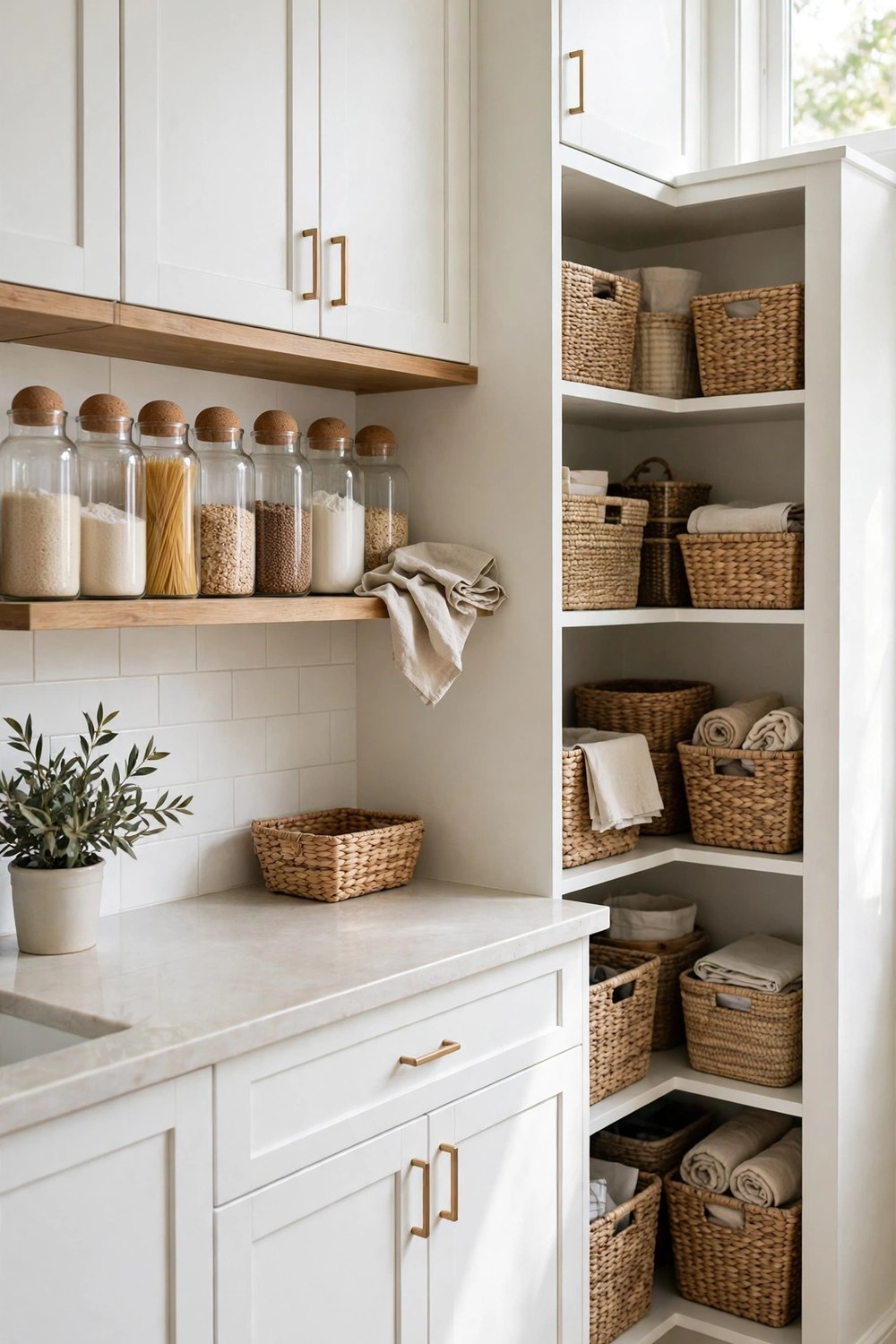
Do not start by buying boxes. Start by removing what is already in the way. Set a timer for 10 minutes and take out only the obvious things: broken gadgets, chipped mugs, duplicate spatulas, out-of-date food, and anything you have not used in a year. Put them straight into a bag for donation or the bin — do not make a ‘maybe’ pile on the worktop, because that pile becomes the new clutter. This one step usually frees a surprising amount of space. In a small kitchen, three or four items off a shelf can be the difference between calm and chaos.
Give everything a home
The easiest way to declutter small kitchen spaces is to give every item one home near where you use it.
A small kitchen works when every item has one place, and that place is near where you use it.
- Pans near the hob, not across the room
- Everyday plates and glasses at eye level
- Baking things together on one shelf
- Cleaning supplies under the sink, in one caddy you can lift out
If something has no home, it will live on the worktop. That is the rule to remember when you are tempted to keep ‘just one more’ gadget.
The 7-day plan
You do not need to do it all at once. One small area a day is enough — and it is much easier to keep going.
It is a simple Home Organisation routine you can repeat whenever things start to pile up.
- Day 1 — Worktops: Clear everything off. Only put back what you use daily. The rest finds a cupboard home or leaves.
- Day 2 — The junk drawer: Empty it, wipe it, and keep only what fits in a small tray or divider.
- Day 3 — Pantry and food cupboards: Check dates, group like with like, and put the things you reach for most at eye level.
- Day 4 — Fridge: One shelf at a time. Wipe as you go and use clear boxes for small items that get lost at the back.
- Day 5 — Pots, pans and lids: Keep the ones you actually cook with. Stack lids vertically in a rack or a simple file organiser.
- Day 6 — Under the sink: One caddy for cleaning, one small bin for recycling bags. Nothing loose.
- Day 7 — The final tidy: Walk through with fresh eyes, label the spots that still confuse you, and enjoy a worktop you can actually cook on.
Small storage wins that do not cost much
You do not need expensive systems. In a small or rented kitchen, these are the changes that help most:
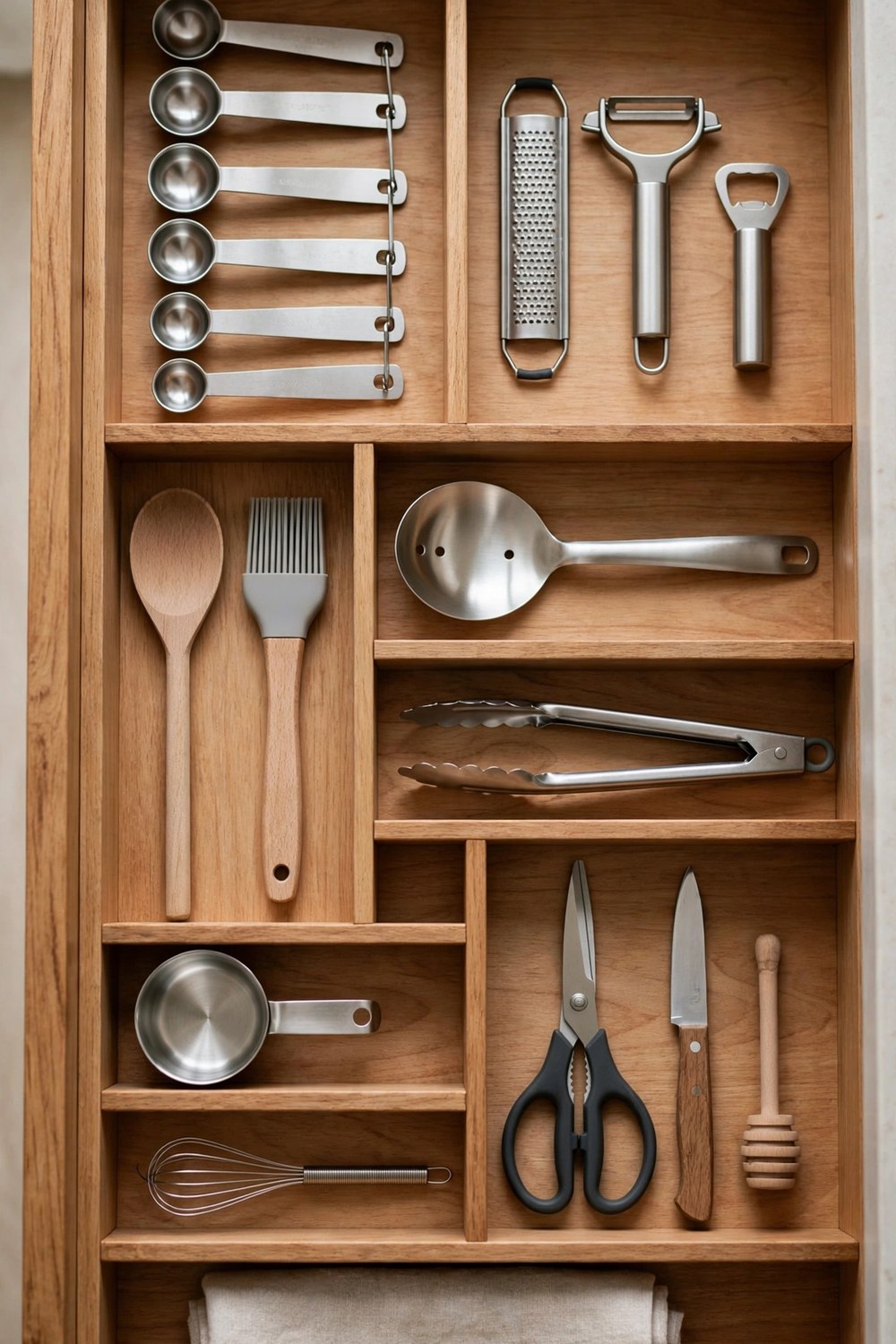
- Use the inside of cupboard doors for measuring spoons, wraps, and cleaning cloths. A couple of small hooks do the job, and nothing is drilled in.
- Go vertical. Stackable shelves inside cupboards, a lid rack, and tall, slim containers use the height you already have.
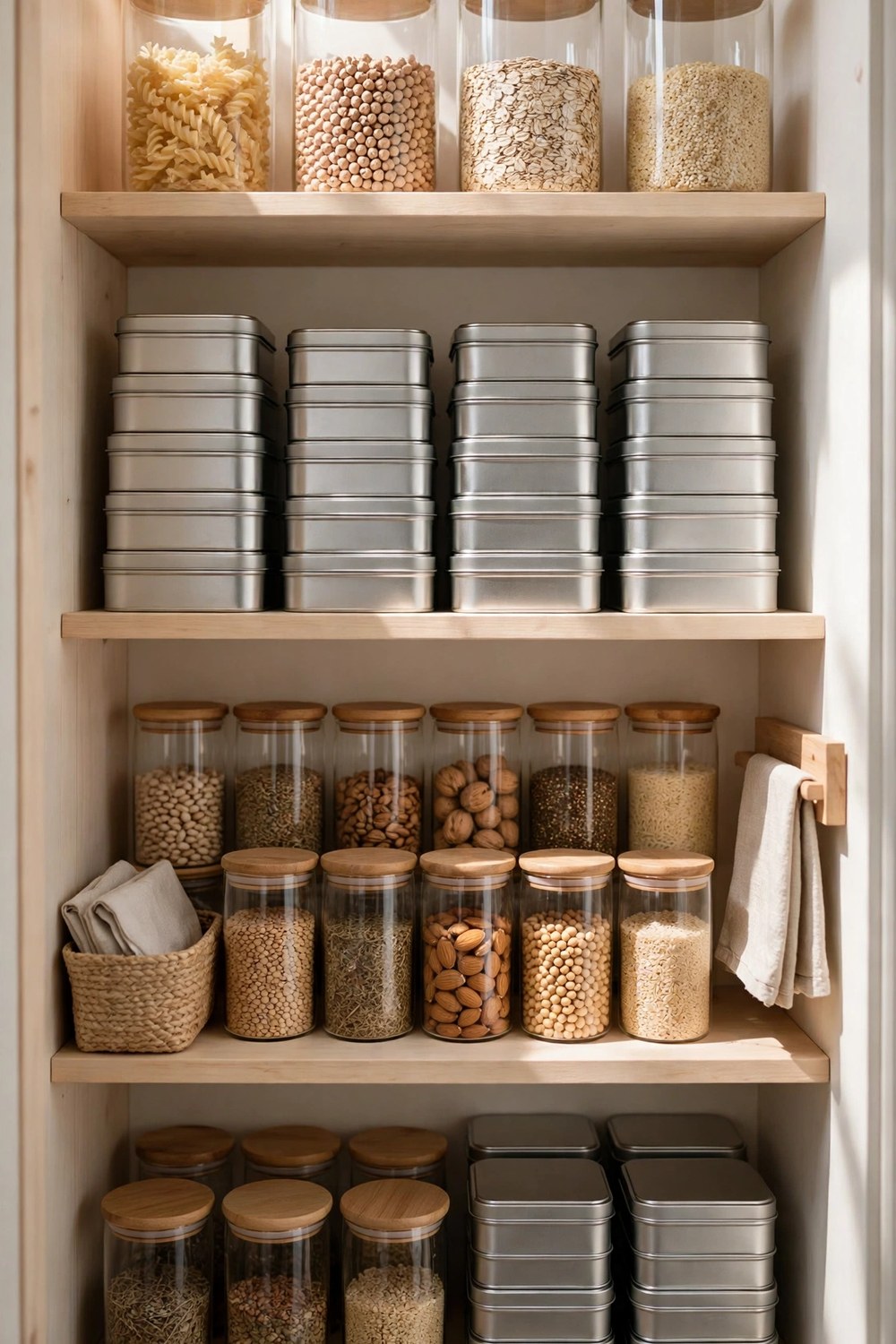
- Decant the everyday things. Rice, pasta, oats, and flour in clear jars mean you can see what you have at a glance — and you stop buying duplicates.
- Keep a ‘one in, one out’ rule. A new mug in means an old one out. It sounds strict, but it is what stops a small kitchen filling up again in a month.
Keep it that way with a 5-minute reset
The tidy part is easy. Keeping it tidy is the real test — and that comes down to a tiny nightly habit. Every evening, set a timer for five minutes: put dishes away, wipe the worktops, and return anything that has wandered to its home. Five minutes at night saves thirty minutes of frustration in the morning.
Once a week, pick one small spot — a drawer, a shelf, the fridge door — and give it a quick check. Small kitchens do not need big clean-outs if you catch the creep early. A calm kitchen is not about having less for the sake of it. It is about being able to find what you need, cook without clearing a space first, and actually enjoy the room you have. Start with Day 1 today. Thirty minutes is all it takes.
How long does it take to declutter a small kitchen?
About 30 minutes a day for a week is enough for most small kitchens. Tackle one area a day — worktops, drawers, pantry, fridge, pots and pans — instead of emptying everything at once.
What should I declutter first in a small kitchen?
Start with the worktops. Clear them completely, then only put back what you use every day. It gives you an instant win and makes the rest of the job feel much easier.
How do I keep a small kitchen organised?
To declutter small kitchen spaces and keep them tidy, give everything one home near where you use it, use a “one in, one out” rule for new items, and do a 5-minute reset each evening. Check one small area each week so clutter does not build up again.
Can I organise a small kitchen in a rental?
Yes. Use hooks, stackable shelves, baskets, and drawer dividers that do not need drilling or permanent changes. Clear jars and labels also help, and they move with you when you leave.



0 Comments