
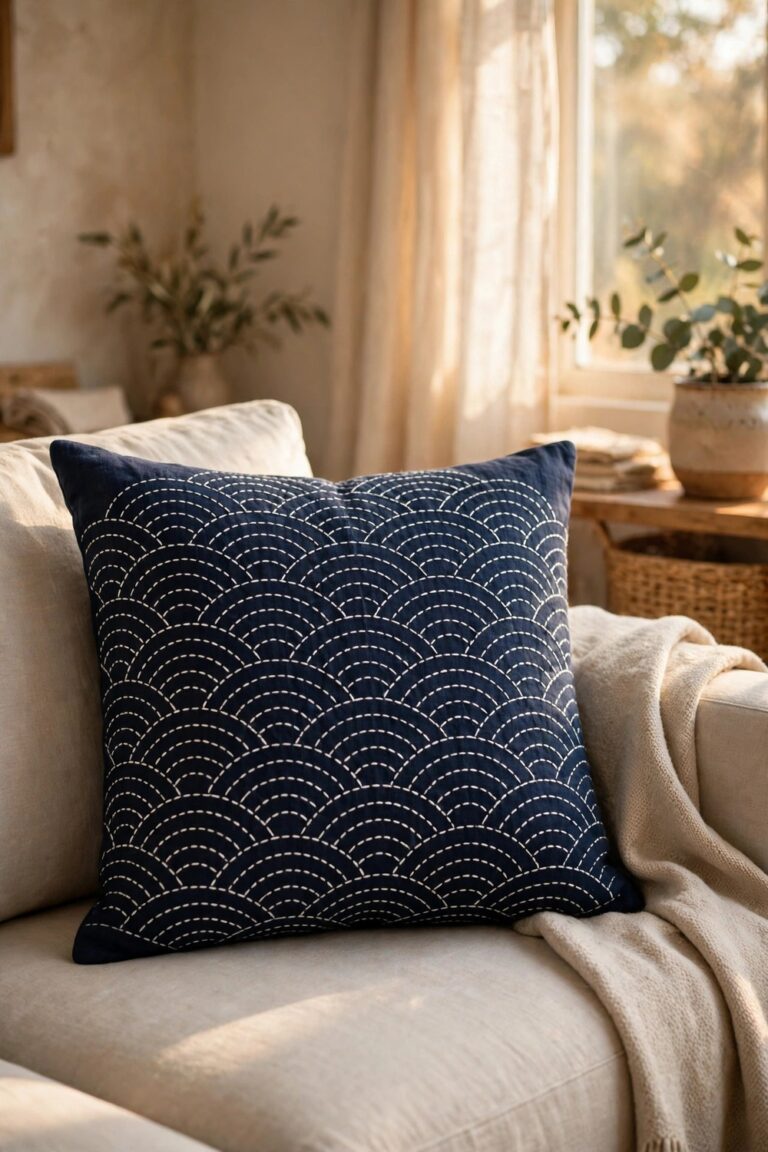

A sashiko cushion cover is a plain cushion given a pattern of simple running stitches — the Japanese visible-mending look, and the fastest-growing craft search in Pinterest’s 2026 Hobbies Report. This is the no-sew version: the stitching is decorative and done by hand, or skipped entirely with iron-on and fabric glue. Either way, the cushion ends up the cosiest thing in the room.
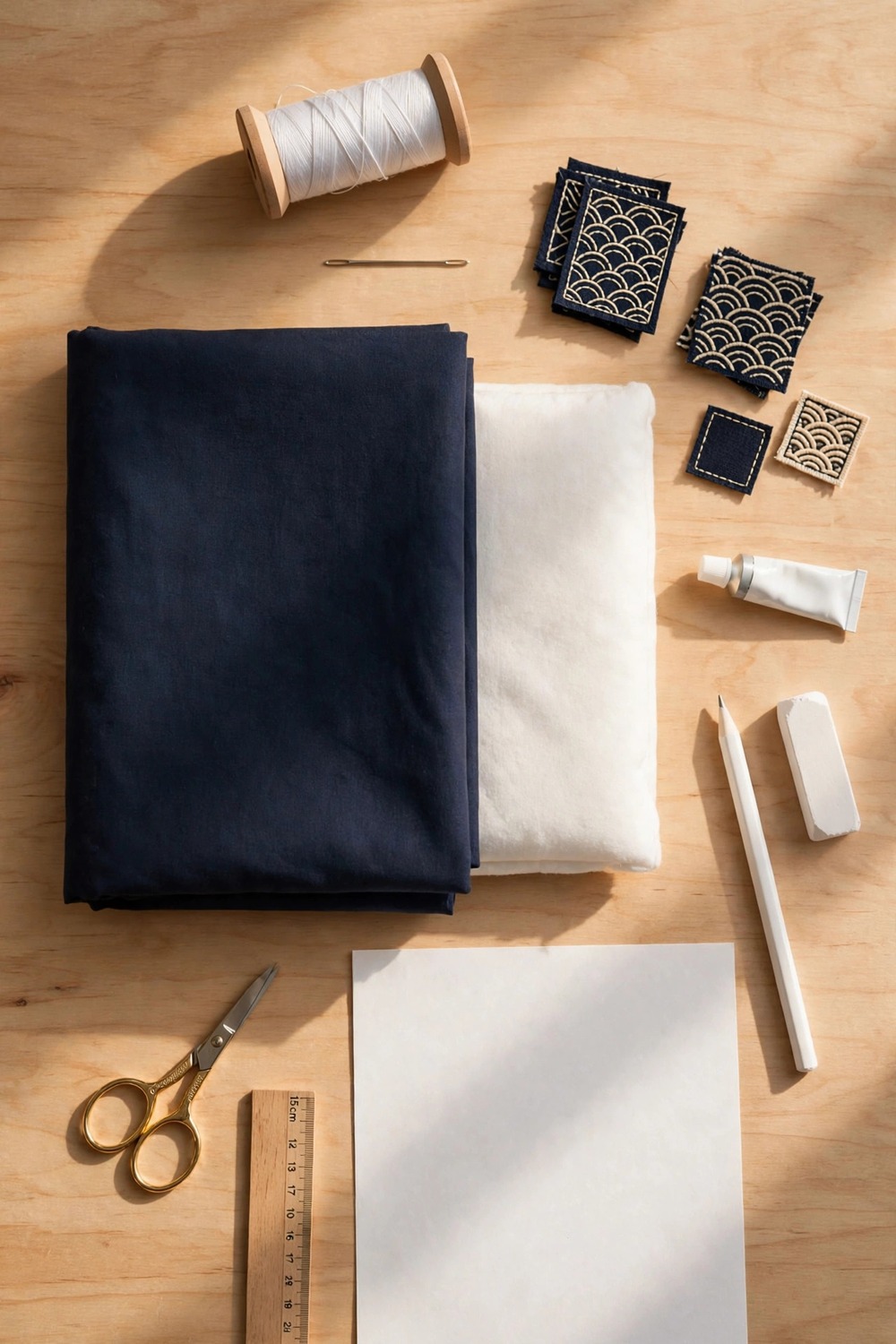
You’ll need
Supplies
- Plain cushion cover, solid colour, cotton or linen
- Cushion pad to fit the cover
- Contrasting thread (white on dark fabric shows best)
- Iron-on sashiko patches (for the no-stitch route)
- Fabric glue
- Fabric pencil or tailor’s chalk
- Paper for the pattern
Tools
- Hand-sewing needle
- Small scissors
- Iron
- Ruler

A sashiko cushion cover is a plain cushion given a pattern of simple running stitches — the Japanese visible-mending look, and the fastest-growing craft search in Pinterest’s 2026 Hobbies Report. This is the no-sew version: the stitching is decorative and done by hand, or skipped entirely with iron-on and fabric glue. Either way, the cushion ends up the cosiest thing in the room.
Total Time: 1 hour
Pick the cushion and cover
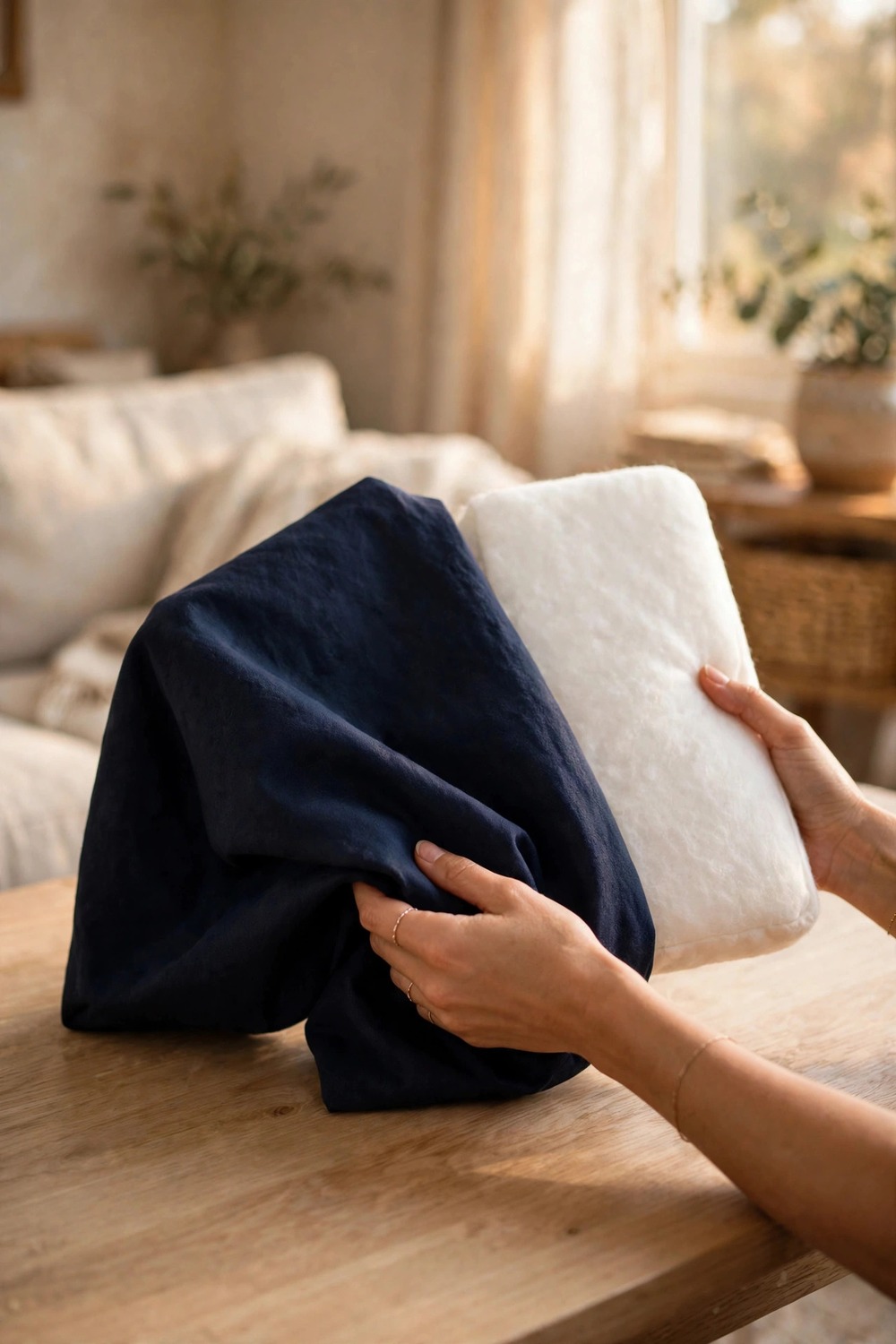
Choose a plain cushion cover in a solid colour — cotton or linen works best — and a cushion pad that fits it snugly. A light cover shows the sashiko pattern best.
Choose your pattern
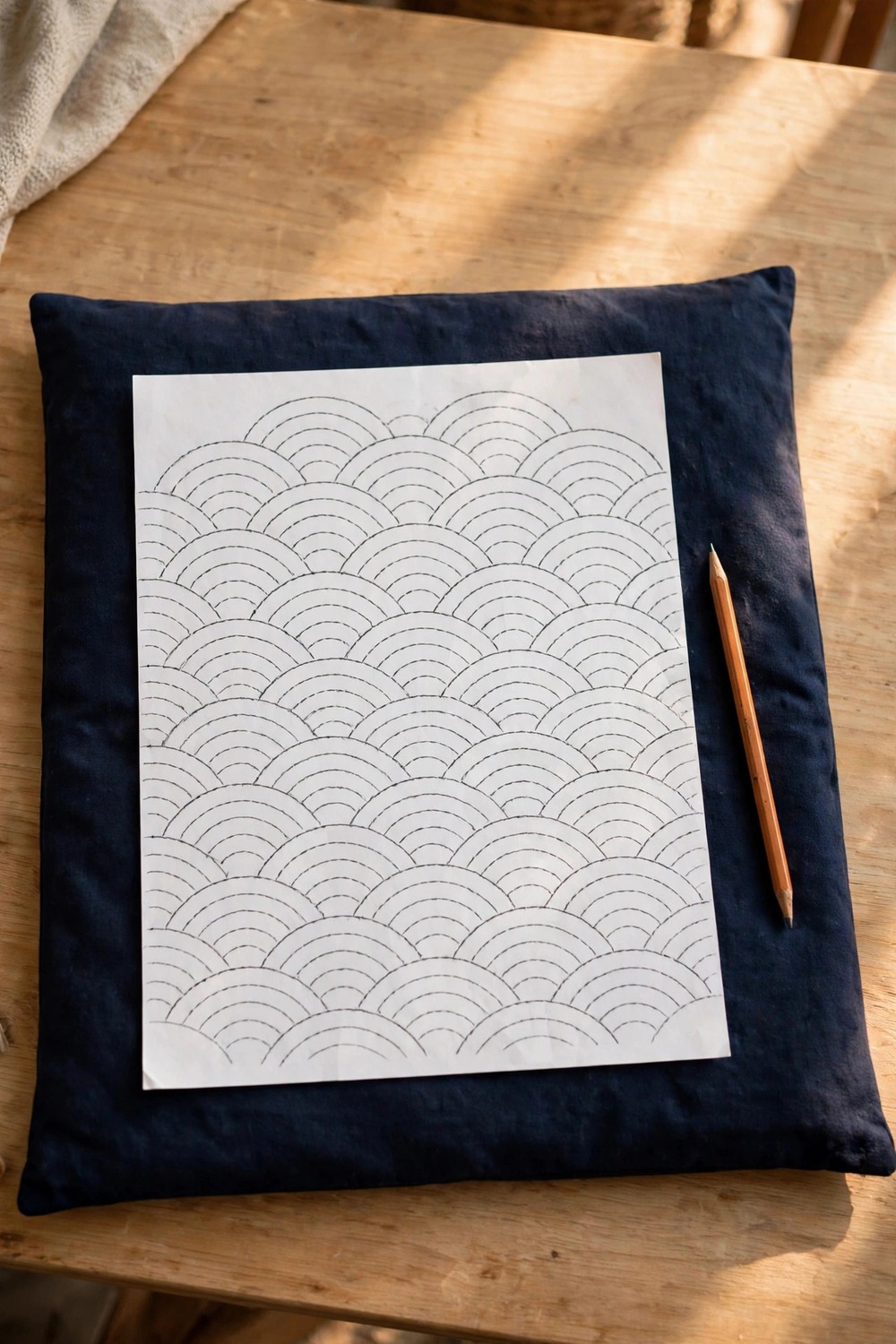
Pick a simple sashiko pattern — a wave, a grid, or scattered crosses — and print or draw it on paper at the size of the cover. Simple patterns look best; fiddly ones blur at cushion size.
Transfer the pattern
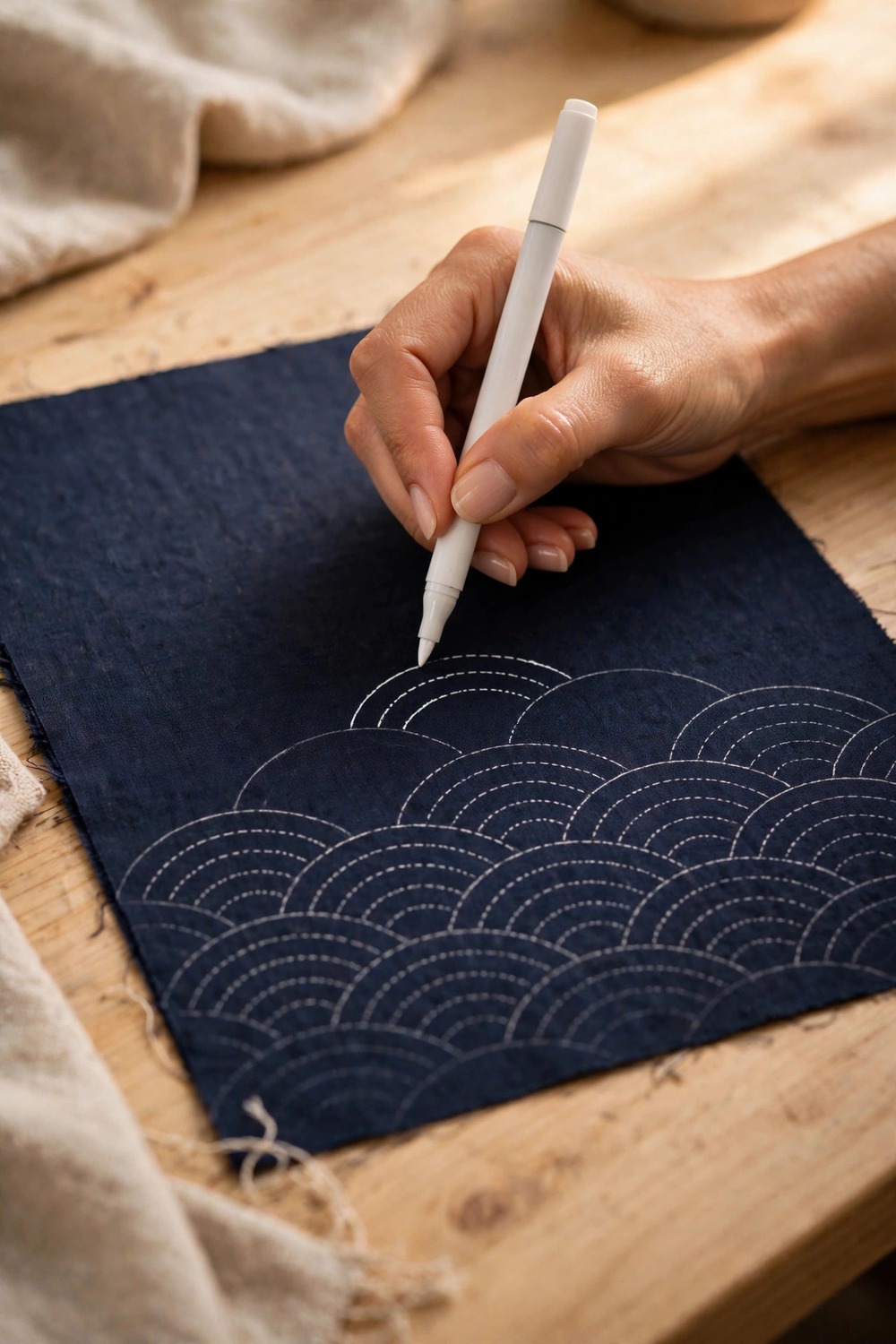
Lay the pattern on the cover and trace it lightly with a fabric pencil or chalk. Keep the lines light — they wash out, but heavy marks can show through pale fabric.
Stitch or stick
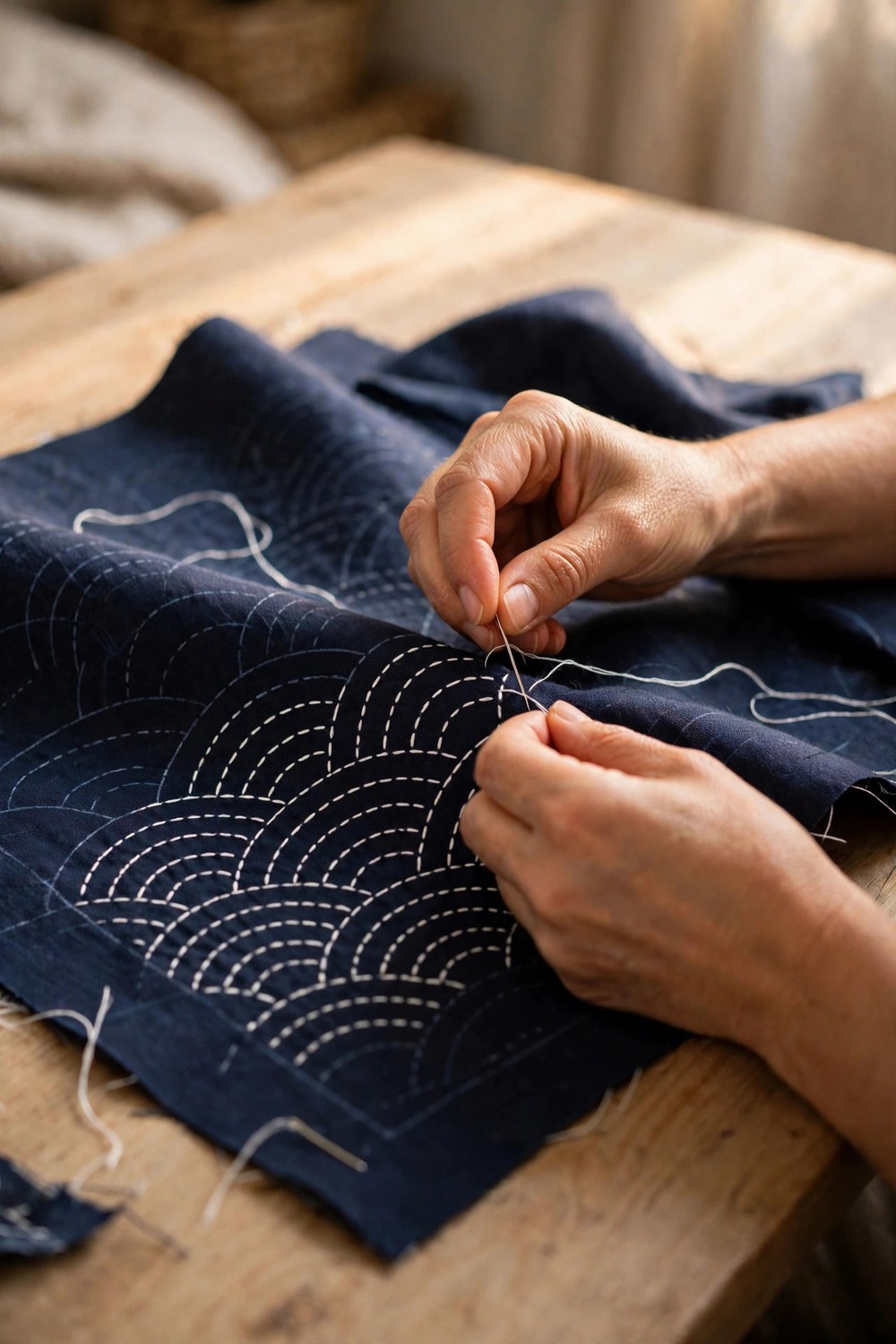
Follow the lines with simple running stitches in a contrasting thread, or press iron-on sashiko patches along the lines and fix the edges with fabric glue. Short, even stitches look neater than long ones.
Finish the back
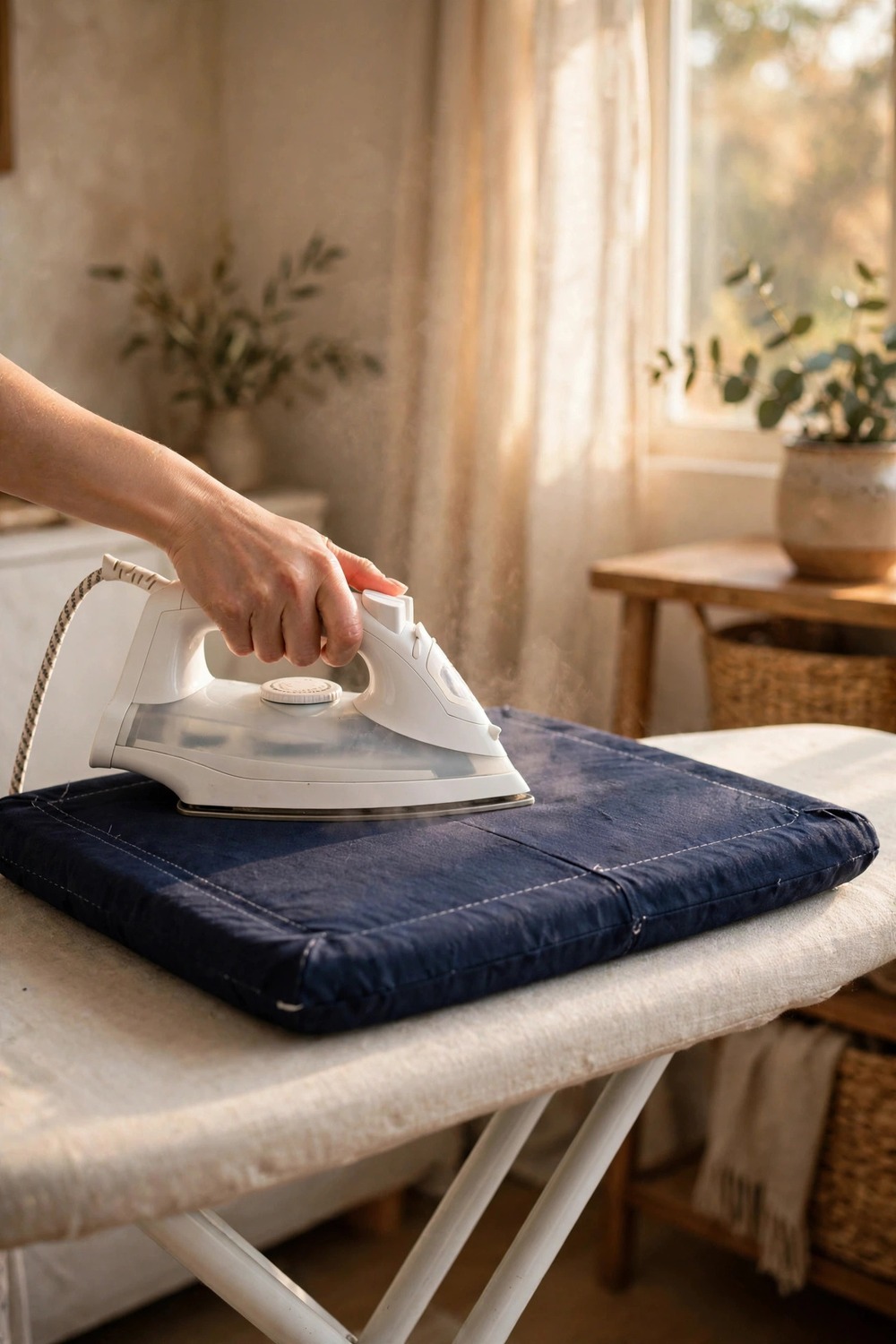
Turn the cover inside out and trim any loose thread ends, then press the seams flat with a warm iron. A tidy inside is what stops the cover puckering on the cushion.
Let glue dry
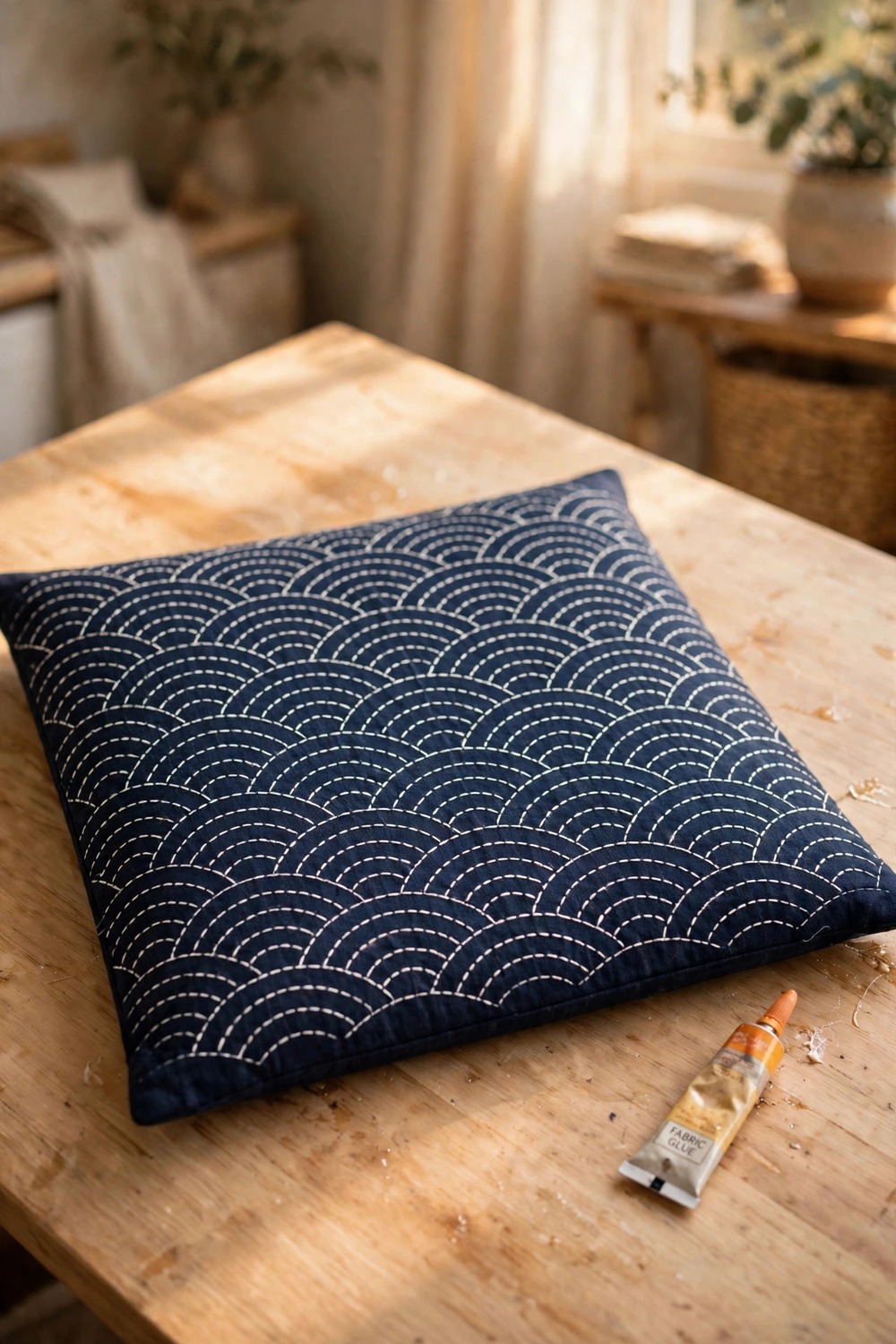
If you used fabric glue, leave the cover flat for a full day so the glue sets properly. Touching it too soon lifts the patches and spoils the pattern.
Dress the cushion
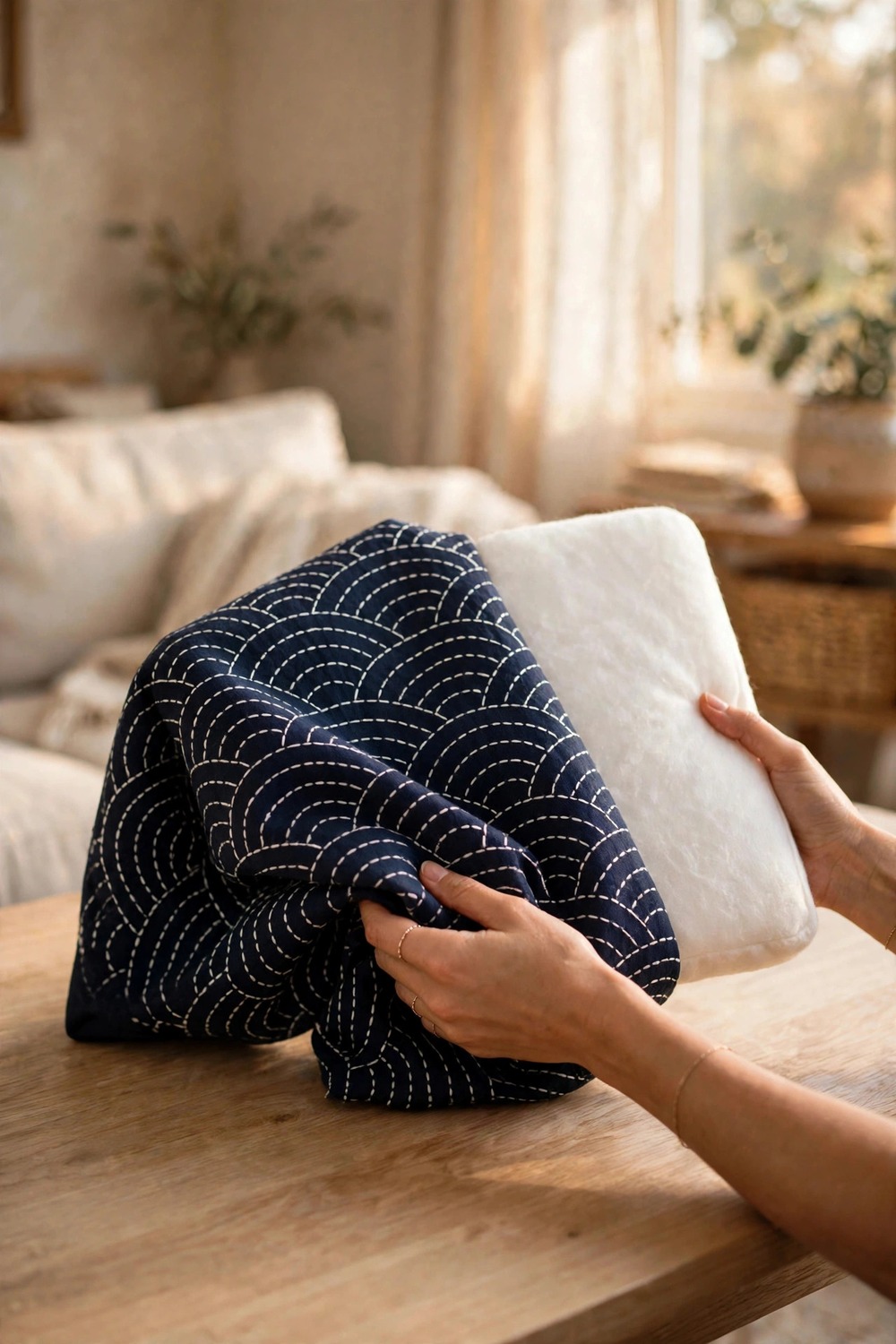
Slide the cushion pad into the finished cover, plump the corners, and put it where you sit most. The pattern shows best where the light falls on it.

Keep the rhythm, not a race
Keep stitches short and even — sashiko is a rhythm, not a race. If a line goes wonky, unpick just that line; the pattern forgives a restart. Wash the cover inside out on a gentle cycle so the stitching stays put, and if the cushion is for a chair that gets daily use, pick the stitched route over glue — stitches survive washing better. (If the bedroom itself needs sorting first, the small bedroom storage ideas are the place to start.)
Do I need a sewing machine for a sashiko cushion cover?
No — sashiko is hand stitching, and this version can skip stitching entirely with iron-on patches and fabric glue.
Is sashiko hard for a beginner?
No — it is one stitch, the running stitch, repeated in a pattern. The pattern does the work; the stitch stays the same throughout.
What fabric works best?
Plain cotton or linen in a solid colour. The pattern needs a calm background — busy prints fight with the stitching.
Can I wash a sashiko cushion cover?
Yes — turn it inside out, wash gently, and air dry. The stitches are decorative, so a gentle cycle keeps them safe.
For more ways to keep the house calm and tidy, see the small apartment storage ideas and wardrobe organisation ideas, or browse everything in Home Organisation.



0 Comments