
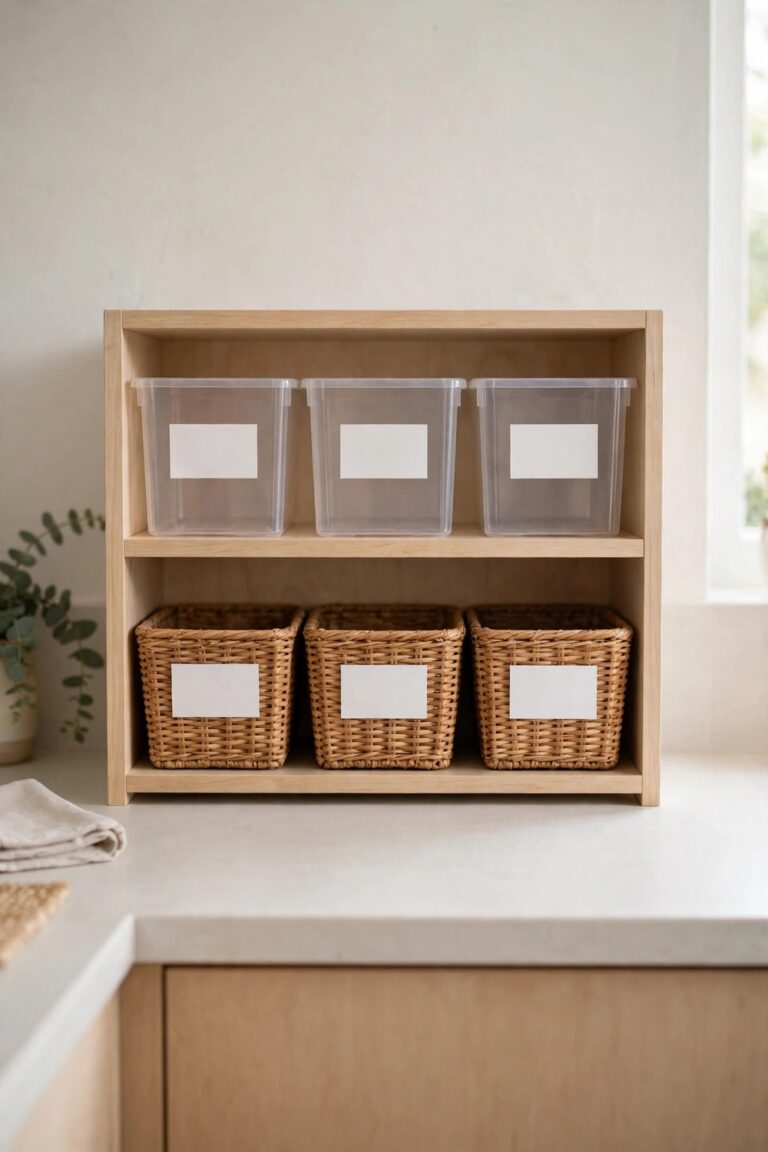

Dollar store kitchen organisation starts with a simple idea: the cheapest find is the one that already fits. A small kitchen does not need a new storage system. It needs a few bins, a few baskets, and a rule that every bin has one job, in one place, where your hand already reaches. The trick is not buying more. It is buying last — after the cupboard is empty, the shelves are decided, and the measurements are written down.
Measure first, buy last
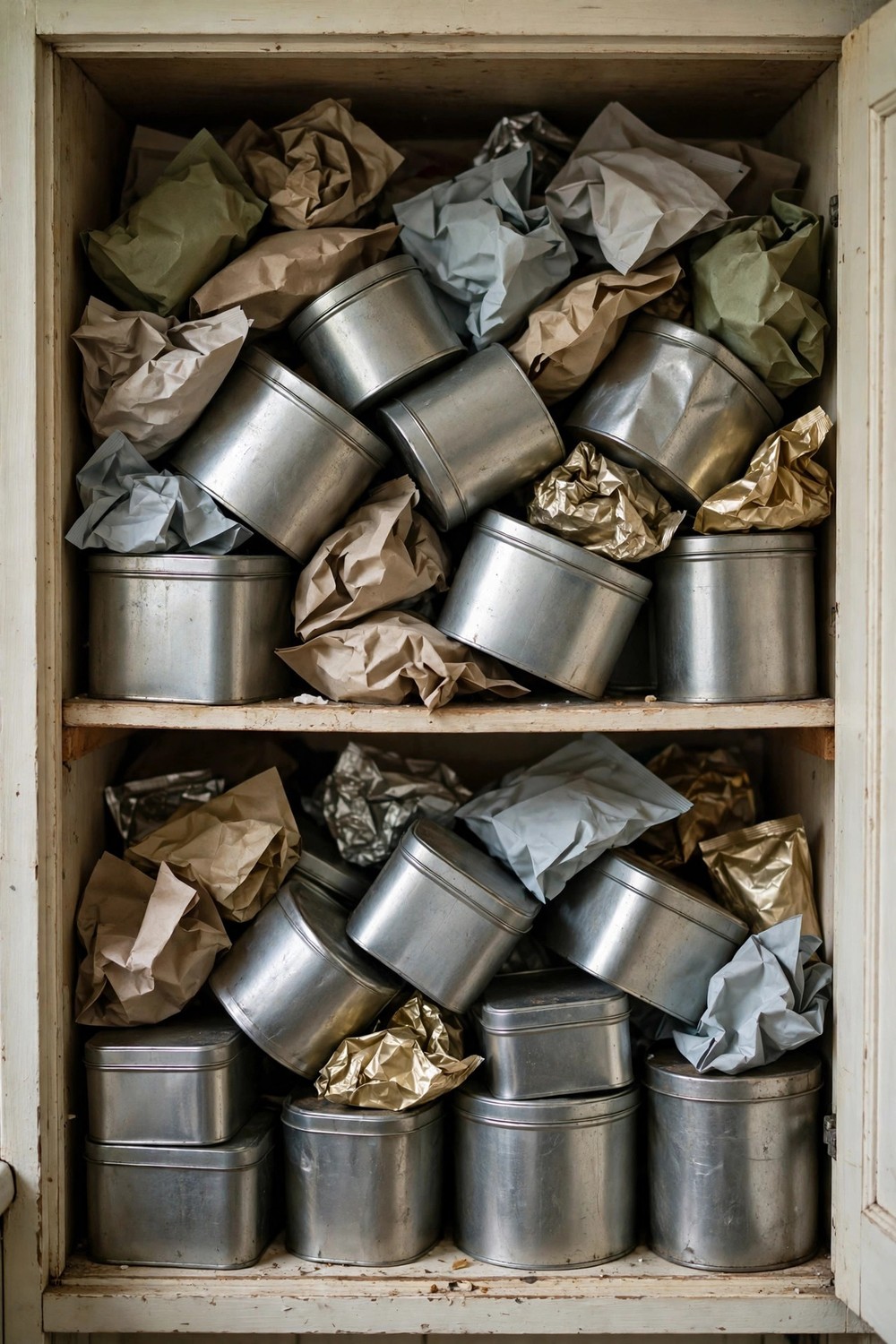
Dollar store kitchen organisation works best when the shopping trip comes last. Take everything out of one cupboard — every tin, packet, jar and half-used bag — and sort it into three piles: keep, use this week, and out. Keep means used in the last three months. Use this week means it goes into the next three dinners. Out means it leaves the kitchen. Then measure the cupboard: the width of each shelf, the height between shelves, the depth of the door. Write the measurements on the shopping list, and only then look at bins. A bin that does not fit is clutter with a handle, and a basket that is too tall for the shelf is a basket that lives on the worktop forever. (If the whole kitchen needs a reset first, the thirty-minute daily declutter is the place to start.)
One bin, one job
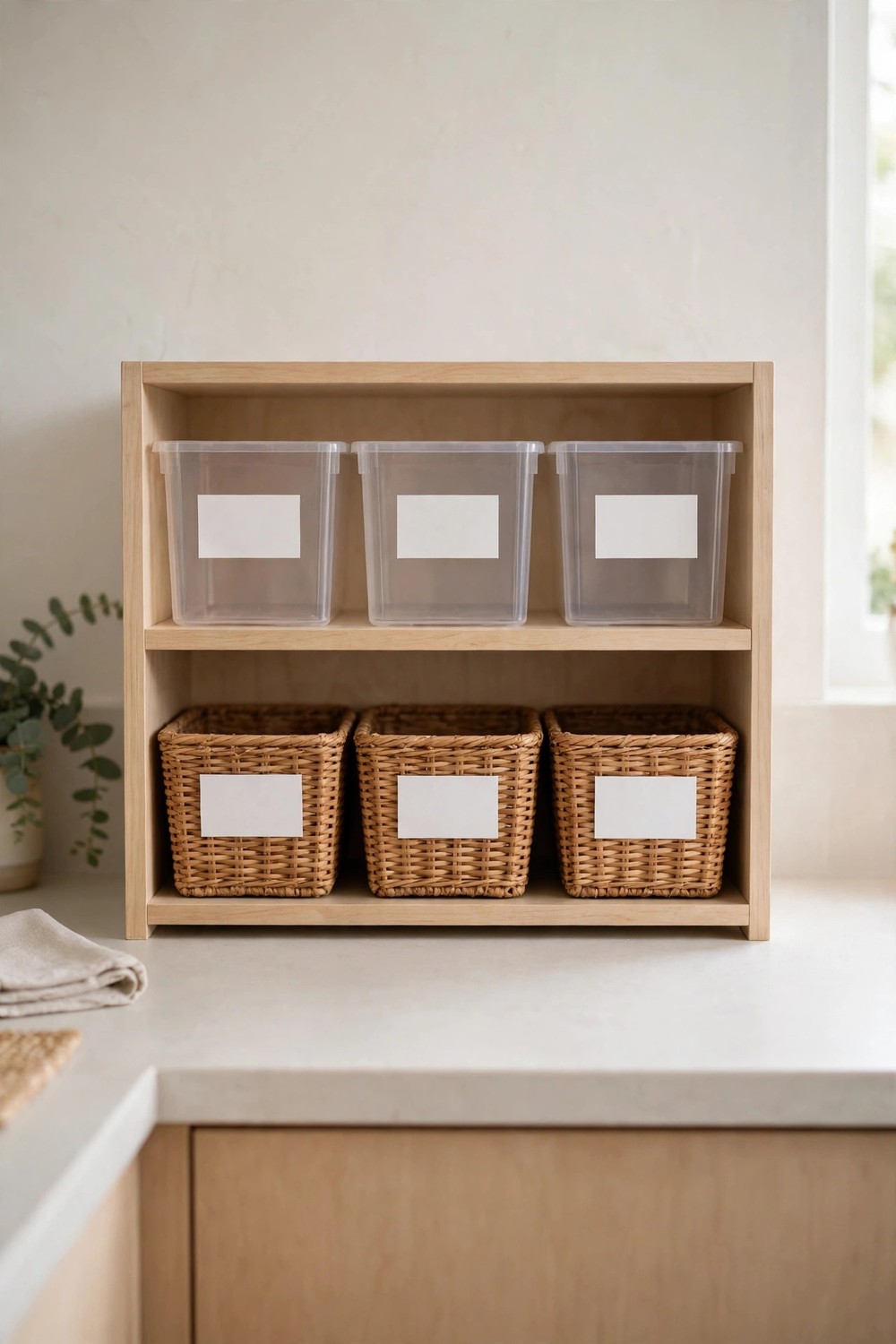
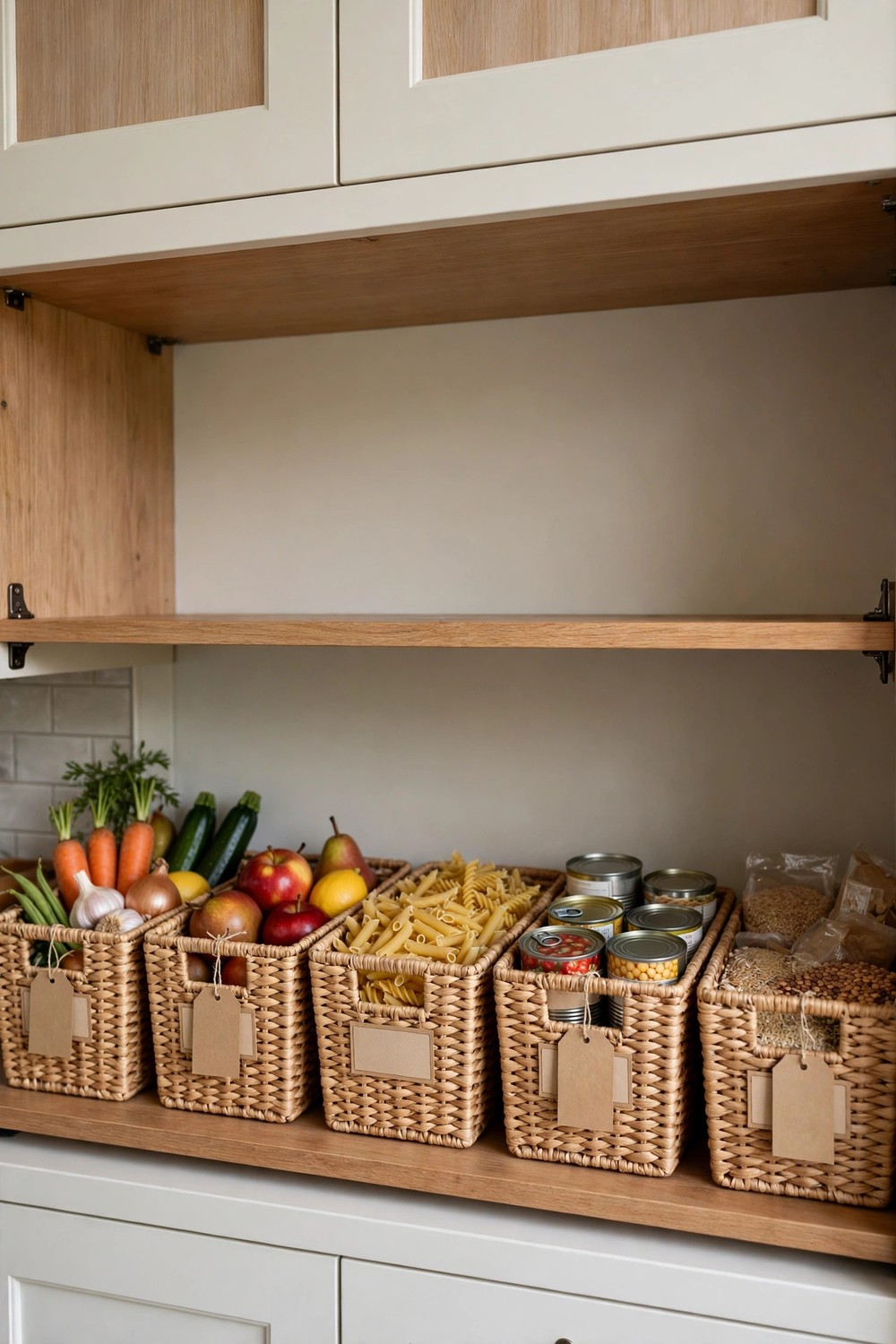
A kitchen is organised by bins, not by piles. One bin for pasta, one basket for tins, one small bin for the packets that must stay — and each bin holds only its own things. A bin with one job stays tidy; a bin that holds a bit of everything becomes the bin nobody opens. Put the daily things at arm height: the pasta and rice you use every day live where your hand already reaches, and the roasting tin lives above the cupboards. (If the pantry itself needs sorting first, the tiny-pantry weekend is the place to start.)
Bins for the drawer, baskets for the shelf
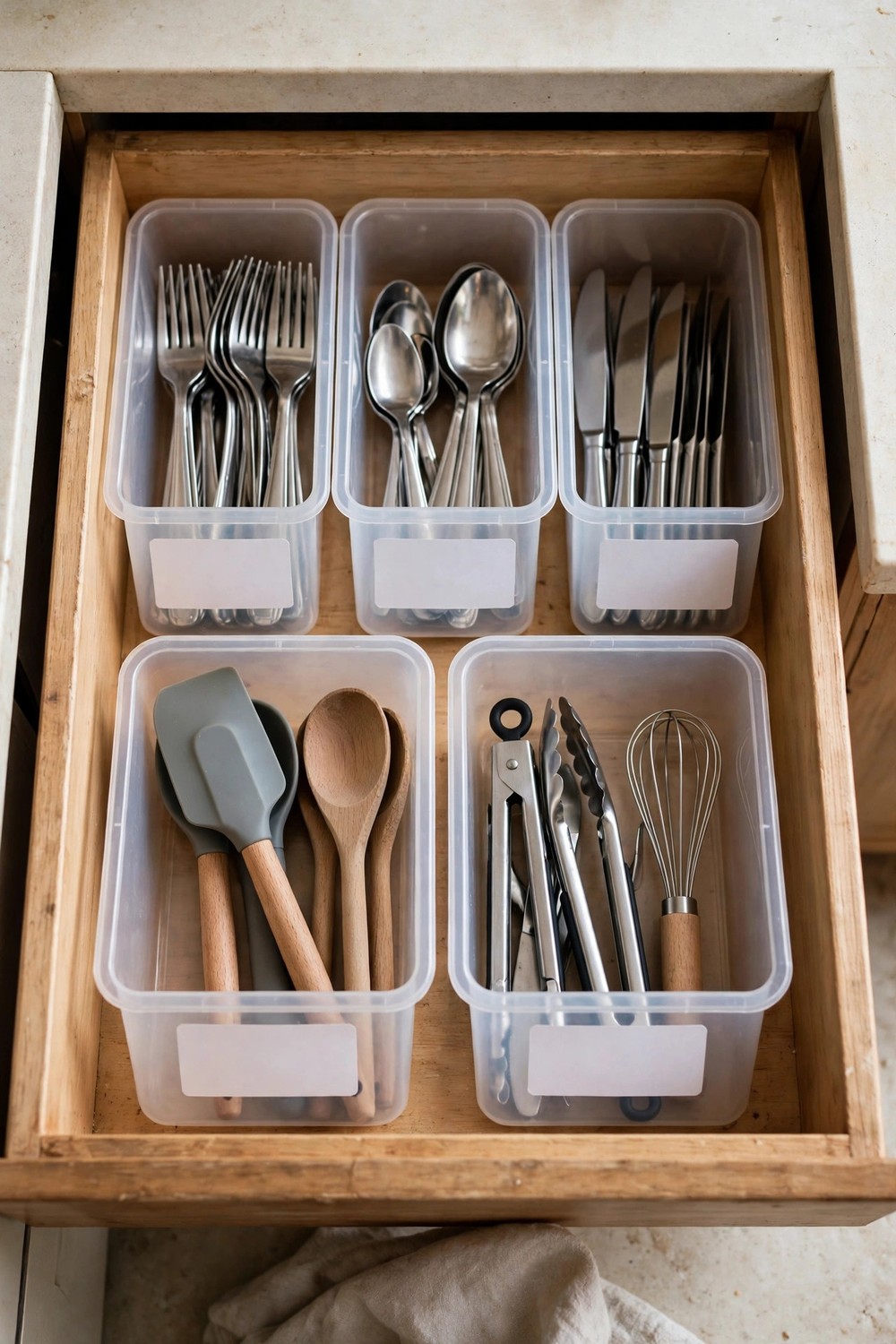
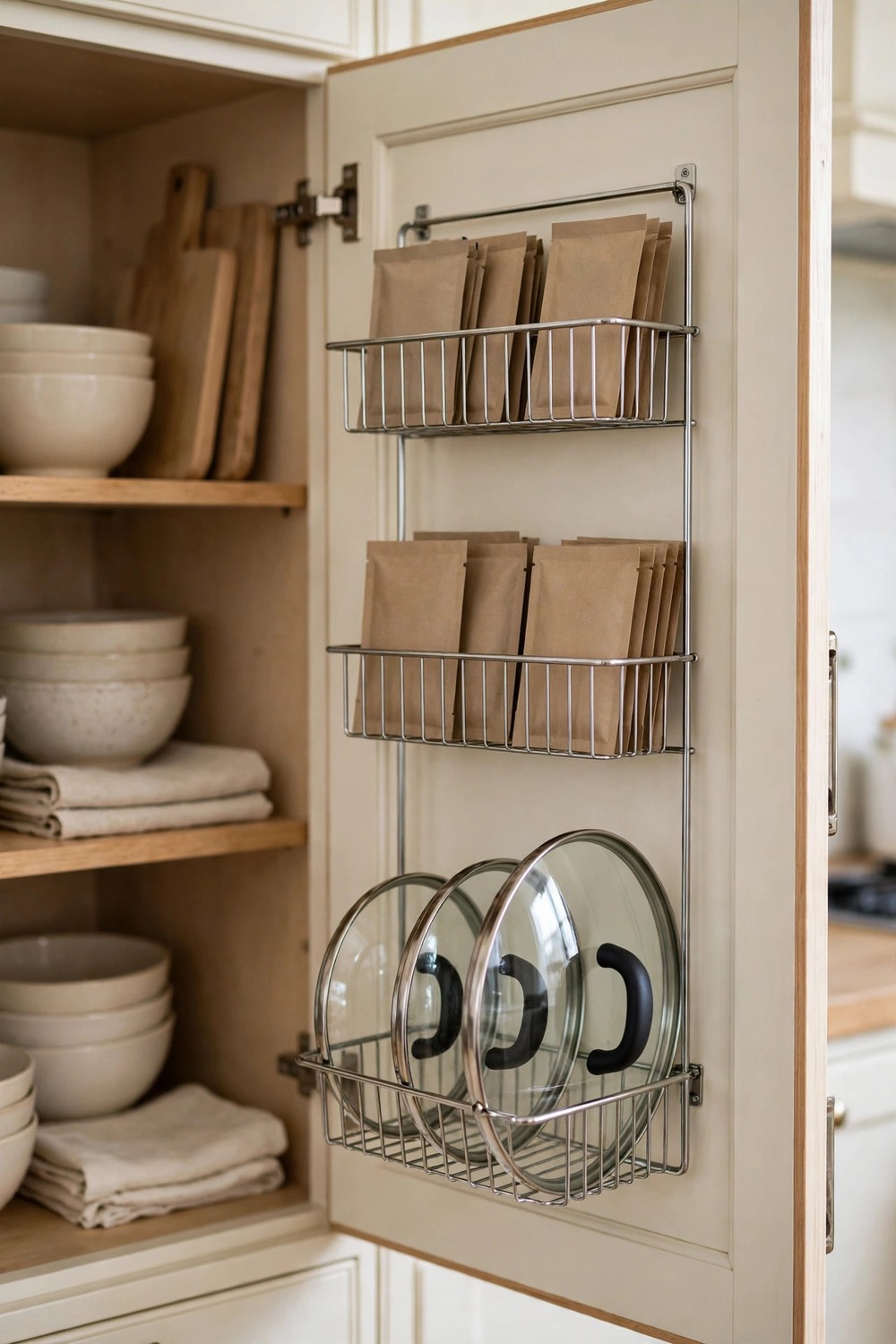
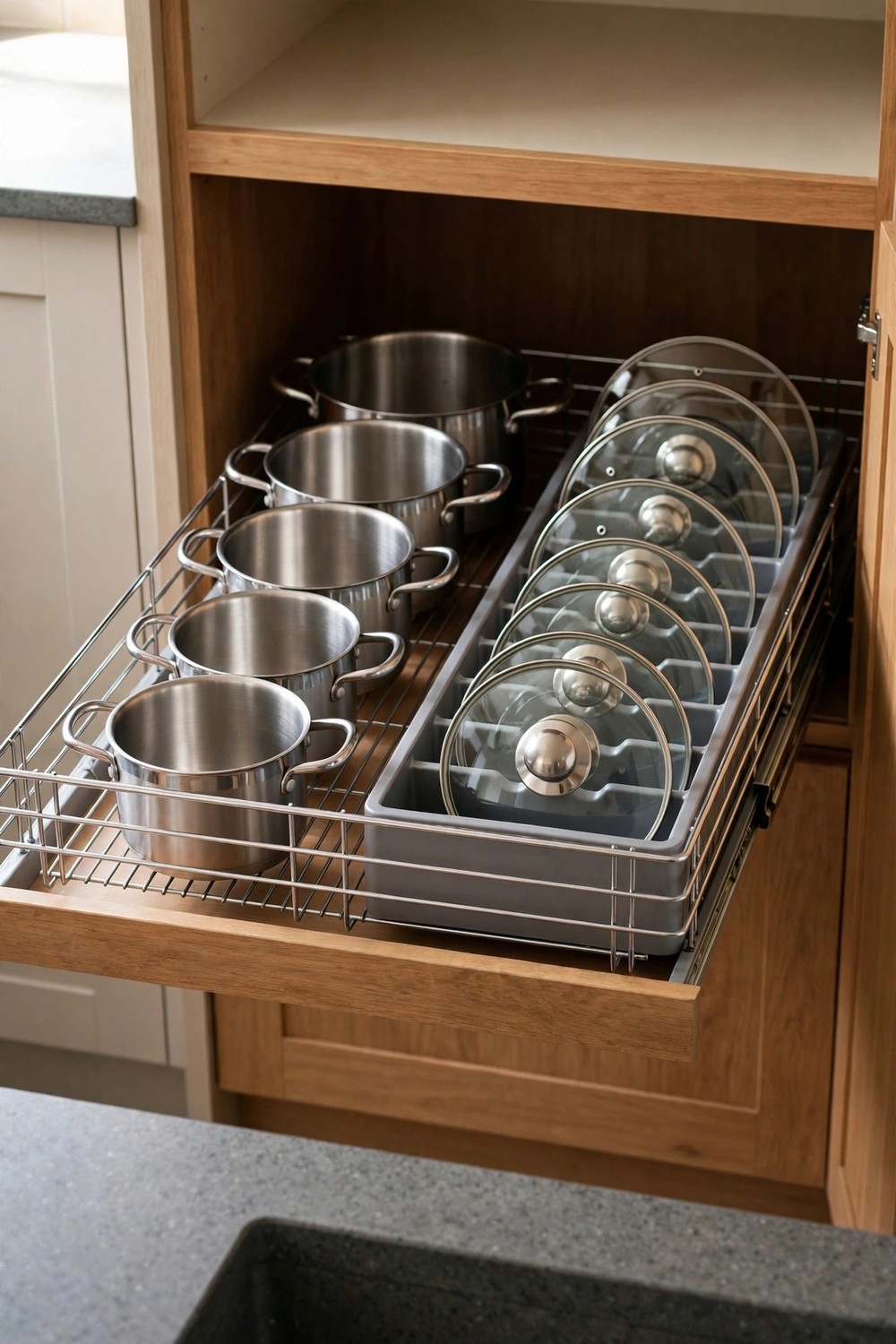
The drawer and the shelf need different finds. Small bins in the drawer take the cutlery, the utensils and the bits that roll around — one bin per job, labels on each one, and the drawer opens to order instead of a jumble. Baskets on the shelf take the tins and packets in a row — pull a basket out like a drawer instead of reaching into the dark. A slim rack on the cupboard door takes the lids and small packets, and frees a whole shelf inside. Three finds, three jobs, and nothing bought twice because the first one did not fit.
Labels that last
Label the bin and the basket. The pasta you need is always the one at the back, and a label on the front is the only thing that saves you from pulling out four bins to find it. Write the name on the label, and write it by hand — printed labels peel off in the steam, and a bin with no label is a bin that gets filled with whatever is nearest. Labels are the cheapest find of all, and they do the most work: a labelled bin stays tidy because everyone in the house knows where things live.
The five-minute reset
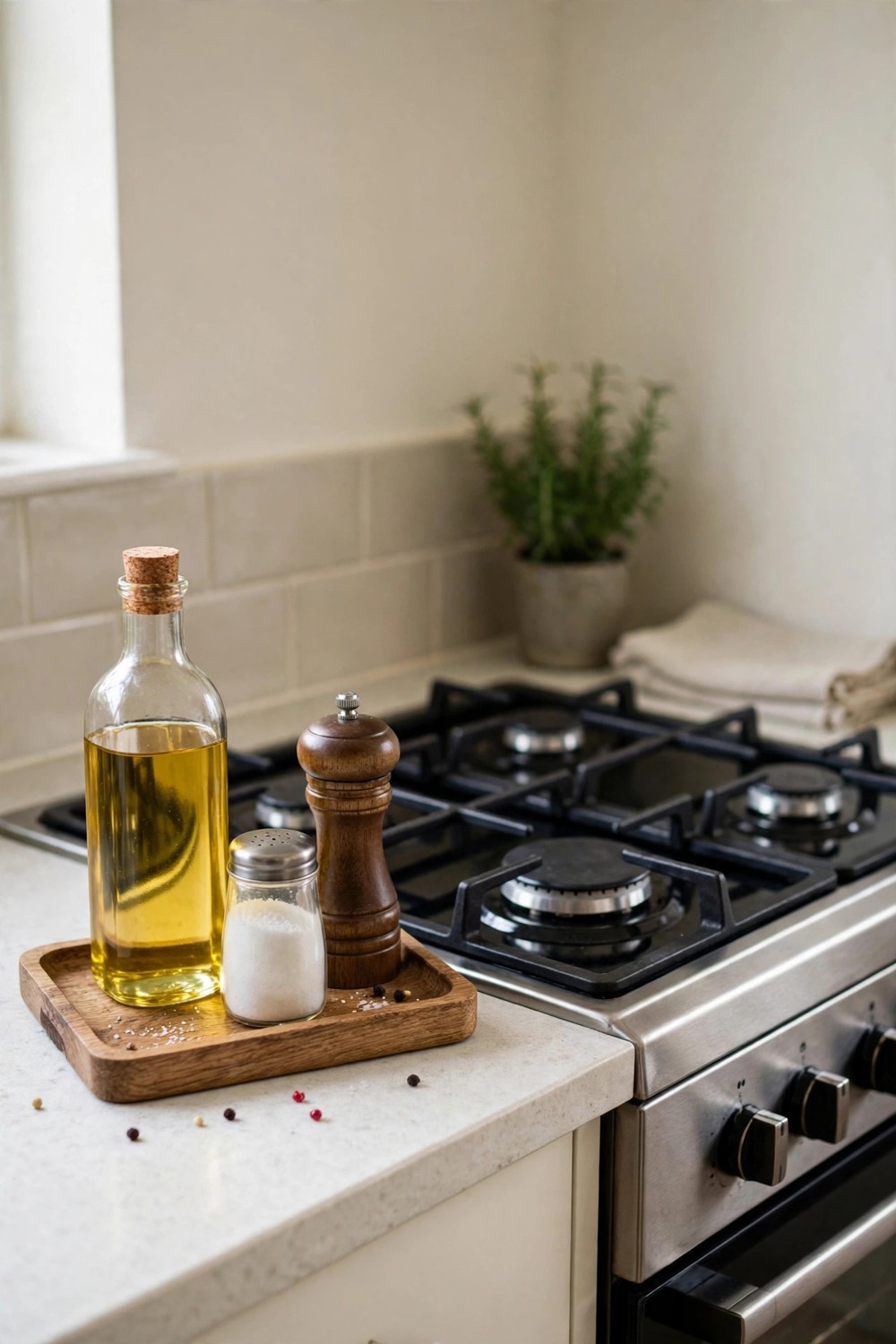
A tidy kitchen stays tidy by a habit, not by luck. Five minutes at the end of the week: every bin back in its place, shelf wiped, shopping list pinned by the door, kitchen ready for the shop. The same five minutes every week beats an hour of clearing on a Sunday, because the kitchen never gets the chance to fill up again. A clear worktop makes a small kitchen feel twice as big, and it costs nothing at all.
Start with one cupboard, not the whole kitchen
Do not try to organise the whole kitchen in one weekend. Pick one cupboard — the pantry cupboard — and finish it properly: bins in a row, labels out, nothing else there. One finished cupboard changes how the whole kitchen feels, and it shows you what works before you spend anything on the next one. A kitchen gets easier one cupboard at a time.
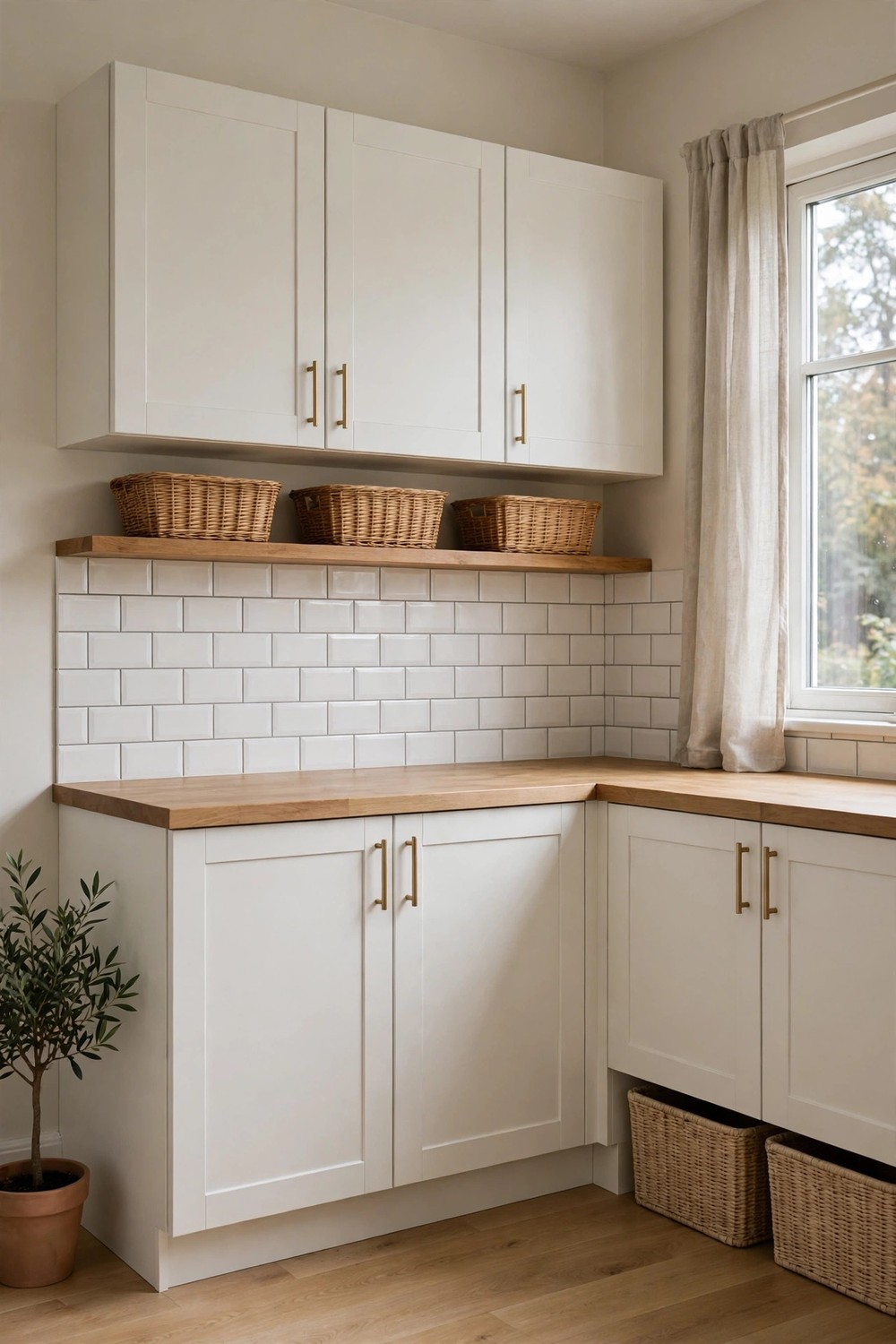
What should I buy at the dollar store for kitchen organisation?
Small bins for drawers, baskets for shelves, a slim rack for the cupboard door, and labels. Measure the cupboard first, then buy the bin that fits — one bin per job, nothing that does not earn its place.
How do I organise my kitchen with dollar store finds?
Empty one cupboard completely, keep only what you have used in the last three months, and give each shelf one job — pasta, tins, breakfast — with bins in drawers, baskets on shelves, and labels on everything you cannot see into.
How do I stop buying bins that do not fit?
Measure the shelf before you shop and write the measurements on the list. A bin that does not fit is clutter with a handle — so buy last, after the cupboard is empty and the shelves are decided.
More small-space storage: small apartment storage ideas and the full home organisation collection.



0 Comments