
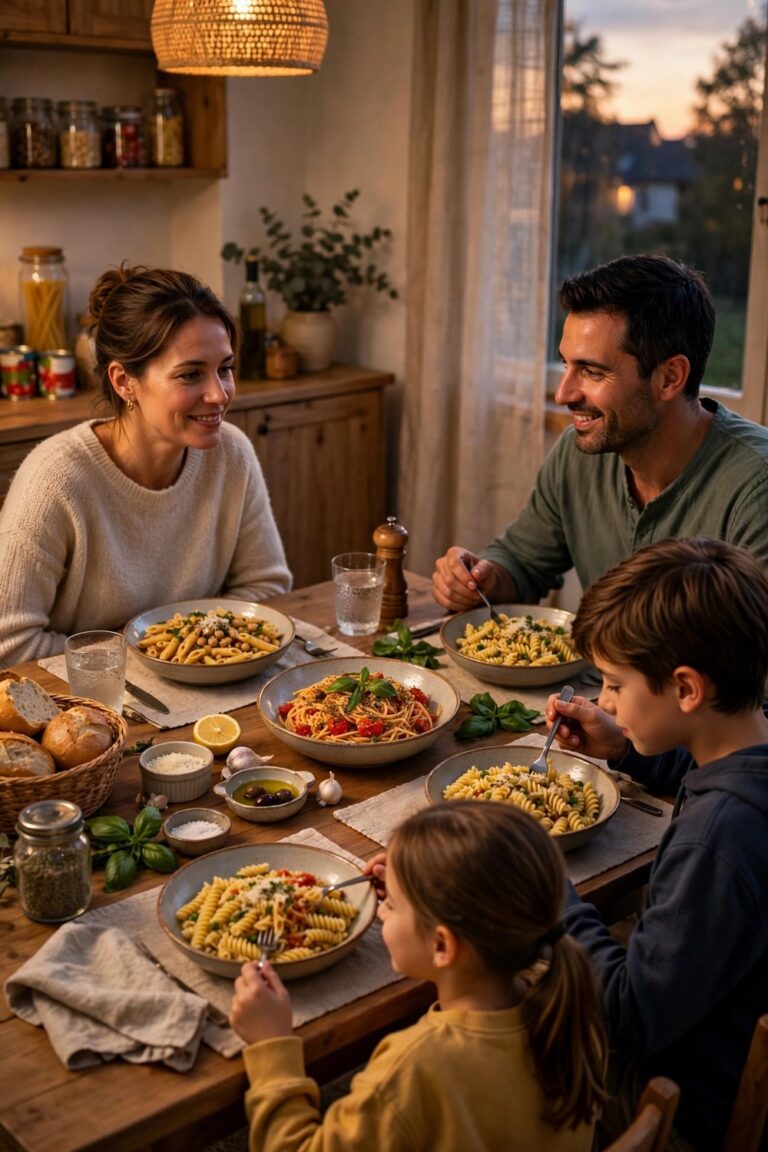

The cheap pantry dinners that work are rarely the clever ones. They are the familiar ones — pasta on Monday, rice and beans on Tuesday, soup on Friday — cooked from what is already in the cupboard, served at the same table, at the same time. The trick is not a new recipe. It is a short list of dinners the pantry can already make, repeated in the same order, so nobody has to shop at 5pm and nobody orders a takeaway.
Five formulas, one pantry
Cheap pantry dinners work when the shape of the week is fixed and only the details change. Learn five formulas, and the week plans itself.
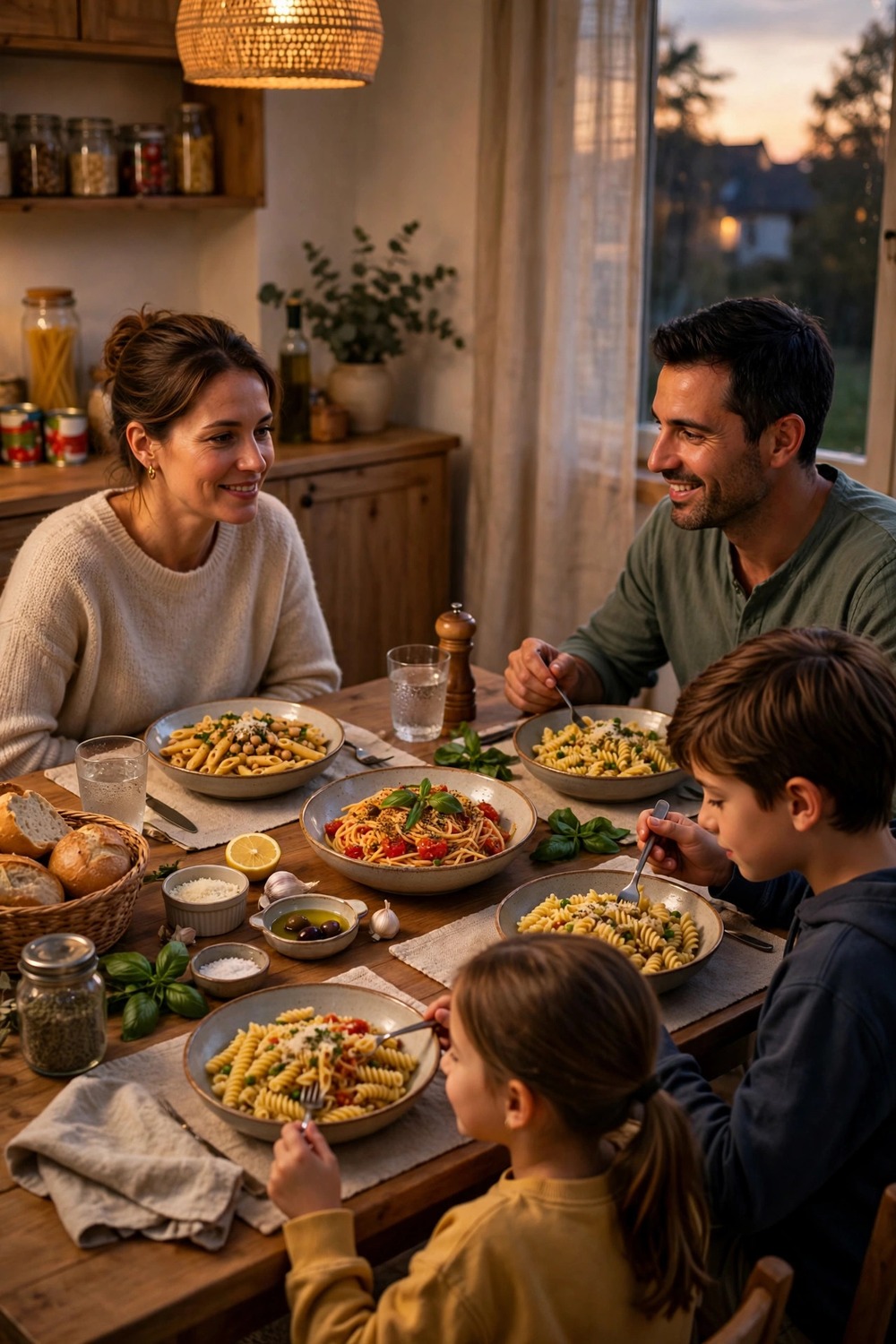
- Pasta night. Pasta, tinned tomatoes, garlic and beans, all in one pan. Twenty minutes, and everyone eats.
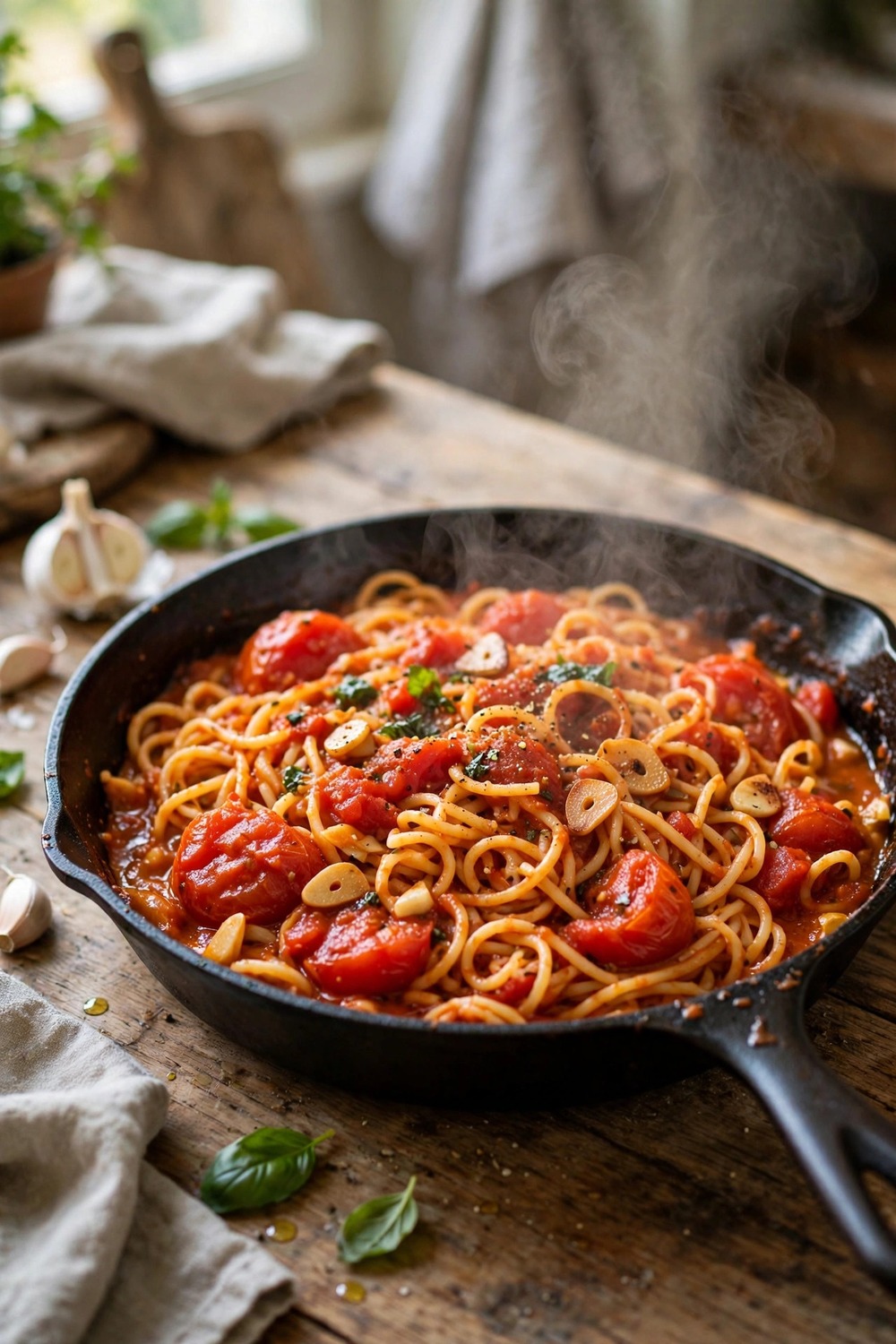
- Rice and beans night. Rice, beans, tinned tomatoes and spices in one pot — filling, and the bowl comes back empty.
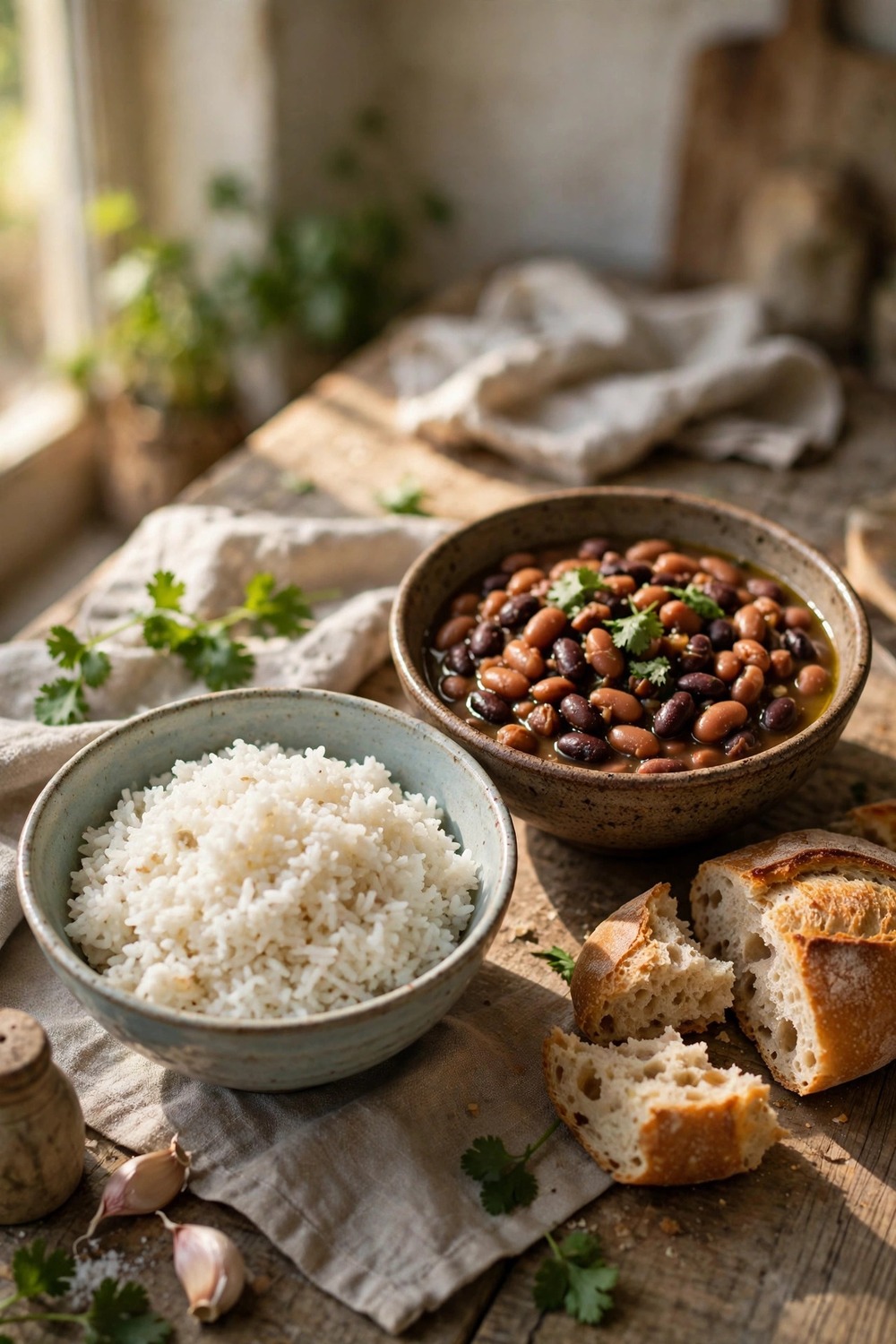
- Soup night. A big pot of soup with bread for dipping — filling, and the bowl comes back empty.
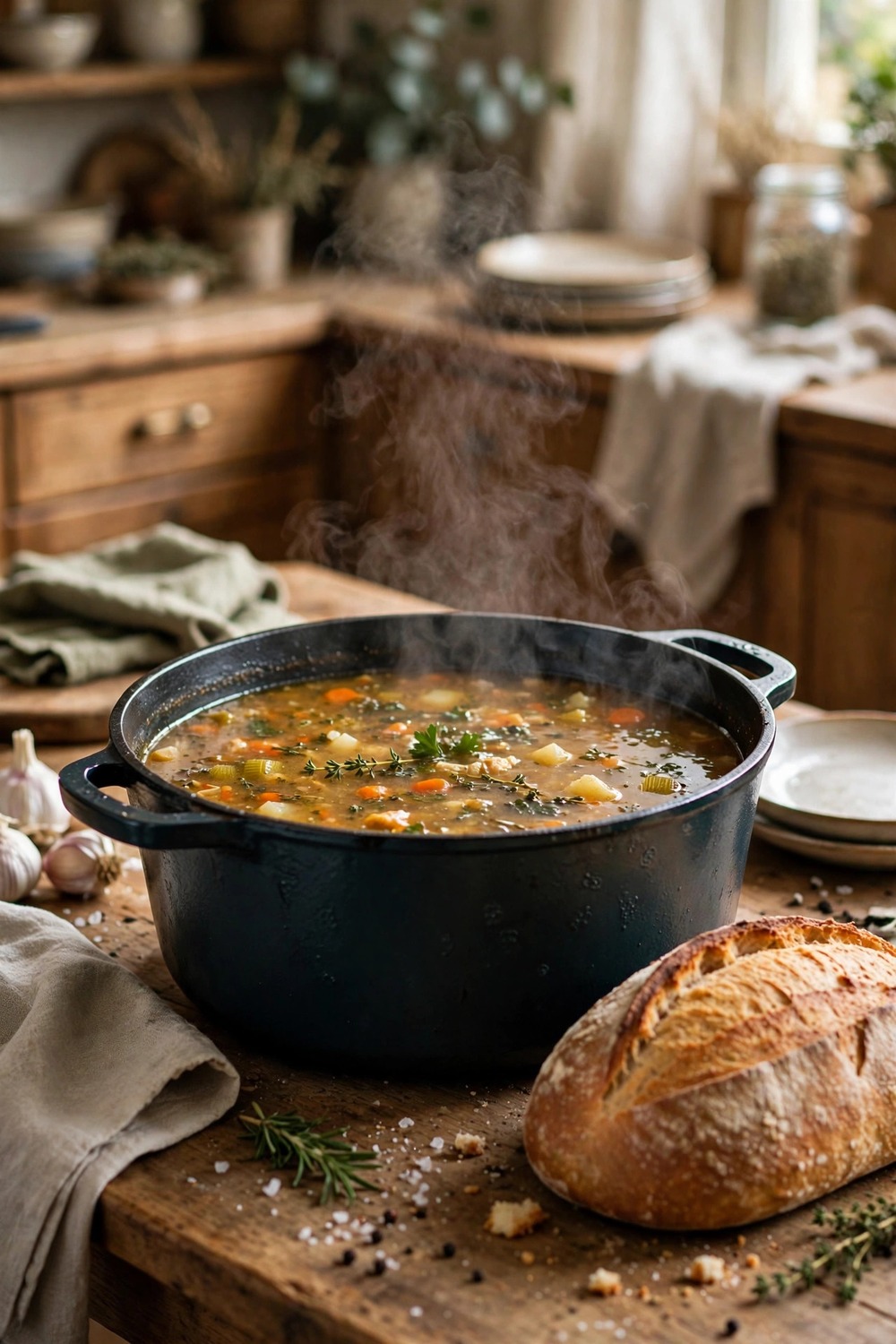
- Tray bake night. Potatoes, onions and tinned beans on one tray, oven does the work.
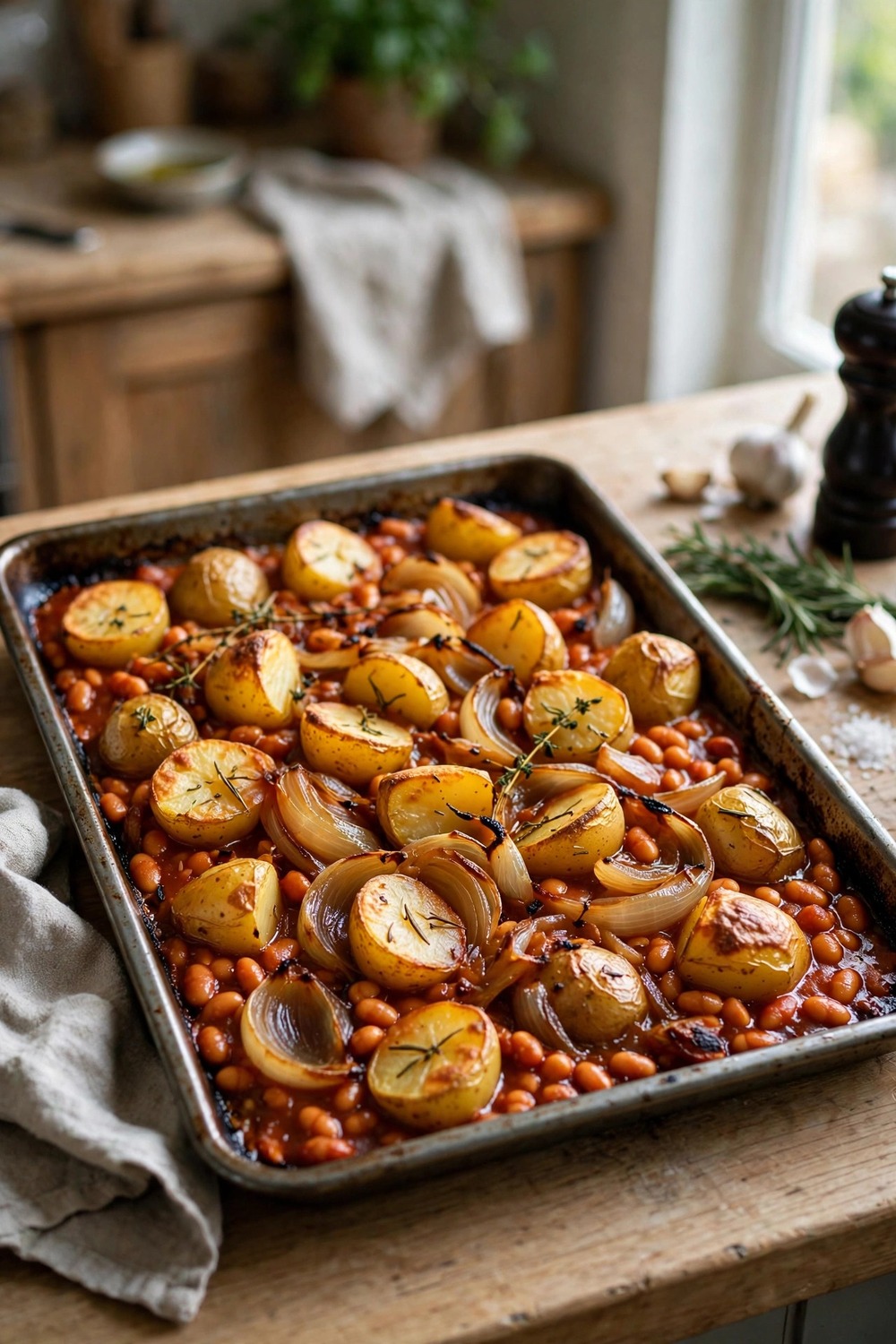
- One-pot rice night. Rice, stock, frozen vegetables and beans in one pot, lid on. Thirty minutes.
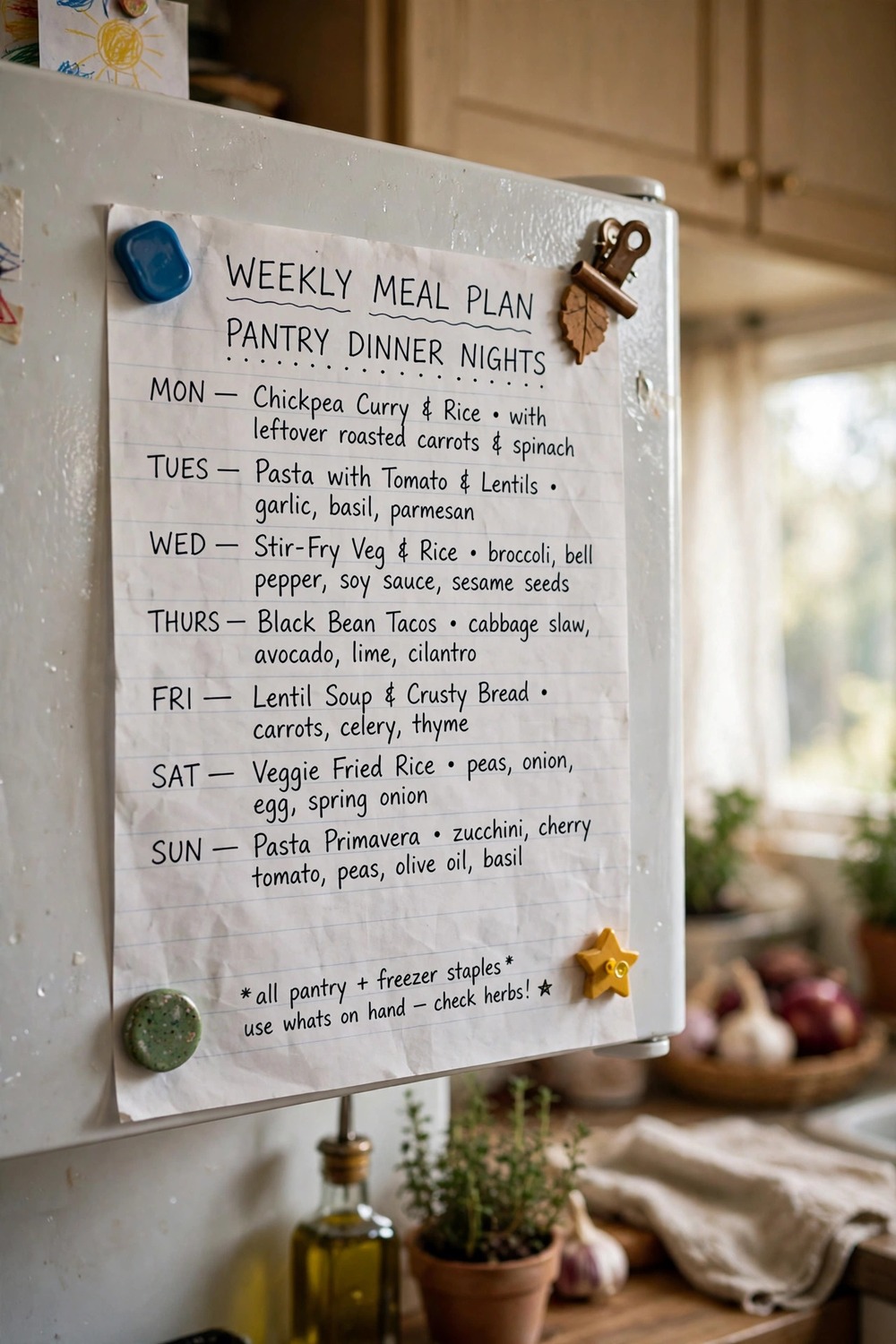
Pick one formula per night, write it on the meal plan, and repeat what they eat. Nobody gets bored when the details change, and nobody has to invent dinner from scratch at 5pm.
Shop the pantry first
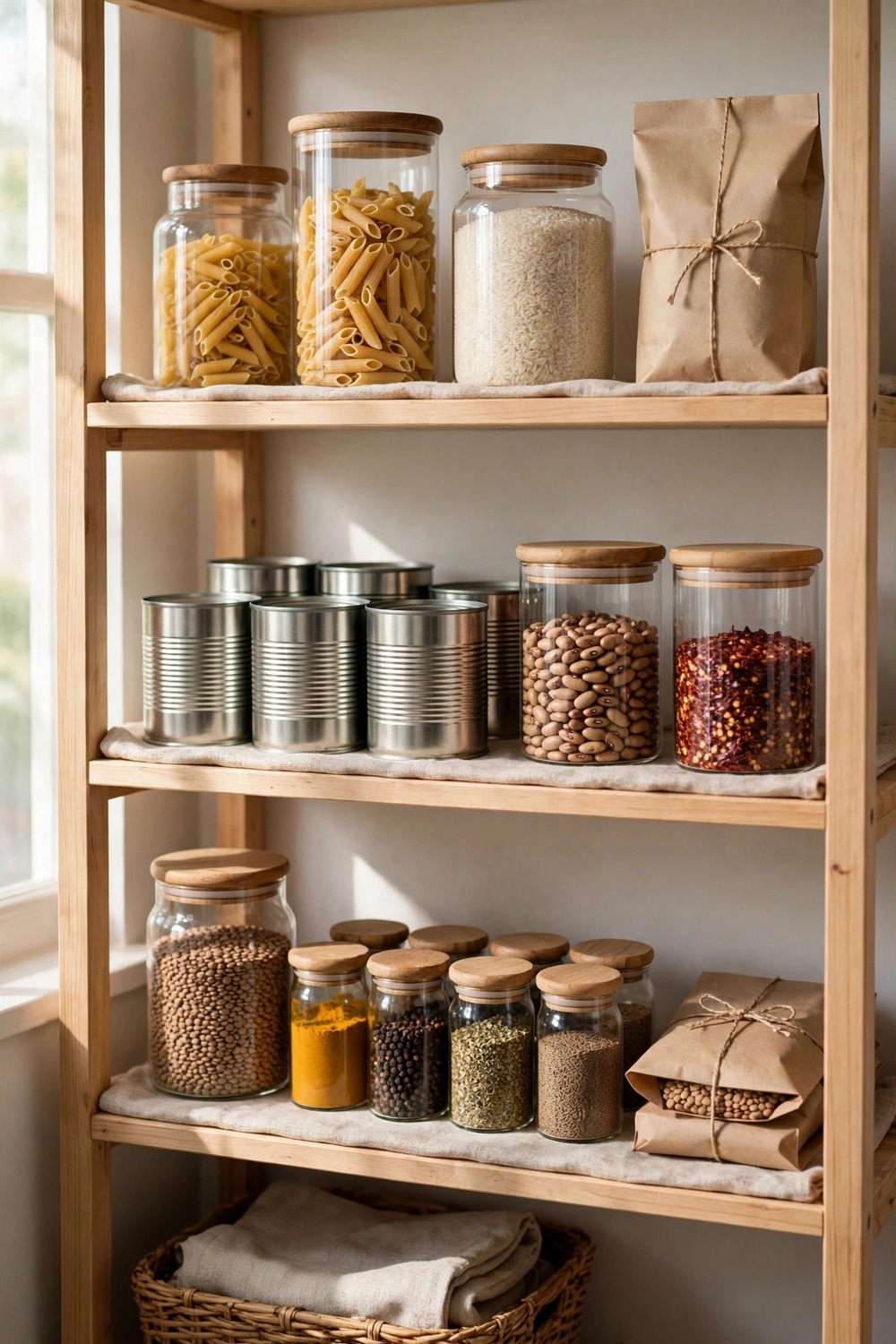
The rule that makes cheap pantry dinners work is simple: look in the cupboard before you shop. The dinner is usually already there — pasta, rice, tinned tomatoes, beans, lentils, stock cubes, frozen vegetables and spices. Keep a short staple list pinned by the pantry and shop from that list, not from a wander round the shop. (If the pantry itself needs sorting first, the tiny-pantry weekend is the place to start.) Buy the staples on purpose: pasta, beans and tinned tomatoes store well and cook fast — which is exactly what a pantry dinner needs.
One familiar thing on the plate
Cheap pantry dinners are only easy if everyone eats them. Keep one thing they already like on the plate: pasta beside the new vegetable, bread beside the soup, cheese on top of the thing they are not sure about. A small portion of the new food, no pressure to finish it, and the same food again next week. Children eat what they recognise, and they recognise what they have seen before — so the new food stops being a battle when it stops being new. (If dinner still needs to be quick, the thirty-minute formulas are the place to start.)
When the pantry looks empty
Some nights the pantry looks empty, and that is usually a sorting problem, not a shopping problem. Pull everything out, put the pasta with the pasta, the tins with the tins, the beans with the beans — and the dinner appears. Cheap pantry dinners are built from what is already there, and the cupboard that looks empty often holds three dinners once it is sorted. The slow cooker nights help here too: food that has cooked all day smells like dinner long before it reaches the table.
Start with this week, not next week
Do not wait for a perfect plan or a full pantry. Pick two pantry dinner nights for this week, write them on the fridge tonight, and shop from the staple list tomorrow. Two dinners from the cupboard this week beat a perfect seven-night plan that never starts — and by next week, the routine will already feel normal.
What can I cook from the pantry tonight?
Pasta with tinned tomatoes and garlic, rice and beans in one pot, or soup with bread — all from pasta, rice, tinned tomatoes, beans and spices you already have.
How do I plan cheap pantry dinners for the week?
Pick two formulas for the week, write them on the fridge, and shop from the staple list — pasta, rice, tinned tomatoes, beans, lentils, stock cubes and frozen vegetables.
What pantry staples should I always keep?
Pasta, rice, tinned tomatoes, beans, lentils, stock cubes, frozen vegetables and the spices you actually use. With those, five dinners are always possible.
More easy dinners: one pan family dinners and family dinners kids actually eat.



0 Comments