


The budget lunches to take to work that actually get eaten are the ones packed on Sunday. Five lunches, one packing session, and the working week never starts with an empty bag. The trick is not cooking five different lunches. It is cooking once, packing five ways, so Monday to Friday each looks different while the work stays the same.
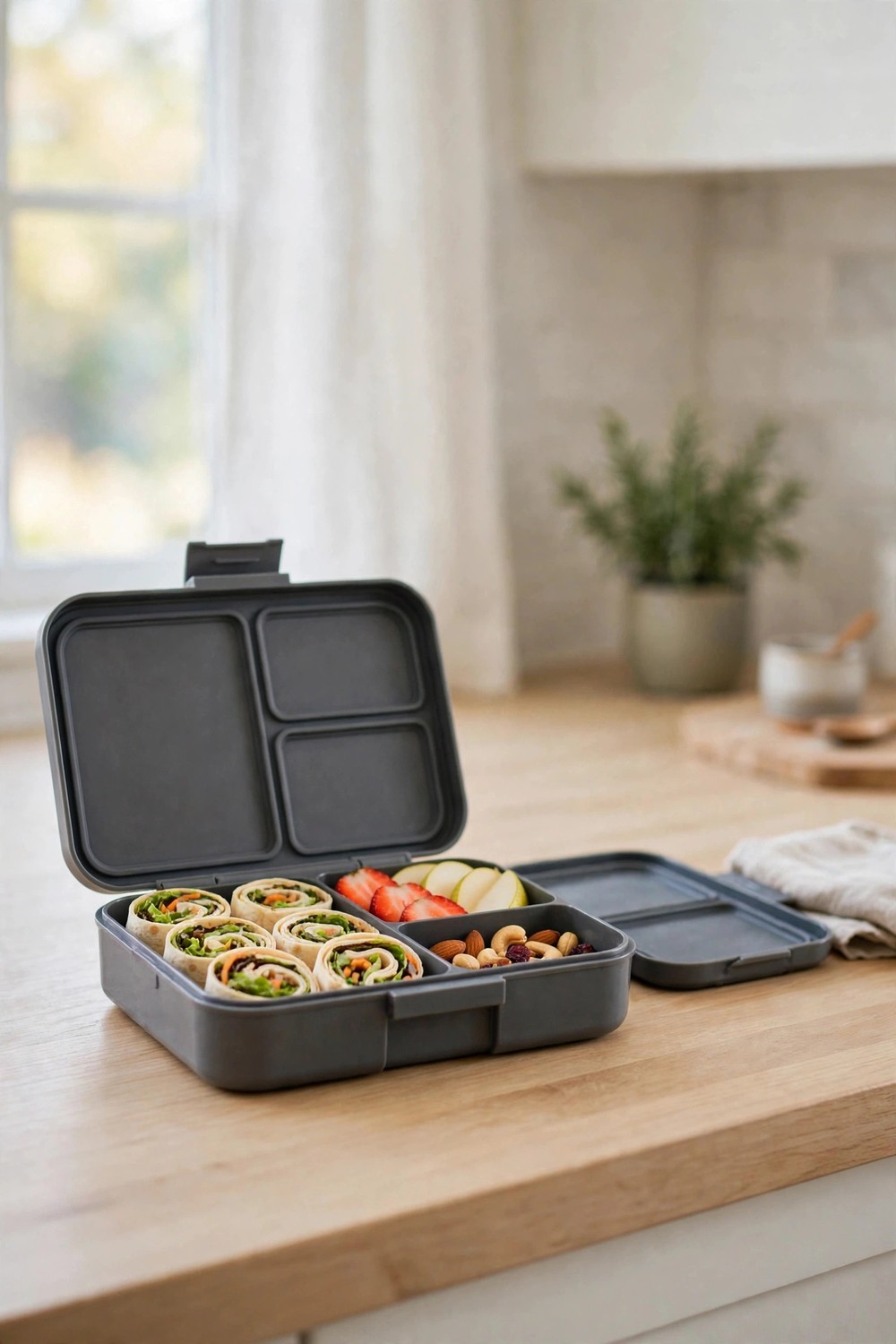
Five lunches, one Sunday
Budget lunches to take to work work when the plan is fixed and only the lunch changes. Pick five that share a base, so one shopping list covers the whole week.
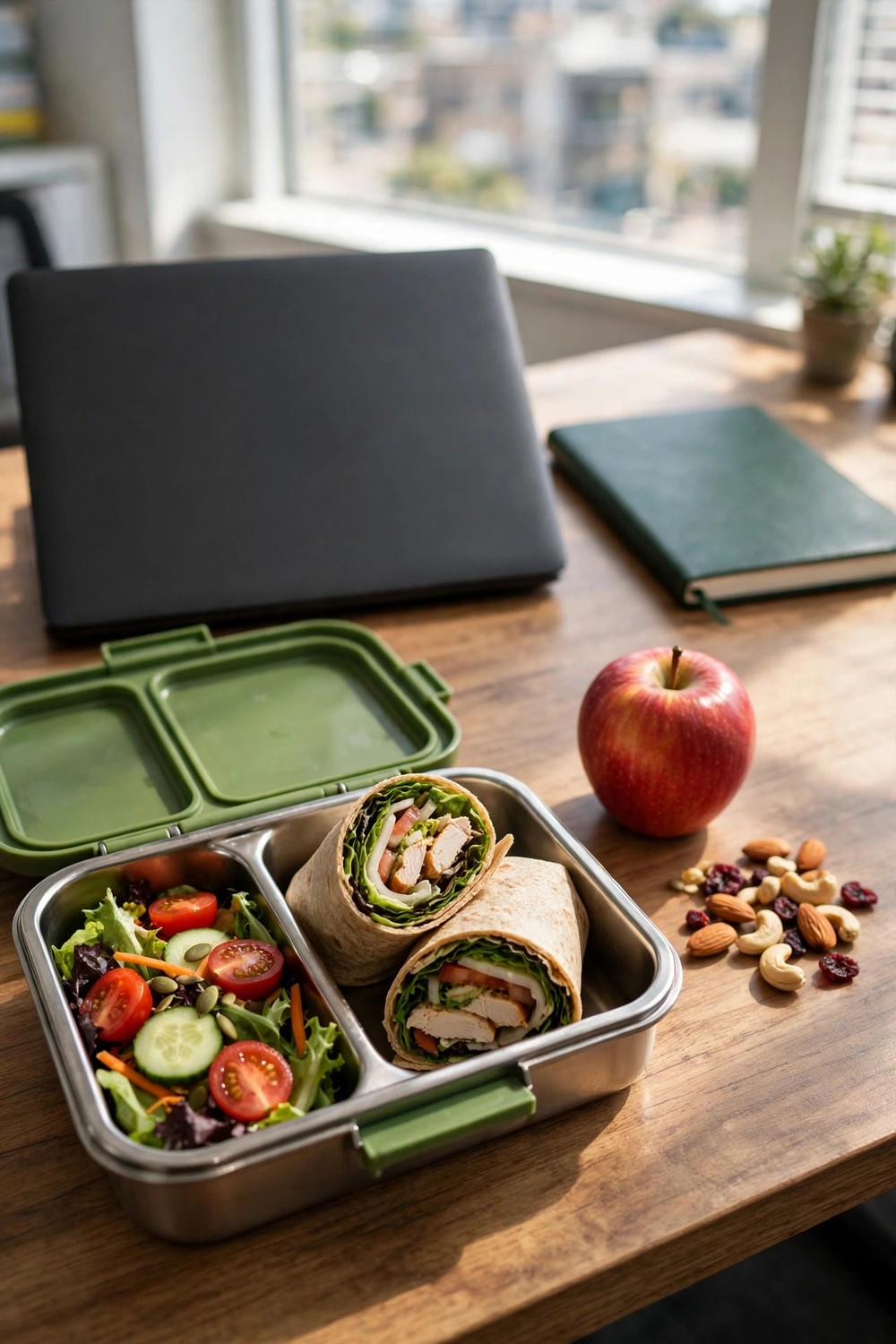
- Wrap lunch. Wraps, filling from last night’s dinner, fruit and a small snack — the fastest of the five to pack.
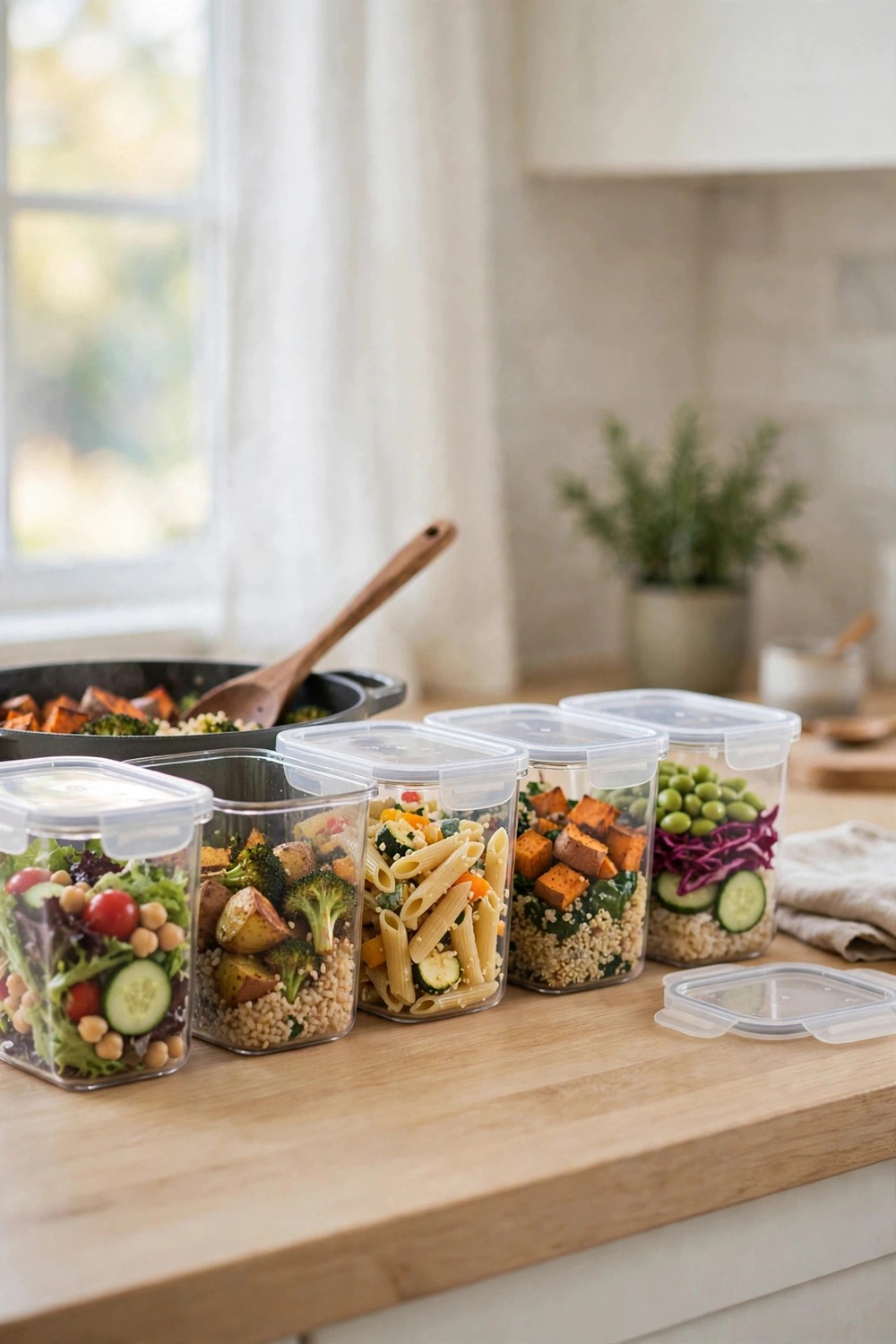
- Jar salad. Dressing at the bottom, grains, vegetables, greens on top — crisp until midday, no soggy leaves.
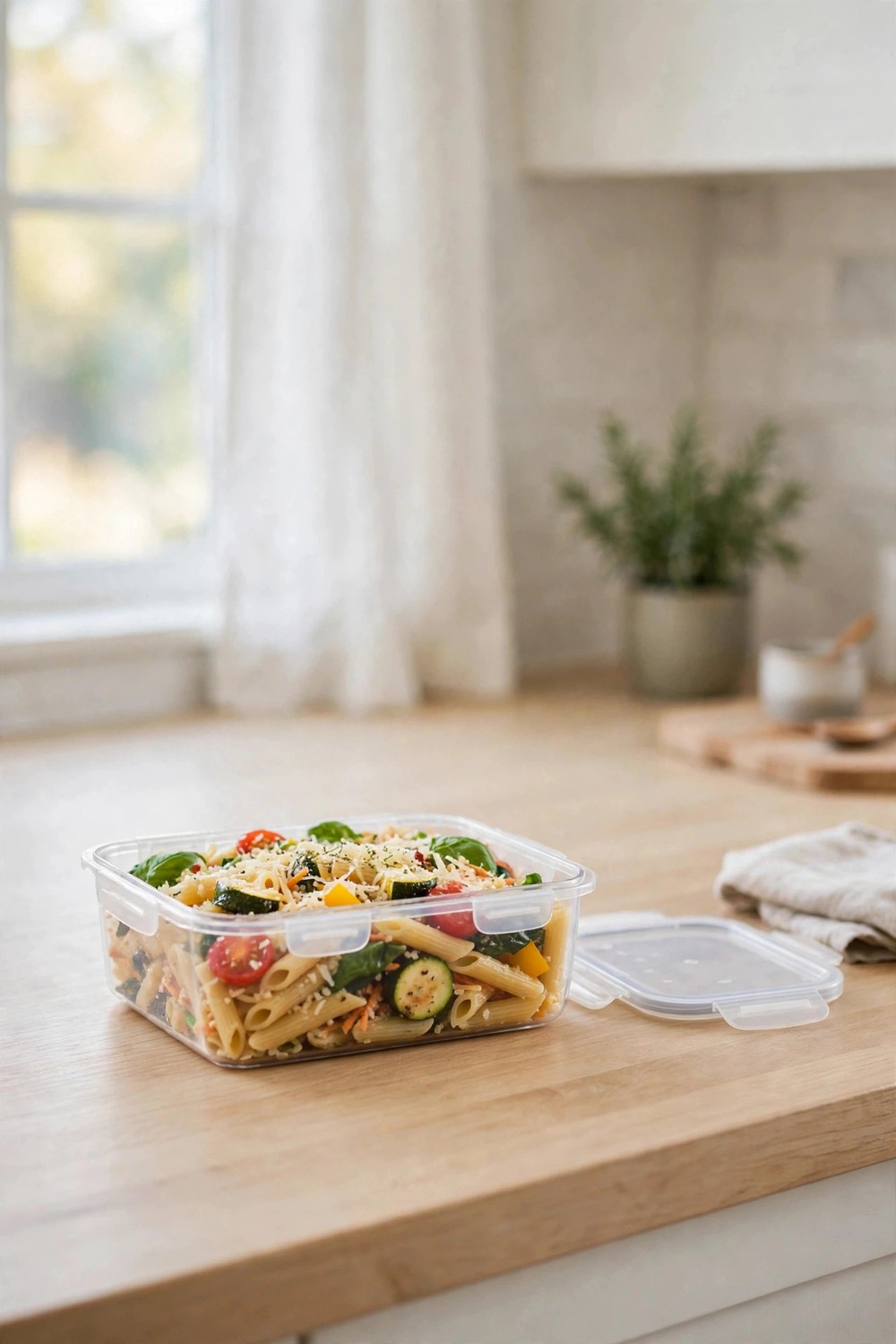
- Pasta lunch. Pasta with vegetables and cheese, packed from last night’s pot — no extra cooking at all.
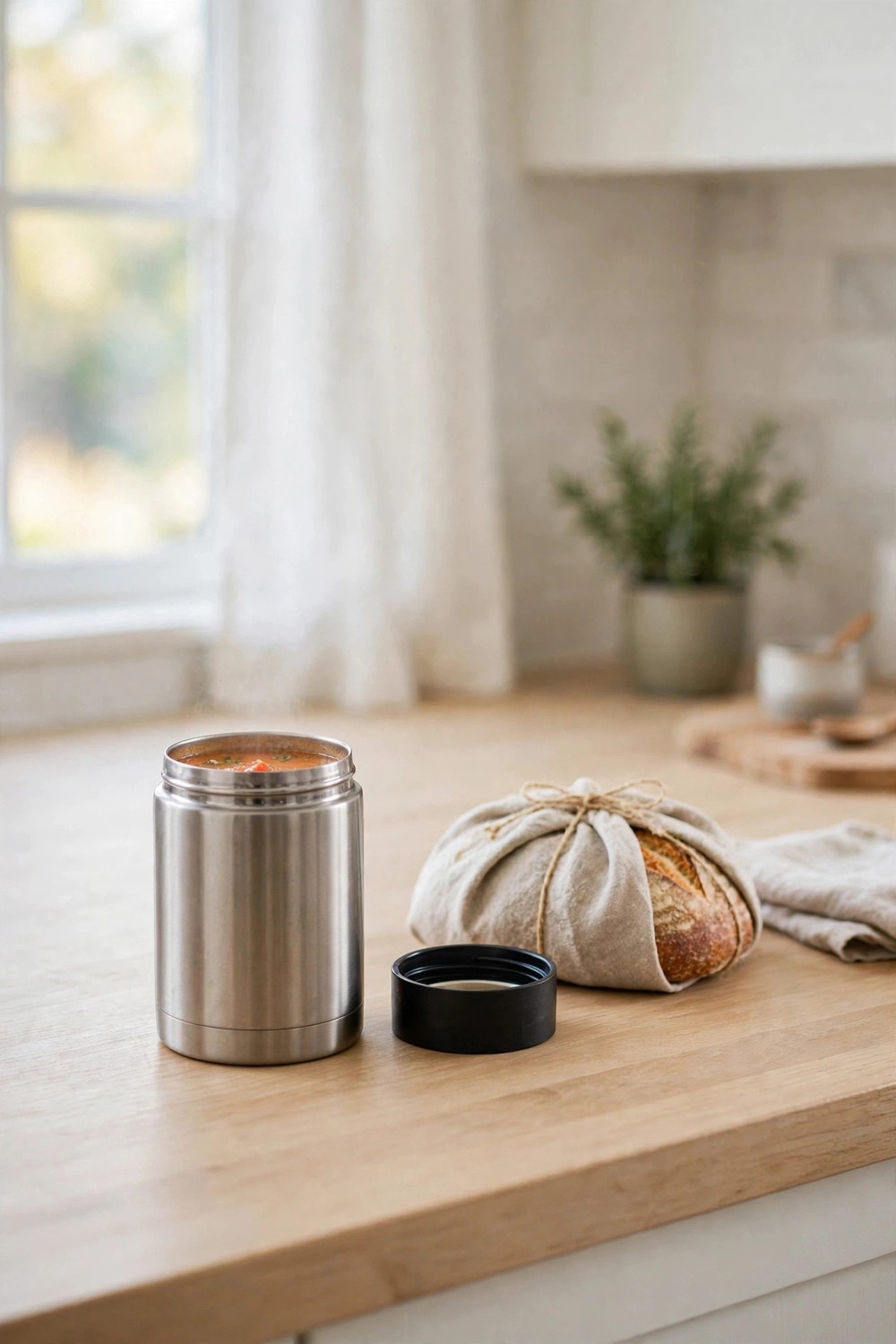
- Soup lunch. Soup in a flask, bread wrapped beside it — the warm lunch for the coldest day of the week.
- Leftovers lunch. Whatever dinner was last night, portioned into a container while the pans are still out.

Write the five down before Sunday. Budget lunches to take to work without a list turn into five days of the same sandwich, and the same sandwich gets skipped by Wednesday.
Pack once, grab all week
Packing is the whole job. On Sunday, line the containers up on the counter, fill them one by one, and label each with the day it is for. Stack them in the fridge with Monday on top, so the week’s lunches are already decided and the morning is just grab and go. The budget meal prep list helps here too: a short list of staples, bought once, so the week never starts with an empty fridge. If the fridge is full of labelled lunches, the morning never turns into a hunt for something to take.
Keep them fresh until Friday
A packed lunch only works if it still tastes good on Friday. Wet things stay separate from dry things until eating time — dressing in a small pot, not on the salad; bread wrapped on its own, not in the soup. Eat the freshest lunches first and the hardiest last: salad and wraps early in the week, pasta and soup later. The school lunch ideas on a budget use the same packing logic — the same containers, the same labels, the same Sunday session, just smaller portions.
The no-cook days count too
Not every lunch needs cooking. Two of the five can be assembled, not cooked: bread and filling from the fridge, fruit, a snack from the cupboard. Those are the days the plan saves the most time, because assembling takes five minutes and there is nothing to wash. The freezer meals for busy families work the same way: cook when you have time, eat when you do not. A full fridge turns a busy work week into five mornings with nothing to decide.
Start this Sunday, not next Sunday
Do not wait for a perfect plan or a full pantry. Pick three lunches for this week, check the cupboard for wraps, pasta and tinned soup tonight, and pack them tomorrow. Three packed lunches this week beat a perfect five-lunch plan that never starts — and by next week, the Sunday session will already be part of the routine. The cheap pantry dinners help here too: the same staples that feed dinner feed lunch the next day, and nothing in the cupboard goes to waste.

What are cheap budget lunches to take to work?
Wraps, jar salads, pasta lunches, soup in a flask, and leftovers from last night’s dinner — all packed on Sunday from one shopping list, five days covered.
How do I keep packed lunches fresh all week?
Keep wet and dry separate until eating time, eat the freshest lunches first, and pack Friday’s lunch from the hardiest food — pasta and soup keep better than salad.
How do I pack lunches without cooking every night?
Pack on Sunday from one session, and let two of the five be assembled, not cooked — bread and filling from the fridge, fruit, and a snack from the cupboard.
For more ideas in the same series, browse Budget Family Meals for budget-friendly family meals for the whole week.



0 Comments