
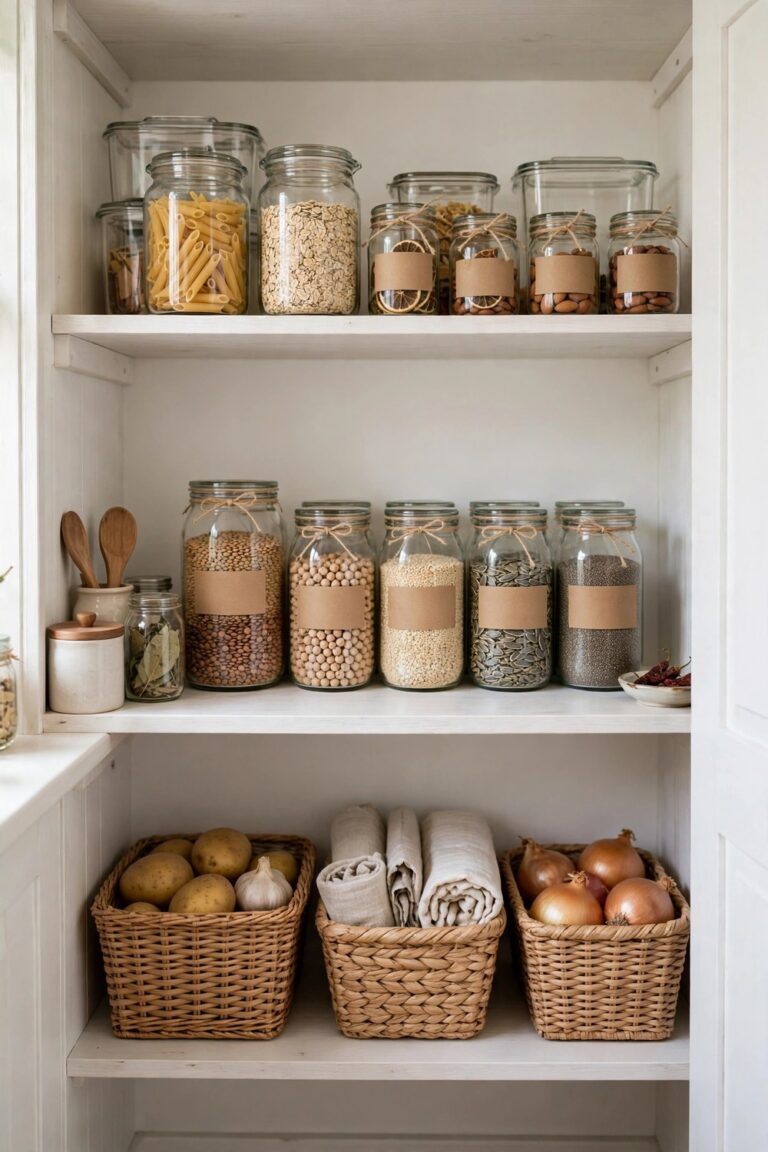

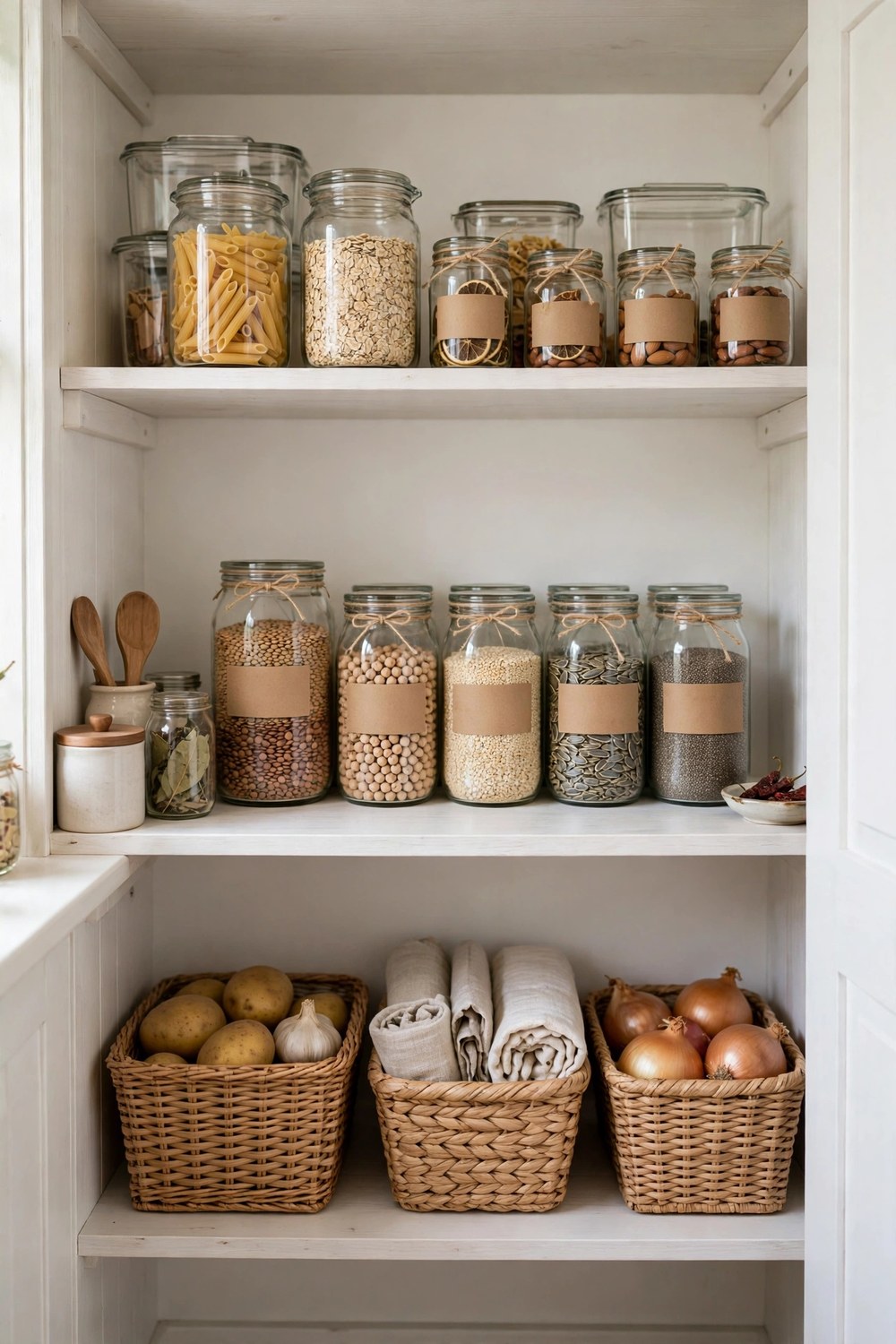
Organise a tiny pantry in one weekend and you will see everything you have at a glance.
A tiny pantry is not a storage problem. It is a seeing problem. When you cannot see what you have, you buy it twice, forget the tin at the back, and cook around the mess instead of through it. One weekend is enough to fix that, because a small space only needs small decisions — made once, and then kept.
Saturday morning: take it all out
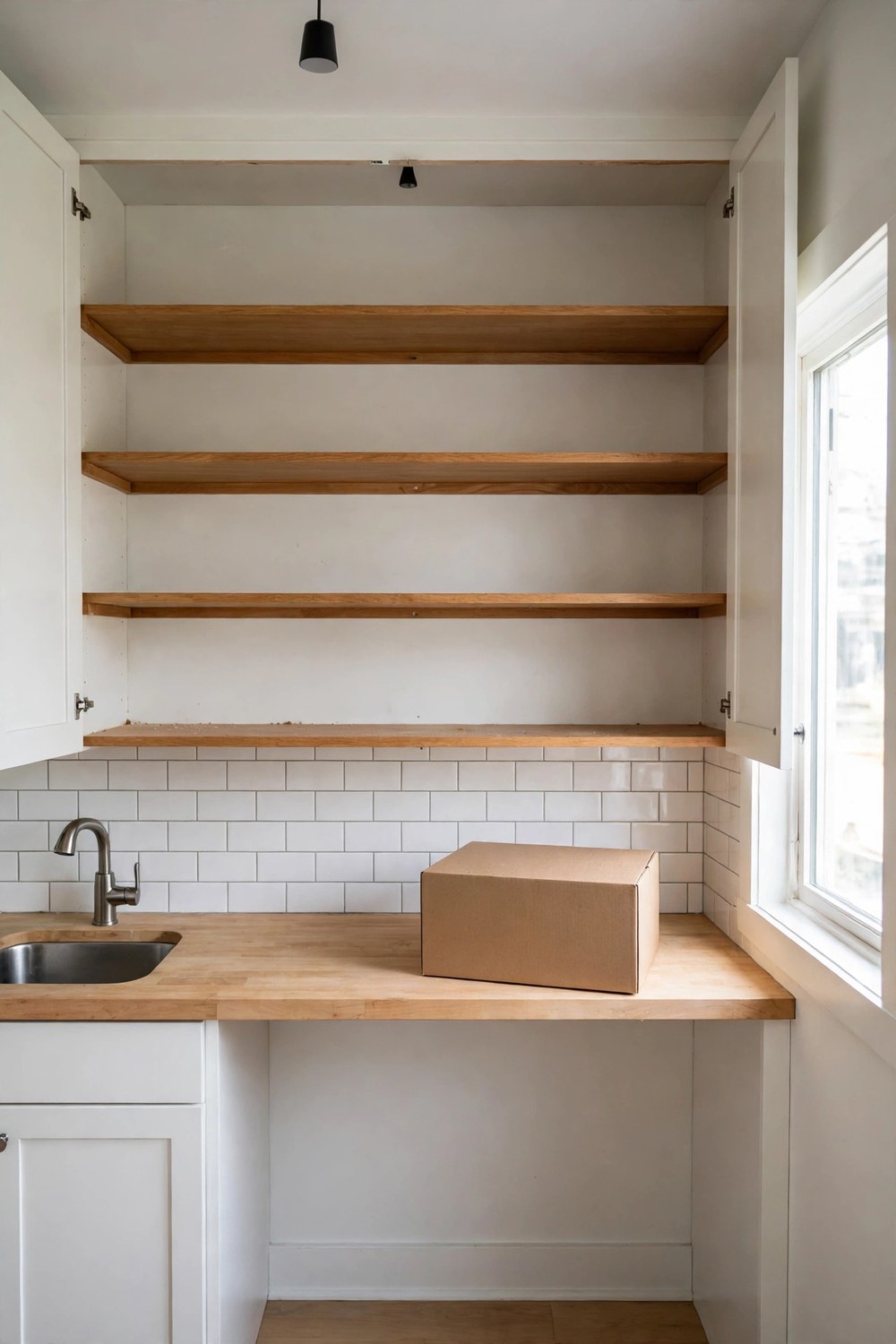
Empty every shelf onto the counter or the table. Yes, all of it. You cannot organise what you cannot see, and a pantry only looks full because the front row hides the rest.
While it is empty, wipe the shelves and check dates as you go. Anything opened and stale, anything a year past its date, anything nobody in the house will eat — out. Put the keepers in three piles: cook with weekly, cook with sometimes, and rarely. The rarely pile is smaller than you think.
Saturday afternoon: zone it in three
A tiny pantry works when every shelf has one job.
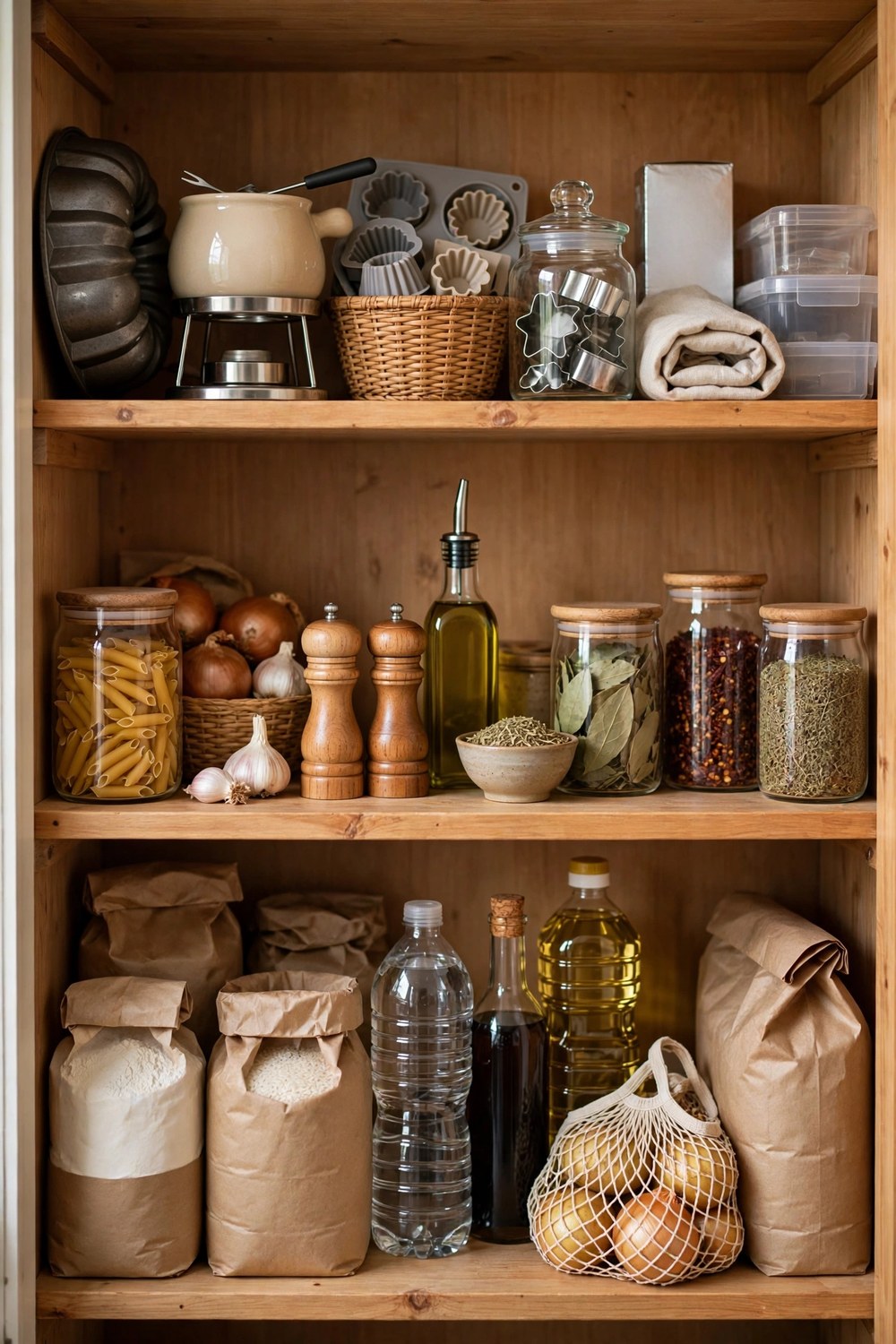
- Top — rarely used. Baking extras, spare stock, the appliance you use twice a year. If you need a step to reach it, it belongs here.
- Middle — daily cooking. The things your hands reach for without thinking: oil, salt, pasta, rice, tinned tomatoes, the sauces you actually use. This shelf earns the eye-level spot.
- Bottom — heavy items. Big bags, bottles, bulk tins. Heavy low down means nothing falls on you and nothing wobbles.
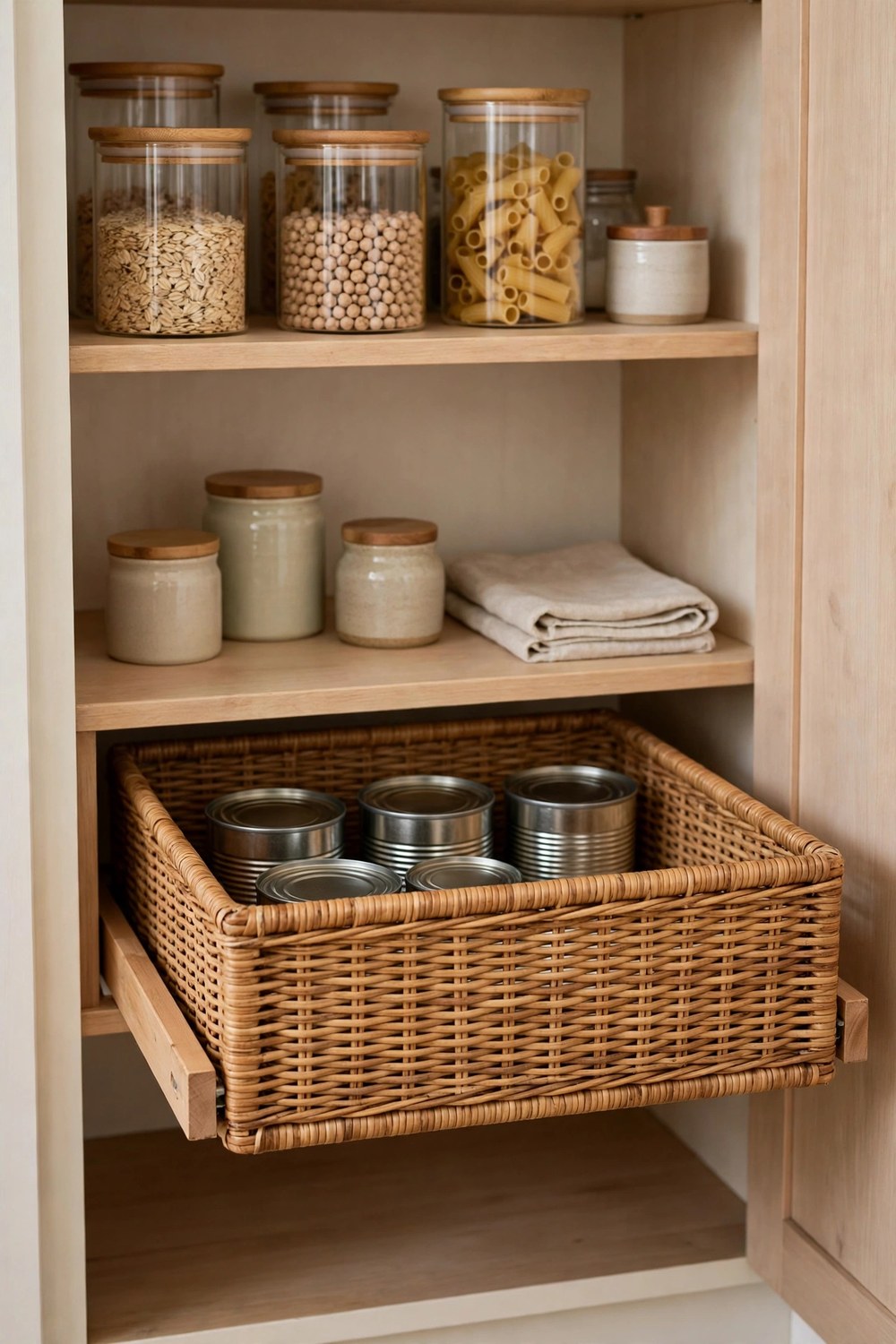
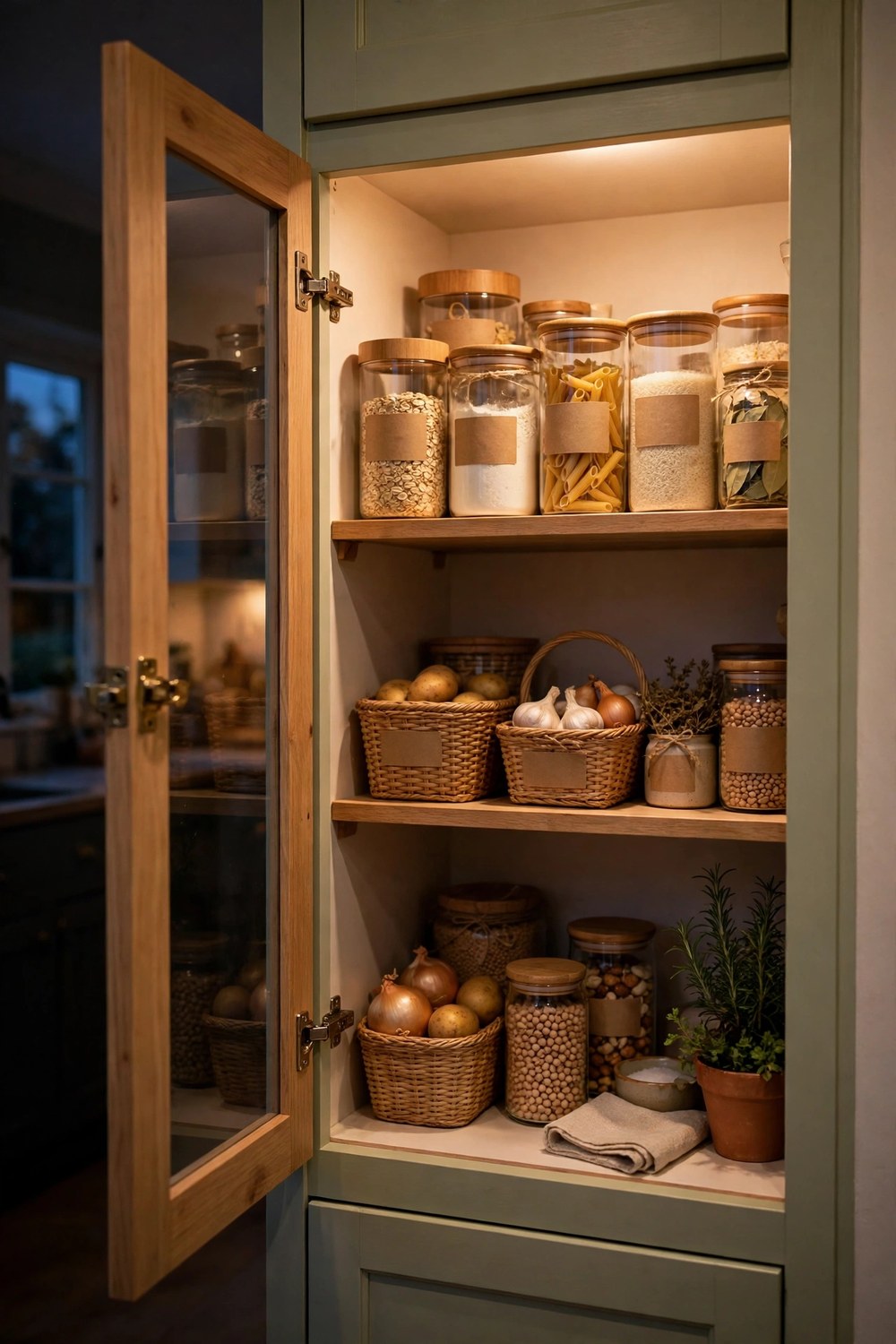
Put a basket on each shelf and let it act as a drawer — pull it out, take what you need, push it back. Tins and packets stay upright in the basket instead of sliding to the back.
Sunday: label what you decanted
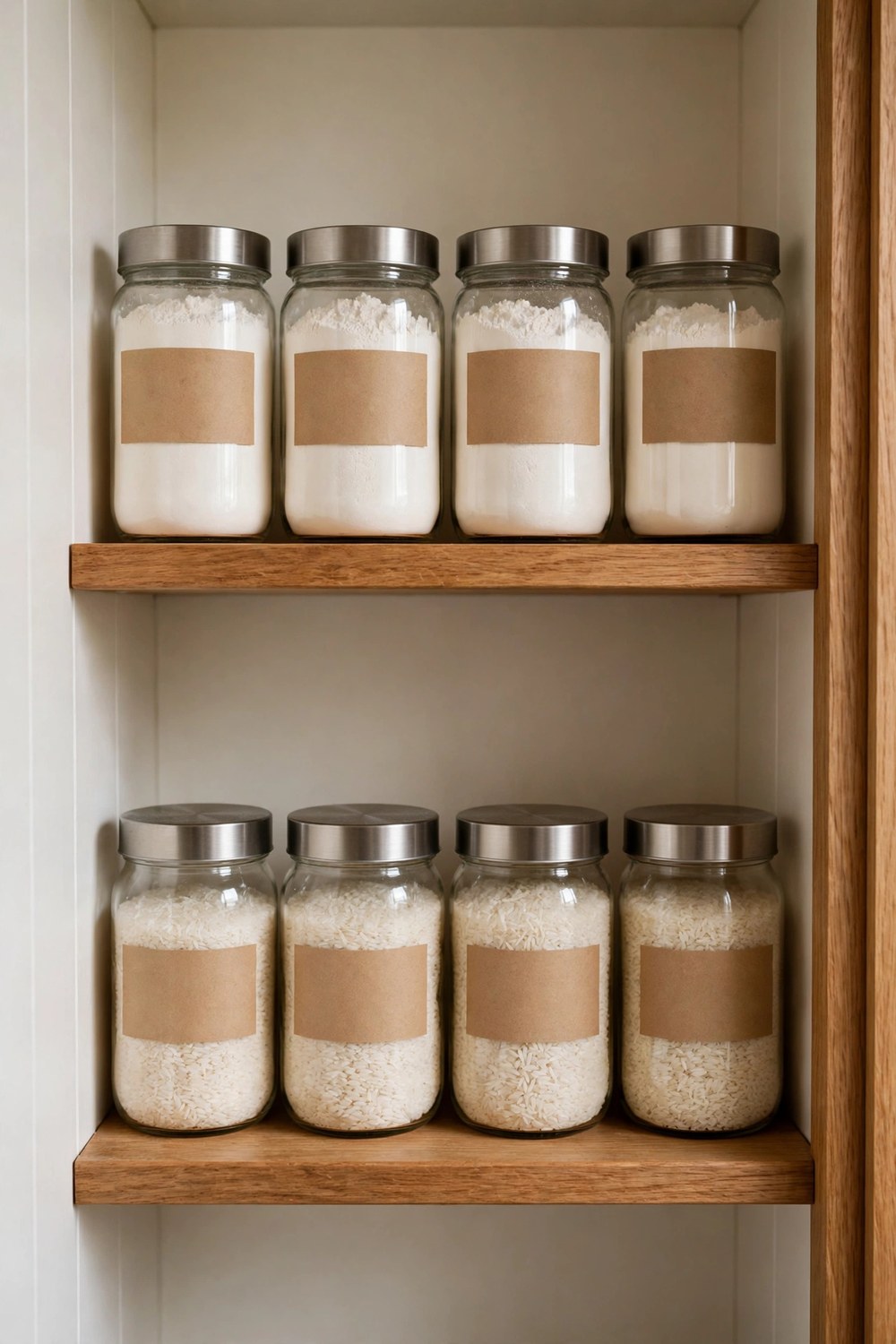
You do not need matching jars for everything. Decant only the things you pour: flour, rice, sugar, oats. One label, one jar, one scoop that lives inside it. Everything else stays in its packet, front-facing, with its date visible.
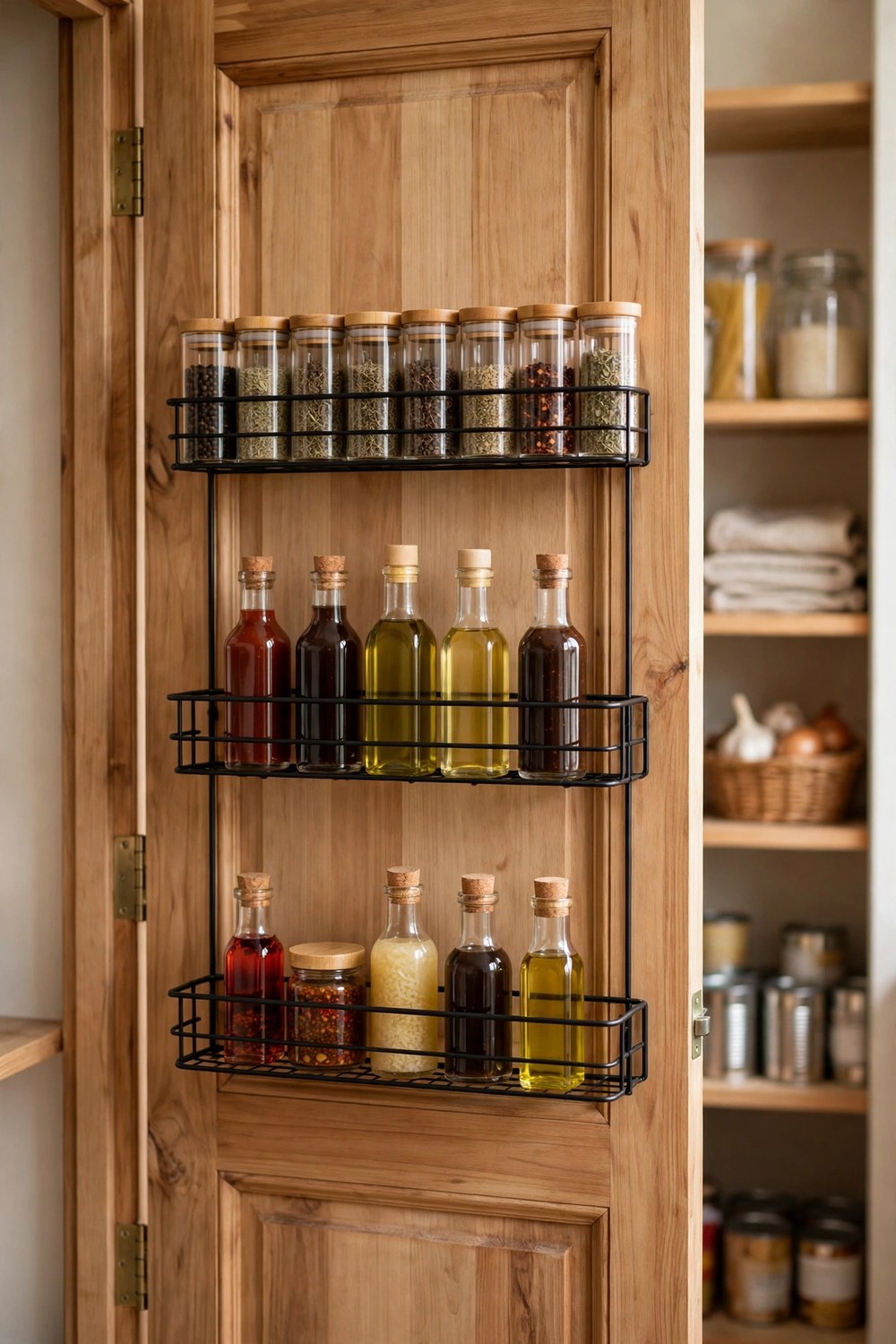
Use the inside of the door. A narrow rack there holds spices and small sauces that would otherwise eat a whole shelf. It is the cheapest extra shelf a tiny pantry has.
Sunday evening: restock from a short list
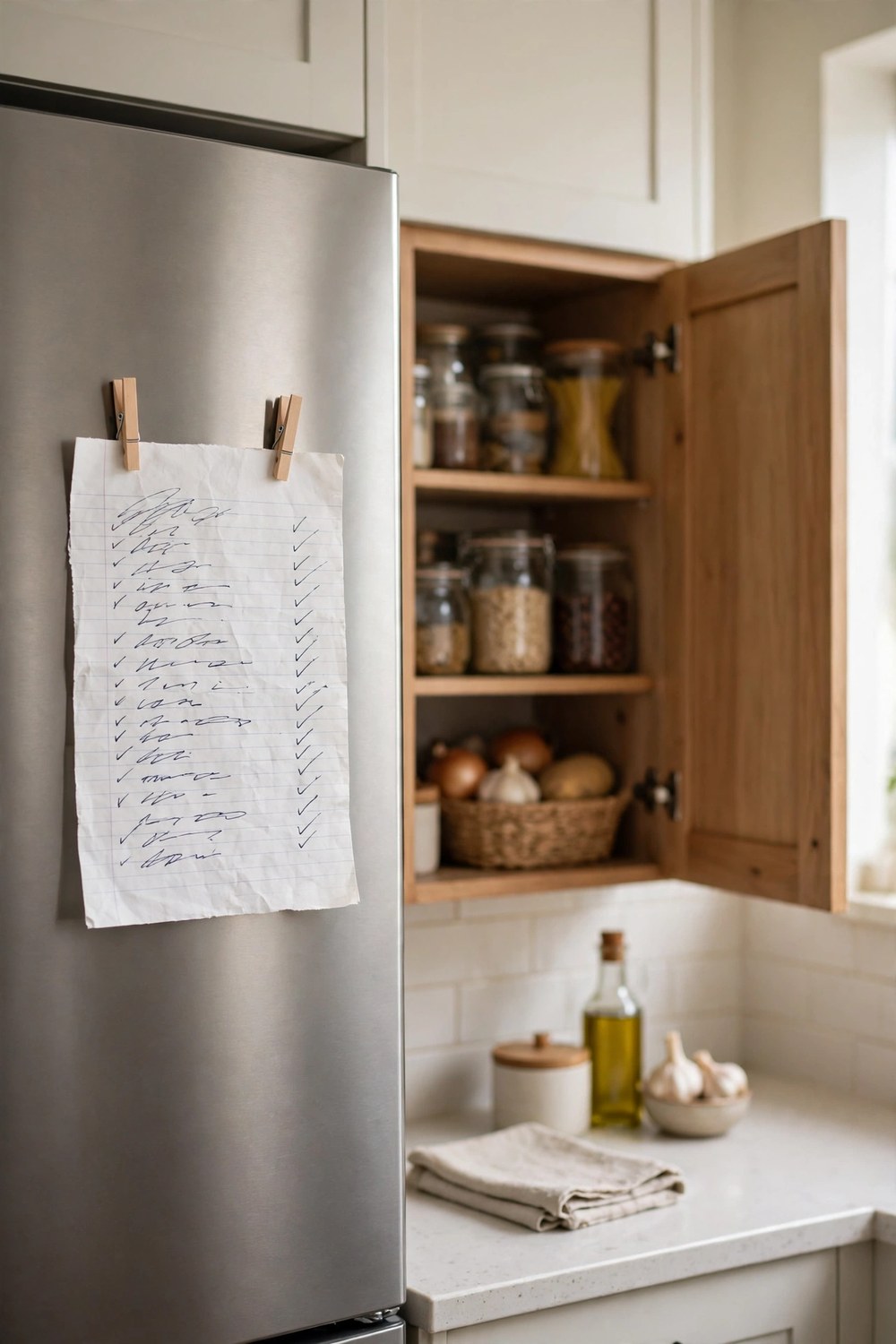
Before you put anything back, write the staple list — the 20 or so things this pantry should never run out of. Pin it on the fridge. Restock from that list, not from a wander round the shop, and the pantry stops drifting back into chaos.
Then put it all back, zone by zone, heaviest low, daily at eye level. Stand back. It will look almost empty — that is the point. A pantry with breathing room is a pantry you can actually use.
Keep it organised with ten minutes a week
A pantry does not stay organised by willpower. It stays organised because someone checks it. Fold it into your Sunday reset: one shelf a week, out of date things out, the staple list checked, one basket pulled out and put straight. Ten minutes, once a week, and the weekend you spent on it keeps paying off. If you cook in a small kitchen, keep the habit going with a 15-minute tidy, and find more ideas in Home Organisation.
Do I need to buy containers first?
No. Organise a tiny pantry with what you have — baskets, jars and the door rack come after you know what needs containing. Buying first is how pantries fill up with empty boxes.
What if my pantry is just one cupboard?
The same three zones still work, shelf by shelf: rarely used on top, daily cooking at eye level, heavy at the bottom. One cupboard is a tiny pantry with fewer shelves.
How do I stop it getting messy again?
A weekly ten-minute check during your Sunday reset, and a staple list so shopping replaces what you used instead of adding something new each time.



0 Comments